
5 Common Mistakes Companies Make When Choosing a CRM System


In the rapidly evolving digital landscape, businesses often struggle with selecting the right Customer Relationship Management (CRM) software, frequently falling into traps that hinder rather than accelerate sales growth. Many organizations view CRM tools as simple databases, failing to integrate them as strategic levers for success. By choosing rigid, one-size-fits-all systems that lack customization, companies often complicate their workflows instead of streamlining them. Experts suggest that platforms like Bitrix24 offer the necessary flexibility to adapt to unique business models. Selecting the wrong software leads to operational bottlenecks, decreased employee productivity, and ineffective data management, ultimately stalling the very sales processes that the digital transformation was intended to optimize.
- Rigid CRM systems fail to accommodate specific industry-related sales cycles and business dynamics.
- Fragmented communication tools across various platforms cause significant delays and data inconsistencies.
- Effective automation requires end-to-end scenario planning rather than simple notification triggers.
- Poor user experience and high learning curves discourage staff from adopting new technological tools.
Businesses Should Avoid Rigid Software Architectures
The primary error many companies make is prioritizing off-the-shelf software that prohibits deep customization. Every business possesses unique customer interaction patterns and distinct sales stages. When a CRM platform forces a company to adapt to its rigid design, it stops being a helpful tool and becomes an administrative burden. Employees are reduced to mere data entry clerks, which negates the purpose of digital transformation. Systems that allow for modular adjustments enable teams to maintain their competitive edge by aligning software logic with actual business goals.
Choosing a flexible CRM acts as an engine for business growth rather than a static storage unit for customer information.
Fragmented Communication Stalls Operational Efficiency
Modern enterprises often suffer from a lack of integration between communication channels and sales tools. When representatives must switch between email clients, calendars, and CRM interfaces, they lose focus and risk creating data gaps. Centralized platforms bridge this divide by consolidating telephone logs, email traffic, and task management within a single interface. 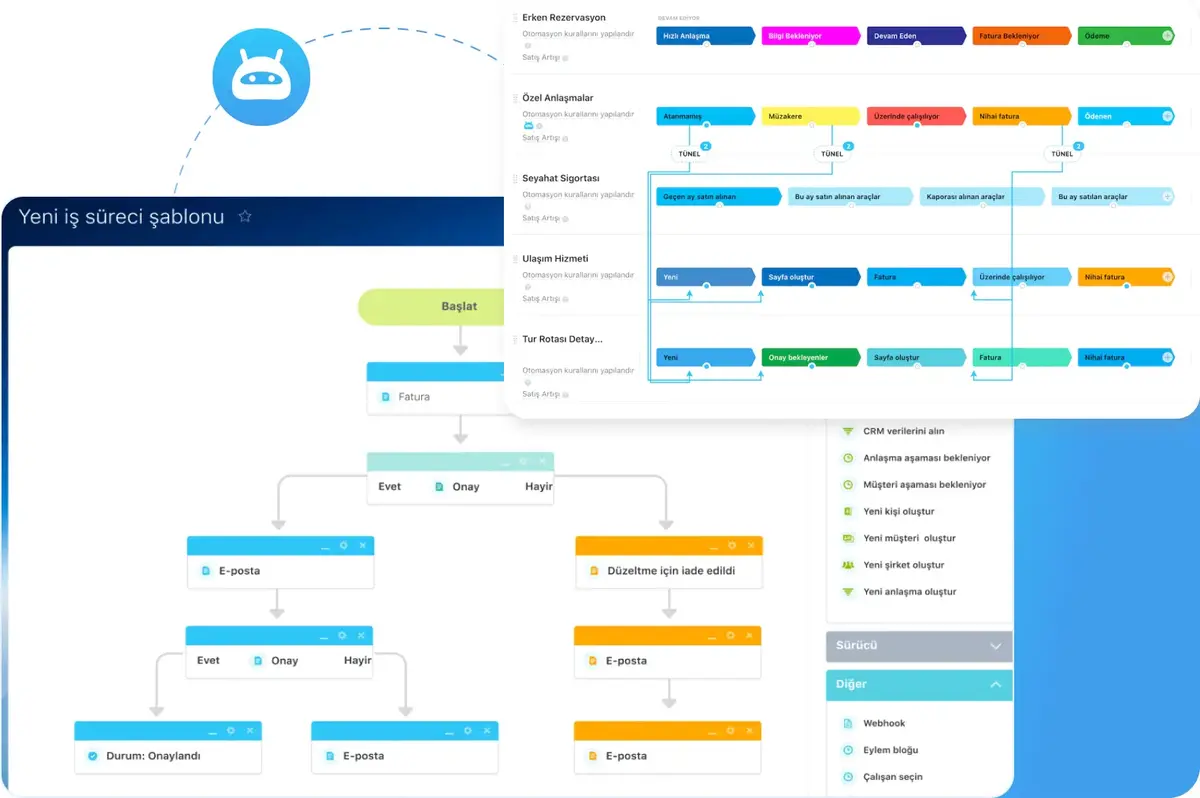 This holistic approach ensures that every team member accesses consistent, real-time information, which is essential for transparent tracking of the entire customer journey.
Automation Must Go Beyond Basic Notifications
Misunderstandings regarding automation capabilities frequently undermine project success. Many organizations define automation merely as the ability to send bulk emails or basic alerts. However, true efficiency stems from comprehensive workflows that handle everything from lead ingestion and calendar scheduling to document drafting. By automating these end-to-end scenarios, businesses minimize the risk of human error and allow systems to operate independently, freeing staff to focus on higher-level strategy.
User Adoption Determines Long-Term System Success
Even the most powerful software fails if the user interface is too complex for the daily staff. High learning curves lead to resistance, resulting in incomplete data entry and unreliable reporting. Companies should prioritize intuitive designs, such as Kanban boards or drag-and-drop interfaces, which encourage daily engagement. Furthermore, a CRM must function as a forecasting tool, providing actionable analytics on sales performance and conversion rates. Without real-time data analysis, a business is essentially navigating without a compass. Implementing an integrated, flexible system creates a culture where data-driven decisions become the standard for every department.
What challenges have you encountered while implementing new software in your organization, and how did you overcome them? Share your thoughts and experiences in the comments below.
Your comment has been submitted,
it will be published after approval.