
Sony Unveils New LYTIA L910 Camera Sensor to Revolutionize Photography


Sony has officially announced the launch of its groundbreaking Sony new camera sensor, the LYTIA L910, poised to redefine the standards of mobile photography. Unveiled recently, this advanced hardware component is engineered to deliver exceptional performance in low-light conditions and superior dynamic range, directly challenging the dominance of current flagship devices like the iPhone. By integrating cutting-edge capacitor technology, the sensor addresses common issues such as light overexposure, signaling a significant shift in how smartphone cameras process visual data. While this technological leap promises to enhance the photographic capabilities of future devices, industry experts anticipate that it will initially debut in select Asian markets before reaching a global consumer base.
- The Sony new camera sensor utilizes proprietary LOFIC technology to prevent pixel saturation in high-contrast environments.
- The hardware achieves a dynamic range of up to 100 dB to ensure natural transitions between light and shadow.
- The sensor reduces noise in low-light 4K video recording by approximately 30 percent.
- Initial adoption is restricted to upcoming flagship models from Vivo and OPPO rather than Apple or Samsung.
The integration of the LYTIA L910 sensor represents a fundamental hardware transition for mobile imaging capabilities.
LOFIC Technology Eliminates Common Light Overexposure Issues
The core innovation within this Sony new camera sensor is the implementation of Lateral Overflow Integration Capacitor (LOFIC) technology. Traditional image sensors often struggle when encountering intense light sources, such as neon signs or streetlights at night, leading to a phenomenon known as white clipping, where detail is lost in the brightest areas of the frame. 
By placing specialized micro-capacitors adjacent to each pixel, the sensor effectively manages excess electrical current, storing it like a reservoir. This hardware-level solution allows the camera to capture a broader spectrum of light without sacrificing clarity in shadows or highlights. The result is a more natural photographic output that retains texture and detail that would otherwise be rendered as pure white or black.
Advanced Processing Enhances Low-Light Video Performance
Beyond static photography, the sensor excels in videography through a triple-conversion gain architecture. This system is designed to minimize visual noise and grain in nighttime footage, providing a 30 percent improvement in clarity over previous sensor generations. 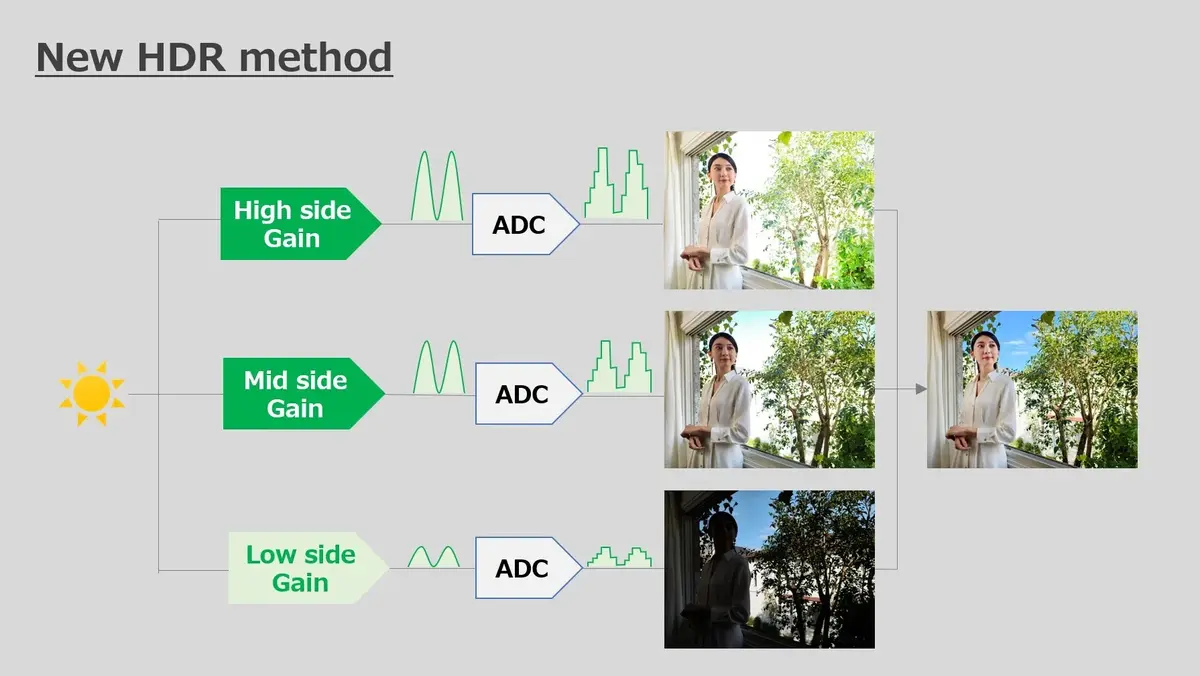
Energy efficiency remains a priority even while the sensor manages complex 4K 60 FPS HDR video processing.
This efficiency ensures that high-quality video capture does not place an excessive burden on the device’s battery life. By optimizing the way data is processed at the sensor level, Sony aims to provide professional-grade video tools within a standard smartphone form factor.
Chinese Manufacturers Lead the Initial Adoption Phase
Despite the high demand for such advanced technology, the 50-megapixel, 1/1.28-inch Sony new camera sensor will not appear in the immediate Apple or Samsung product lineups. Industry reports indicate that the rollout will begin this summer, with the technology being reserved for high-end devices from Chinese manufacturers, specifically the Vivo X500 and OPPO Find X10 series.
Market analysts suggest that Apple may require several years of testing before integrating this specific sensor architecture into its iPhone ecosystem. Consequently, manufacturers in the Chinese market may maintain a competitive edge in mobile photography performance for the foreseeable future, as they are the first to utilize this advanced imaging hardware.
Do you believe that hardware innovations like the LYTIA L910 sensor will finally bridge the gap between smartphone cameras and professional DSLRs, or does software processing still hold the key to the perfect shot? Share your thoughts in the comments below.
Your comment has been submitted,
it will be published after approval.