
Samsung Revolutionizes Smartphone Chip Packaging Technology

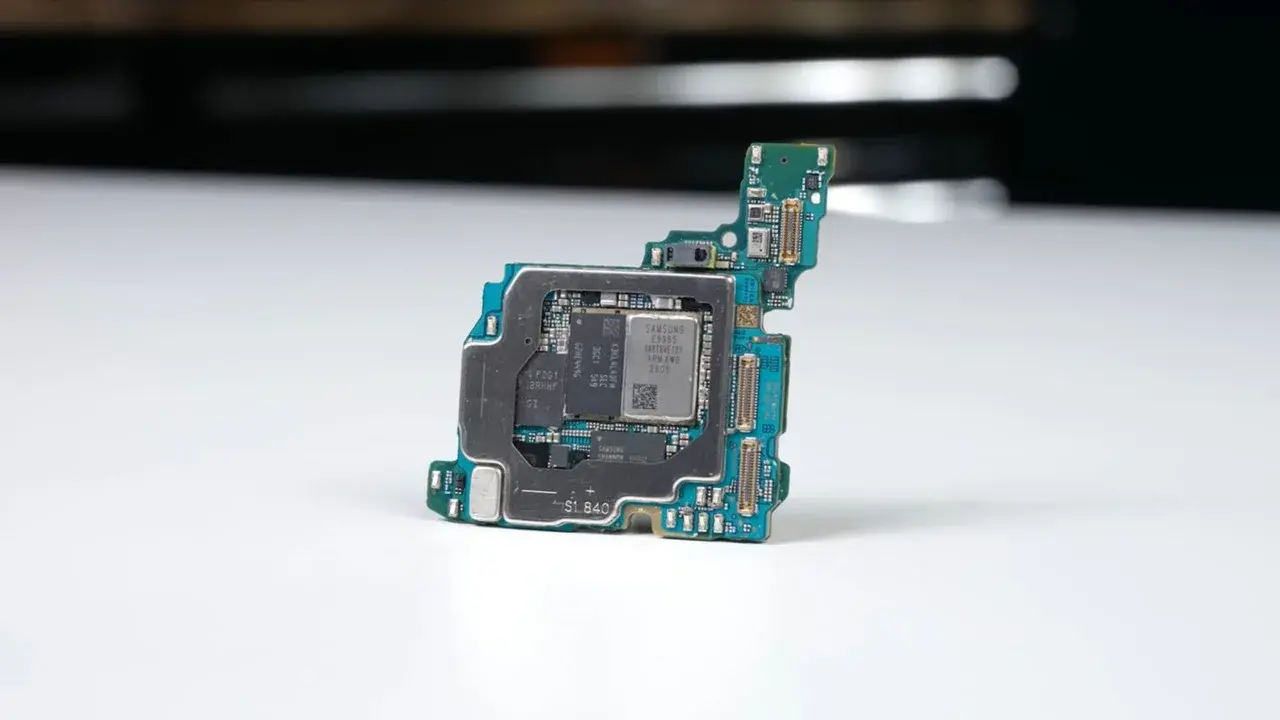
As smartphone chipsets achieve unprecedented levels of performance, manufacturers are encountering severe thermal management challenges that traditional designs can no longer mitigate. To address these overheating issues, Samsung has unveiled a groundbreaking advancement in chip packaging technology within its upcoming Exynos 2600 processor. By introducing a highly compact LPDDR5X RAM module that occupies half the space of standard components without sacrificing speed, Samsung is setting a new industry benchmark. This innovation signifies a critical shift in how high-performance mobile hardware is constructed, as global leaders like Qualcomm and Apple simultaneously explore new physical architectures to sustain peak performance in increasingly powerful mobile devices.
- Samsung introduced the Heat Pass Block technology to replace traditional Package-on-Package methods in mobile chipsets.
- The new LPDDR5X RAM module reduces pin count from 18 to 15 to enable a more compact physical architecture.
- Apple is transitioning to Wafer-Level Multi-Chip Module packaging to improve thermal efficiency in future A-series processors.
- Major manufacturers are moving away from stacked chip designs to prevent thermal throttling in high-performance hardware.
Samsung Implements Heat Pass Block Technology
The traditional Package-on-Package (PoP) method, which involves stacking the RAM directly atop the processor, has long been the industry standard. However, this design traps heat, leading to performance throttling under heavy workloads. Samsung is moving away from this outdated configuration by implementing the Heat Pass Block (HPB) system. 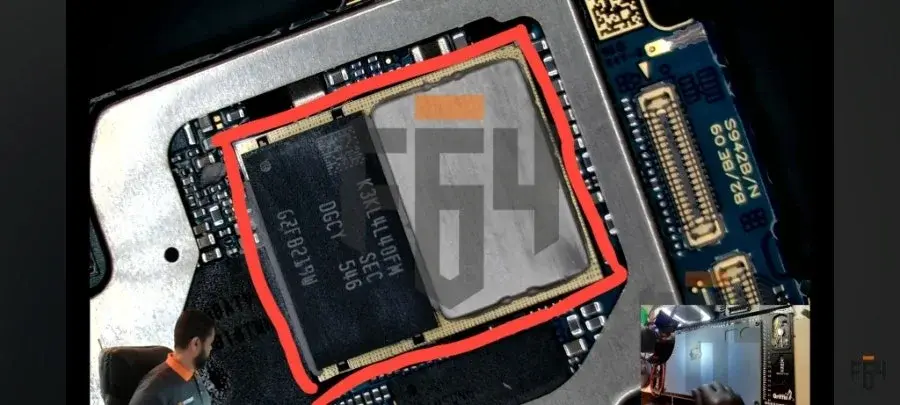
The new HPB system allows for direct heat dissipation from the 2nm silicon die, effectively cooling the component without needing additional bulk.
This hardware transition is expected to influence the wider market significantly. Reports suggest that upcoming high-end processors, including the Snapdragon 8 Elite Gen 6 Pro, will adopt similar HPB configurations. By shrinking the footprint of the RAM module, engineers can create more room for advanced cooling solutions, such as larger vapor chambers, which are essential for maintaining stability in modern, power-hungry smartphones.
Industry Leaders Rethink Thermal Management Strategies
The necessity for these changes is underscored by the limitations observed in current flagship devices. Even advanced hardware like the A19 Pro chip in the iPhone 17 Pro Max faces thermal constraints despite utilizing expansive vapor chamber technology. This failure to maintain peak power under sustained load confirms that lithography improvements alone are insufficient for modern thermal demands.
Apple is responding to these challenges by shifting its focus toward Wafer-Level Multi-Chip Module (WMCM) packaging for the A20 Pro chipset. Unlike traditional stacking, this approach places the DRAM chip adjacent to the processor on the substrate. 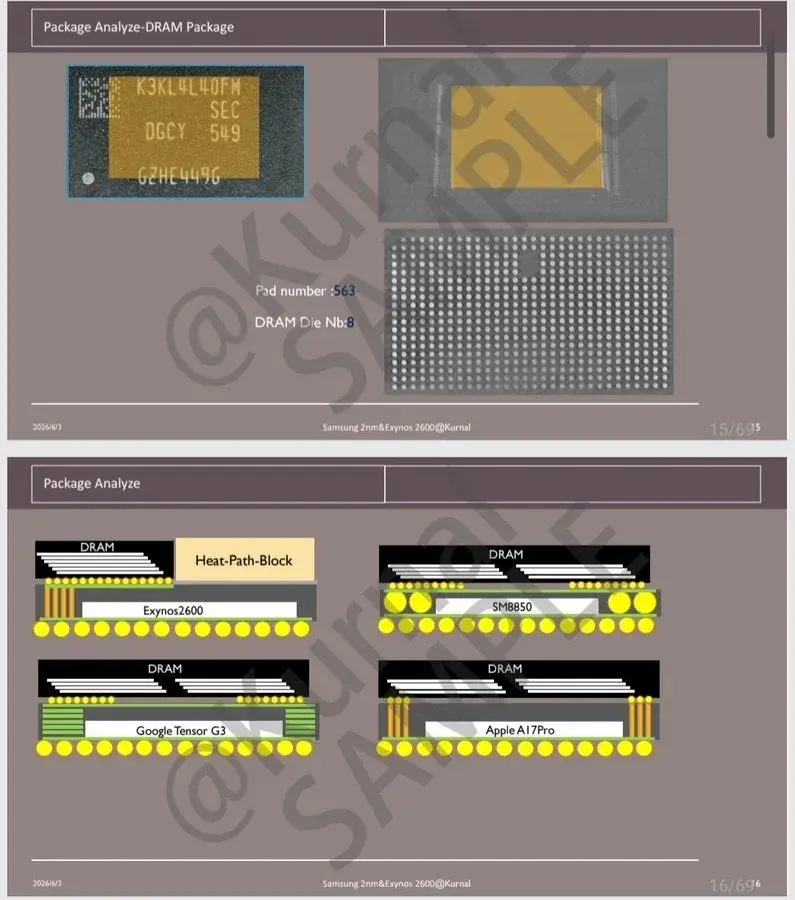
Moving the memory chip to the side of the silicon die significantly reduces heat transfer between the components.
While Samsung and Apple are pursuing different physical layouts, the industry consensus is clear: the era of standard chip stacking is coming to an end. Manufacturers are now prioritizing thermal efficiency as a core performance metric, recognizing that the physical arrangement of components is just as vital as the processing speed of the silicon itself. As mobile games and AI applications push hardware to its absolute limit, these packaging innovations will determine which devices can sustain high-octane performance without overheating.
As these advanced packaging techniques become the new standard for flagship smartphones, we would love to hear your perspective on the future of mobile hardware. Do you believe these structural changes are sufficient to solve the persistent issue of thermal throttling, or do we need a more radical cooling solution?
Your comment has been submitted,
it will be published after approval.