
China Achieves Record 1.2Tb/s Speed With Hollow Fiber Technology


A collaborative research initiative involving China Telecom, Yangtze Optical Fibre and Cable, and Dekoli has successfully executed a landmark field test of a new hollow fiber transmission system in China. This breakthrough, conducted on the world’s longest commercial cross-border hollow fiber cable, achieved an unprecedented data transmission speed of 1.2Tb/s per wavelength. By moving beyond traditional solid glass conduits, the team has established a new benchmark for next-generation telecommunications, effectively demonstrating the feasibility of using air-core transmission to overcome the physical limitations inherent in standard fiber optic networks. The project marks a significant milestone in advancing global high-speed communication infrastructure.
- The research team successfully tested a 1.2Tb/s transmission speed per wavelength using hollow fiber technology.
- The project utilized the world’s longest commercial cross-border hollow fiber cable to validate real-world performance.
- Engineers implemented a new high-power amplifier design that achieves a maximum output power of 33.5 dBm.
- Advanced security features were integrated to provide real-time monitoring and automatic shutdown capabilities.
Hollow Fiber Technology Improves Transmission Efficiency
Traditional fiber optic cables rely on solid glass cores to guide light, a method that inherently introduces signal latency and capacity constraints. In contrast, hollow fiber technology directs light through an air-filled medium, significantly reducing the interference and delays associated with refractive indexes in glass. 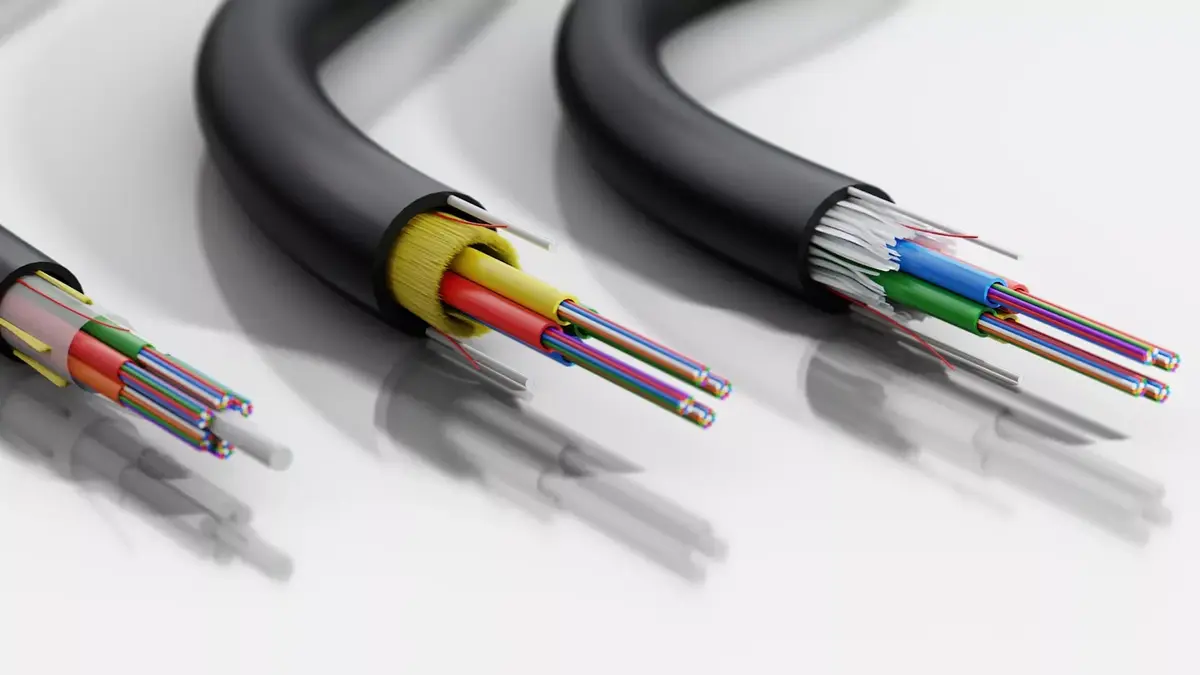
This structural innovation allows for superior signal integrity over long distances. The research team proved that this technology remains stable even under the rigorous demands of real-world environments, effectively navigating the complexities of high-power signal transmission outside of controlled laboratory conditions.
This advancement effectively eliminates the primary bottlenecks hindering the evolution of backbone infrastructure and massive data centers.
Dynamic Systems Optimize Network Performance
To maximize the utility of this new transmission medium, the researchers implemented a sophisticated, adaptive rate control mechanism. Rather than relying on rigid, pre-set parameters, the system dynamically allocates channel power based on real-time requirements. This flexibility allows for hybrid transmission across various data speeds and channel intervals, ensuring that the network remains adaptable to the fluctuating demands of modern digital traffic.
New Amplifier Architecture Enhances Signal Stability
Reliability was a core focus of the development process. To support the high-capacity throughput, the team engineered a novel high-power amplifier architecture that utilizes a cascade dual-gain unit design combined with a multi-element doping approach. This design produces a maximum output power of 33.5 dBm, providing the necessary strength to maintain signal clarity across the entire fiber installation.
The system also incorporates a comprehensive, multi-layered security framework to protect the hardware and ensure operational longevity. Features such as optical path power anomaly detection and automated shutdown protocols allow the system to respond instantly to potential threats or hardware malfunctions.
These proactive safety measures significantly reduce the risk of permanent equipment damage in high-power environments.
Given the rapid development of such high-speed transmission methods, how do you see hollow fiber technology impacting the future of global connectivity? Share your thoughts and predictions in the comments section below.
Your comment has been submitted,
it will be published after approval.