
Xiaomi Prepares HyperOS 3.3 for Upcoming Android 17 Update

Xiaomi is officially pivoting its software strategy as internal reports confirm the development of HyperOS 3.3, rather than the anticipated HyperOS 4, to support the upcoming Android 17 operating system. Engineering test files discovered within the internal software architecture for the Xiaomi 17 and Xiaomi 17 Ultra have unveiled this shift, revealing that the company is currently conducting rigorous performance evaluations. While the official public release remains pending, industry analysts suggest the company aims to roll out this significant update between July and August 2026, focusing heavily on system optimization and advanced performance capabilities for its latest flagship mobile devices.
- Internal test builds for the Xiaomi 17 series indicate that HyperOS 3.3 will serve as the foundation for Android 17 integration.
- Xiaomi plans to initiate the official public distribution of this new software iteration during the summer of 2026.
- The company has opted to prioritize version 3.3 over the previously expected HyperOS 4 release to ensure stability.
Leaks Reveal Changes in Software Strategy
The tech community has been closely monitoring the emergence of specific build codes, such as OS3.0.330.11.XPCCNXM for the Xiaomi 17 and OS3.0.330.8.XPACNXM for the Ultra variant. These identifiers confirm that Xiaomi is actively refining its naming convention and internal development pipeline. 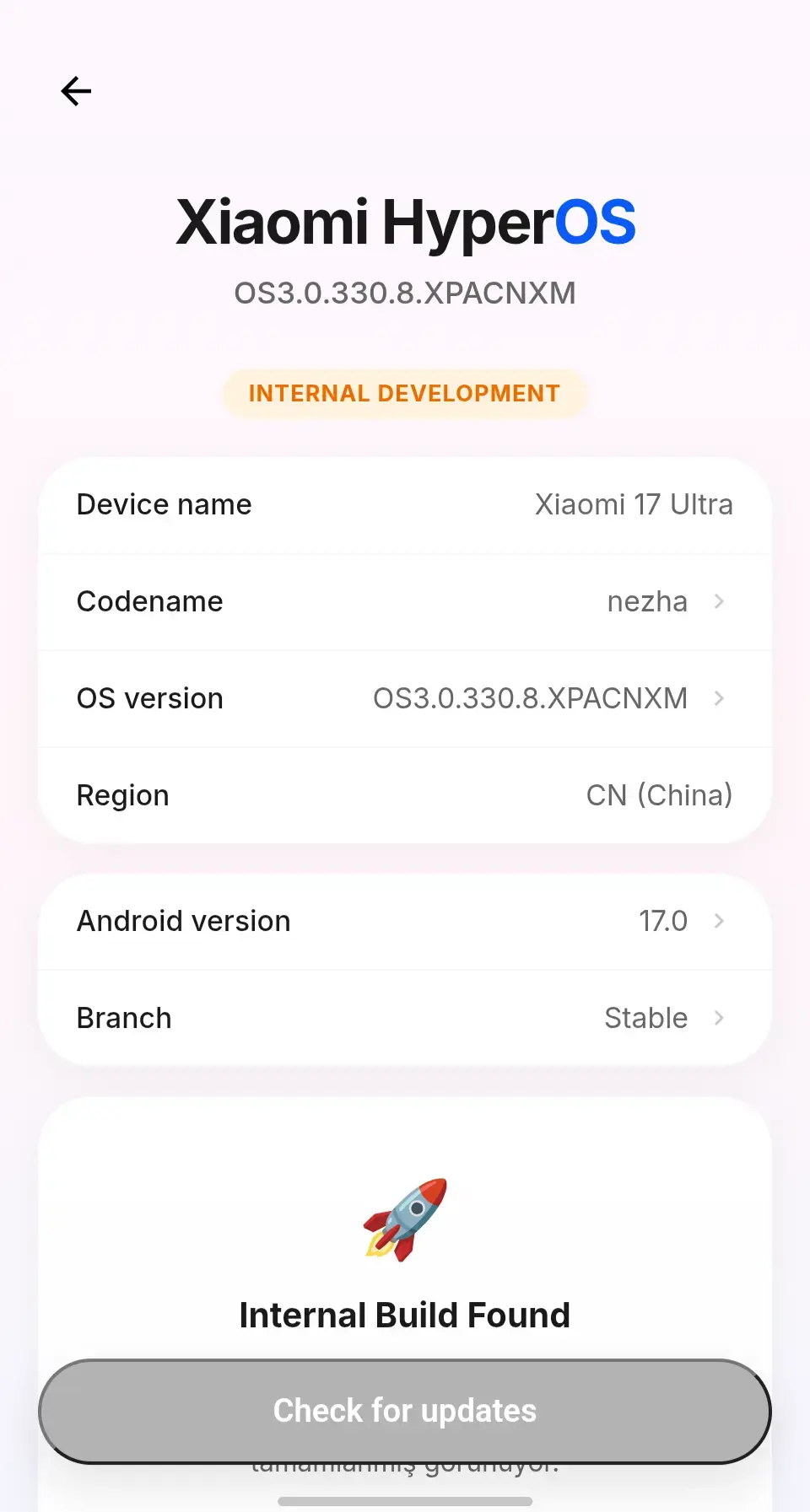 By choosing to proceed with version 3.3, the manufacturer is signaling a focus on incremental refinement and deep system integration rather than a complete overhaul of the user interface.
Industry experts believe this strategic decision will prioritize long-term system stability over superficial version numbering changes.
Users Expect Significant Performance Enhancements
Regardless of the specific version number, the integration of Android 17 is expected to bring meaningful improvements to the overall user experience. The update reportedly emphasizes deeper artificial intelligence integration, allowing the device to adapt more efficiently to user habits. Furthermore, the refined “liquid glass” design language is anticipated to receive further optimization, ensuring that the interface remains visually cohesive and fluid across all screen interactions. These technical adjustments are designed to minimize latency and improve responsiveness, providing a noticeably faster experience during intensive multitasking sessions.
Development Teams Continue Rigorous Testing
While Xiaomi has yet to issue a formal press release regarding these developments, the engineering team is working behind the scenes to address potential bugs and optimize hardware-software synergy. Potential users are encouraged to monitor the official Xiaomi support documentation to verify if their specific hardware will be compatible with the upcoming software deployment. The primary goal remains the delivery of a secure and robust platform that maximizes the capabilities of the company’s latest hardware lineup.
Enhanced system velocity and core stability represent the primary objectives for the upcoming HyperOS iteration.
Do you believe that focusing on HyperOS 3.3 instead of jumping to 4.0 will prove to be a more stable path for Xiaomi devices, or were you hoping for a larger overhaul? Share your thoughts on what you expect from this Android 17-based update in the comments section below.
Your comment has been submitted,
it will be published after approval.