
iPhone 18 Pro Max Sets New Battery Performance Standards

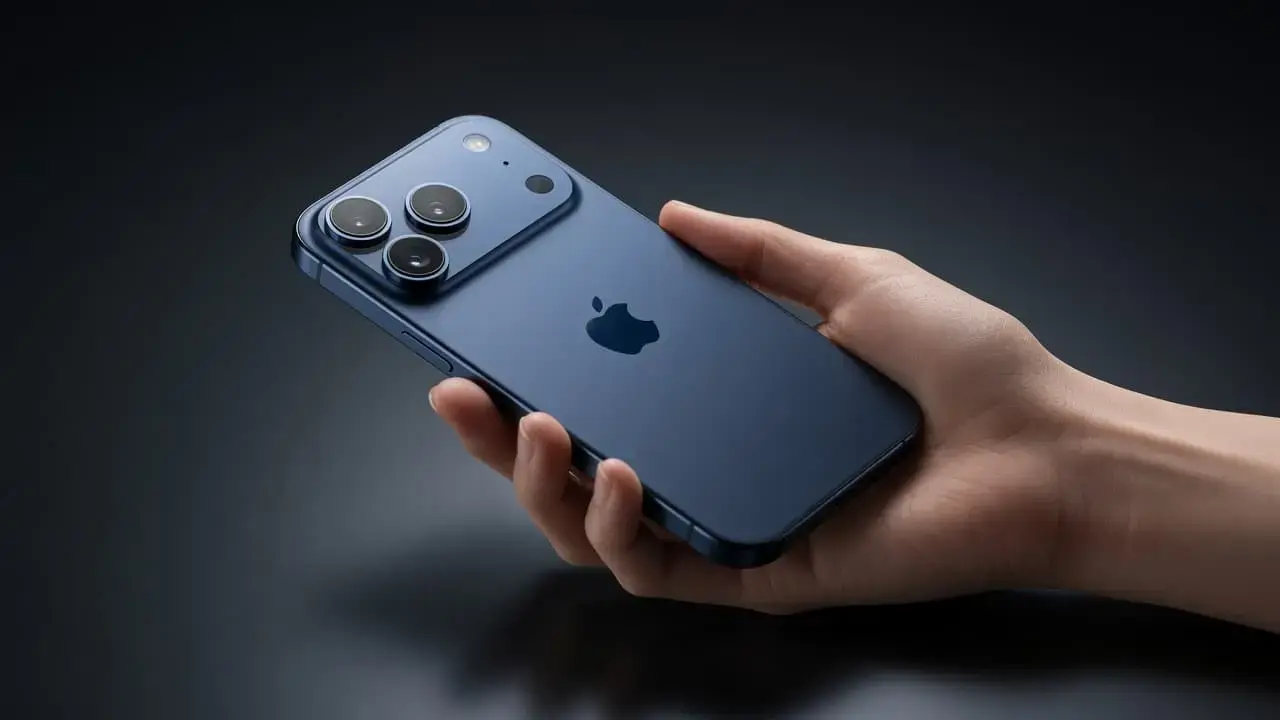
Recent reports from industry insiders suggest that the upcoming iPhone 18 Pro Max is poised to redefine mobile energy standards. By utilizing a 5,567mAh battery paired with the cutting-edge 2nm A20 Pro processor, Apple aims to deliver battery life that rivals Android devices equipped with 7,000mAh capacities. Expected to launch in the next cycle, the device leverages the sophisticated power management of iOS 27 to ensure maximum hardware efficiency. This strategic integration of custom silicon and optimized software positions the iPhone 18 Pro Max as a leader in power endurance, setting a new benchmark for flagship smartphones worldwide.
- The iPhone 18 Pro Max features an upgraded 5,567mAh battery capacity.
- The transition to 2nm A20 Pro chip architecture significantly enhances power efficiency.
- Apple targets performance parity with Android flagships that utilize 7,000mAh batteries.
- The iOS 27 operating system provides advanced CPU scheduling to minimize energy waste.
Apple plans to surpass competitors by prioritizing total system integration over raw battery size alone.
iPhone 18 Pro Max Increases Battery Capacity
The previous iteration, the iPhone 17 Pro Max, established a strong reputation for efficiency with its 5,088mAh power cell. Apple is now elevating this baseline by incorporating a 5,567mAh battery into the new model. While this physical increase provides a solid foundation for longer usage, industry analysts note that hardware capacity is only one part of the equation. 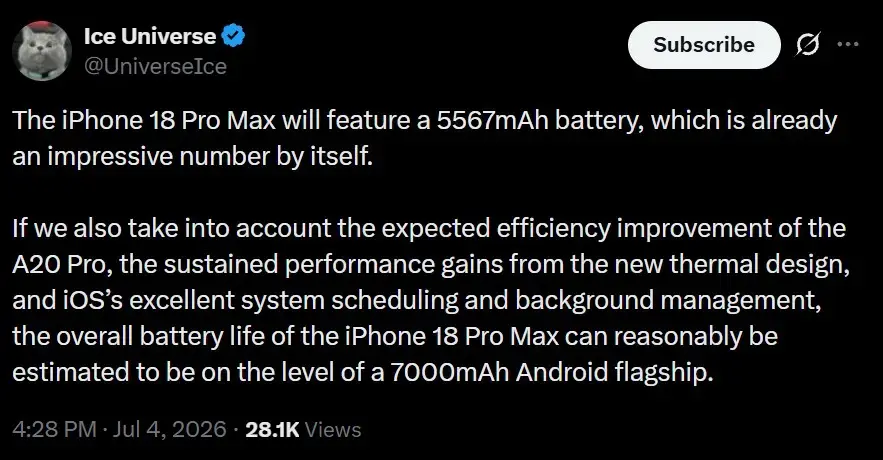 The true potential for extended runtime remains locked within the architectural refinements of the device’s internal components.
A20 Pro Chip Maximizes Energy Efficiency
Central to this efficiency push is the A20 Pro chipset, which utilizes an advanced 2nm production process. By shrinking transistor sizes, Apple has managed to reduce power draw while simultaneously boosting computational throughput. When combined with the intelligent background process management found in iOS 27, this hardware becomes exceptionally adept at preserving charge during daily tasks. This synergy allows the device to compete effectively against Android handsets that rely on massive silicon-carbon battery packs to achieve similar endurance levels.
The technology sector eagerly anticipates the efficiency gains enabled by 2nm processor nodes.
Android Competitors Challenge Apple’s Efficiency Lead
The landscape of mobile technology remains highly competitive, with Android manufacturers preparing their own 2nm-based solutions, such as the Snapdragon 8 Elite Gen 6 and the Exynos 2700. Historical benchmarks have indicated that some devices, including the Xiaomi 17 Pro Max, required batteries up to 55% larger than their Apple counterparts to reach comparable longevity. By further refining its hardware-software handshake, the iPhone 18 Pro Max seeks to widen this gap. The upcoming launch of these new Android flagships will provide the necessary data to verify whether Apple’s focus on optimization remains the superior path for consumer mobile devices.
Do you believe that Apple’s focus on software-driven efficiency will force Android manufacturers to fundamentally alter their approach to battery technology? Share your thoughts in the comments below.
Your comment has been submitted,
it will be published after approval.