
Samsung Develops Gaia AI Accelerator Chip for Personal Computers

Samsung is making a bold return to the PC processor market by developing a dedicated AI hardware component codenamed Gaia. According to recent reports, the South Korean technology giant is engineering this 4-nanometer AI accelerator specifically to enhance on-device artificial intelligence capabilities for personal computers. By focusing on local processing, Samsung aims to provide users with significantly faster computational power without relying entirely on cloud-based services. This strategic move marks the company’s first major entry into the PC processor space in over a decade, signaling an aggressive push to compete with established chipmakers by prioritizing efficient, localized AI performance.
- Samsung is developing the Gaia 4nm AI accelerator chip to boost on-device computational performance for PC users.
- The hardware design utilizes advanced Processing-in-Memory technology to overcome data transfer bottlenecks between the processor and RAM.
- This initiative marks the official return of Samsung to the personal computer processor market after a decade-long hiatus.
Gaia Chip Redefines Standards in the PC Market
As the global technology industry pivots toward generative AI, hardware manufacturers are rapidly updating their roadmaps to support complex local workloads. While cloud-based processing has dominated the landscape, the shift toward on-device operations has created an urgent demand for specialized Neural Processing Units (NPUs). Samsung’s Gaia project addresses this shift by providing a dedicated accelerator that functions alongside the primary system processor.
The Gaia chip is specifically optimized to execute large language models and generative AI tasks directly on the local hardware.
Drawing on years of experience with Exynos mobile processors, Samsung is adapting its NPU architecture for the desktop and laptop environment. By utilizing a 4nm manufacturing process, the chip achieves high energy efficiency, ensuring that demanding AI tasks do not deplete battery life prematurely. This hardware allows for real-time language translation, advanced image generation, and intelligent productivity features without the privacy risks or latency associated with constant data transmission to remote servers. 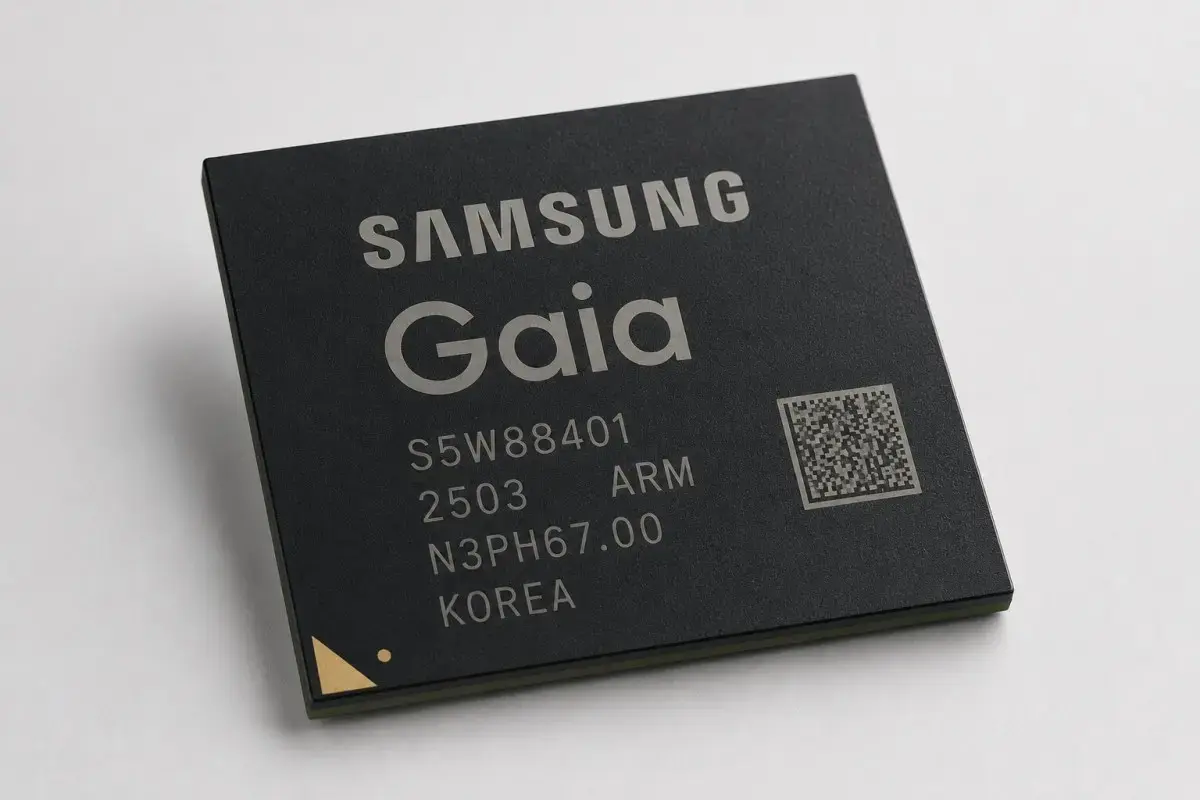
Processing-in-Memory Technology Eliminates Hardware Bottlenecks
One of the most significant advantages for the Gaia project is Samsung’s vertical integration in memory production. New reports suggest that the Gaia chip will integrate with the company’s cutting-edge Processing-in-Memory (PIM) technology to streamline data management. In conventional computer architectures, the constant exchange of information between the CPU and RAM creates a significant performance bottleneck, especially when processing massive datasets required for AI models.
PIM technology executes computations directly within the memory, effectively removing the performance constraints of traditional data traffic.
By performing calculations at or near the memory unit, the system significantly reduces energy consumption while simultaneously increasing processing speeds. This integration provides Samsung with a distinct competitive advantage, as few other manufacturers can combine custom AI logic with proprietary memory architecture so seamlessly. The development reflects a broader corporate strategy to secure a dominant position in the future of personal computing. Industry analysts expect further technical specifications and benchmark performance results to emerge in the coming months.
How do you think the integration of dedicated AI hardware like the Gaia chip will change the way you use your personal computer daily? Share your thoughts in the comments section below.
Your comment has been submitted,
it will be published after approval.