
Samsung Unveils 4nm Gaia Processor to Challenge PC Market

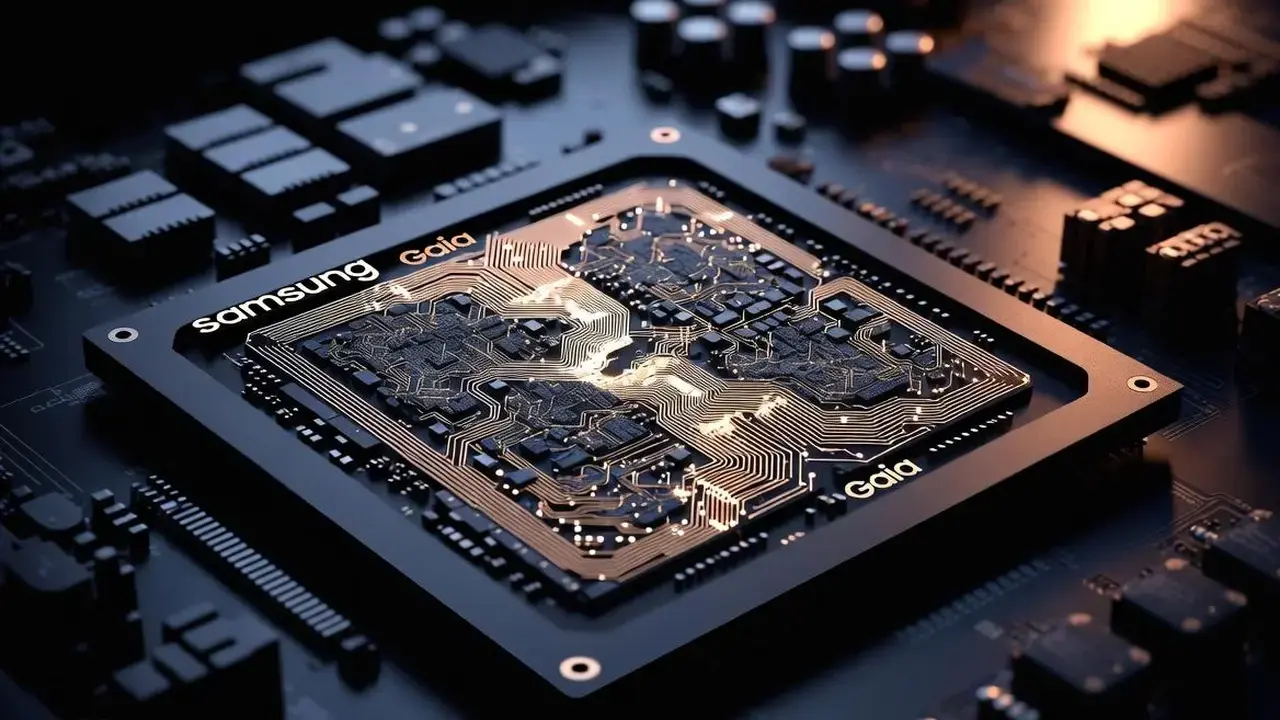
Samsung has officially announced “Gaia,” a next-generation processor project specifically engineered for personal computers, marking a significant shift in the company’s strategy to dominate the artificial intelligence hardware landscape. Developed using an advanced 4nm manufacturing process, these new AI accelerators are designed to boost on-device processing power significantly. By shifting computation from cloud-based systems directly to the hardware level, the South Korean tech giant aims to reduce latency and enhance data privacy for end-users. The first prototypes are currently undergoing rigorous testing with strategic industry partners, with mass production scheduled to commence in 2025.
- Samsung is preparing for mass production of its 4nm Gaia AI accelerators starting in 2025.
- The Gaia architecture enables complex AI tasks to run locally on hardware instead of relying on cloud services.
- The company has already distributed initial prototypes to strategic technology partners for performance evaluation.
- The processor project targets competition against established semiconductor leaders such as Nvidia and Qualcomm.
Gaia Project Localizes Complex Artificial Intelligence Operations
The core innovation behind the Gaia processors lies in their highly optimized Neural Processing Unit (NPU) architecture. Unlike traditional CPUs that struggle with machine learning workloads, these chips are built to handle AI tasks in seconds without requiring an active internet connection. This paradigm shift addresses the current industry reliance on remote servers for AI functionalities.
Samsung’s move aims to eliminate cloud dependency for personal computing tasks entirely.
Hardware Market Enters a New Era of Competition
The applications for Gaia technology extend far beyond standard laptop and desktop environments. Industry experts anticipate that these chips will play a critical role in the growth of Edge AI, influencing sectors such as robotics and autonomous vehicle navigation. In these fields, where real-time data processing is a matter of safety and efficiency, Samsung’s hardware solution promises to deliver a distinct competitive edge. 
Market analysts are closely monitoring how this development will disrupt the existing semiconductor landscape. The primary question remains whether Samsung can offer a superior price-to-performance ratio against entrenched giants like Qualcomm and Nvidia. While specific technical benchmarks remain undisclosed, the 4nm production node is expected to offer industry-leading energy efficiency.
Strategic Partnerships Continue to Shape the Ecosystem
Samsung is actively expanding its ecosystem through confidential partnerships during the testing phase. Preliminary feedback indicates that the Gaia architecture is exceeding expectations regarding both energy efficiency and computational speed. As the company refines its design, it looks to secure a permanent foothold in both the consumer laptop market and the growing sector of industrial automation systems.
The integration of 4nm technology is expected to revolutionize hardware performance standards.
What are your thoughts on Samsung entering the PC processor market with the Gaia project? Do you believe these chips will successfully challenge the current dominance of Nvidia and Qualcomm in the industry? Share your insights in the comments section below.
Your comment has been submitted,
it will be published after approval.