
NVIDIA Unveils Jetson Thor T3000 and T2000 for Physical AI

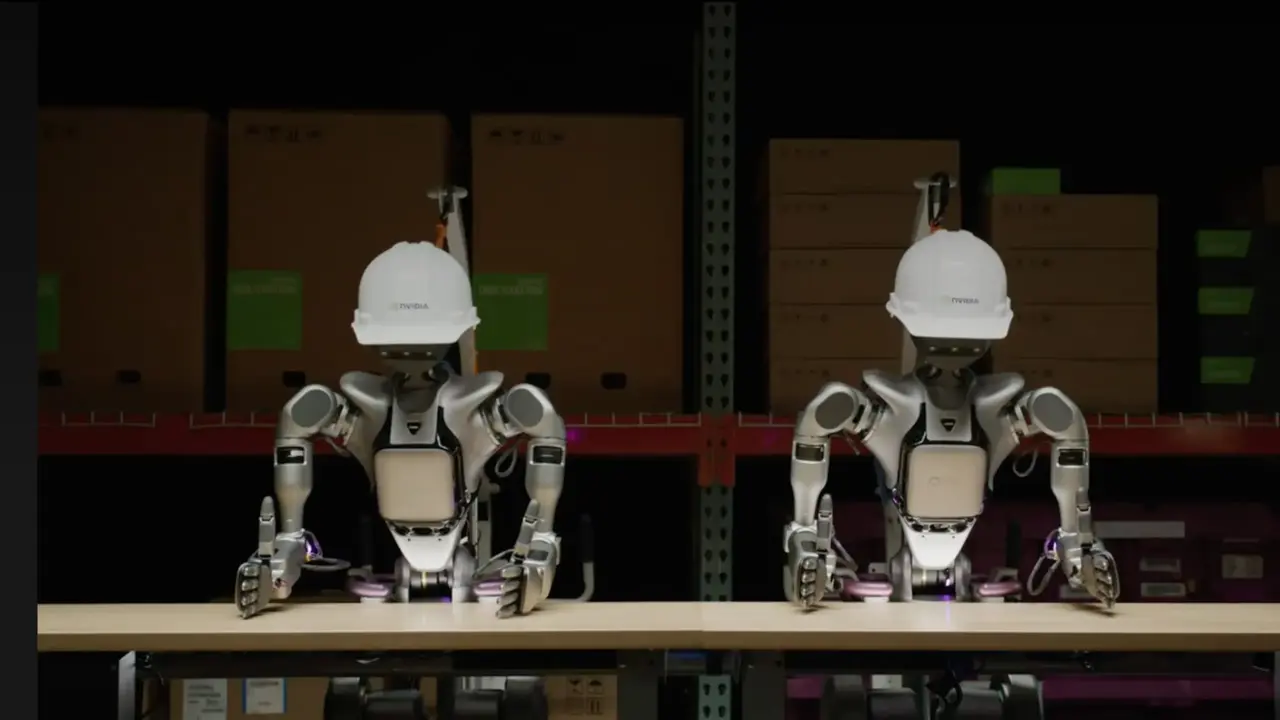
NVIDIA has officially unveiled its new Jetson Thor T3000 and T2000 solutions, marking a significant advancement in the development of the Physical AI ecosystem. Announced during a major industry event in Japan, these platforms are engineered to provide a robust, scalable infrastructure for humanoid robots, industrial automation, and edge artificial intelligence applications. By leveraging the advanced Blackwell GPU architecture, NVIDIA aims to deliver exceptional computational performance combined with superior energy efficiency. This strategic move is set to accelerate the global adoption of robotics, providing essential technological support to industry leaders such as Boston Dynamics and Amazon Robotics as they integrate sophisticated Physical AI capabilities into their systems.
- The Jetson Thor T3000 provides 865 TFLOPs of AI computing power for complex humanoid robotics.
- The T2000 model offers 400 TFLOPs of performance for entry-level edge AI applications.
- NVIDIA implements software optimizations that significantly reduce memory consumption for robotic modules.
- The company plans to commence mass shipments of both modules in the first quarter of 2027.
Jetson Thor T3000 Supports High Performance Requirements
Positioned as a highly optimized and compact iteration of the flagship T5000 series, the NVIDIA Jetson Thor T3000 is built to handle the most demanding computational tasks. Its integration with the Blackwell GPU architecture allows it to achieve 865 TFLOPs of FP4 computing capacity. Despite this immense power, the unit operates at a relatively low power draw of approximately 70 Watts. To accommodate large language models and multi-modal AI tasks, the hardware is equipped with 32 GB of LPDDR5X memory, ensuring rapid data throughput. 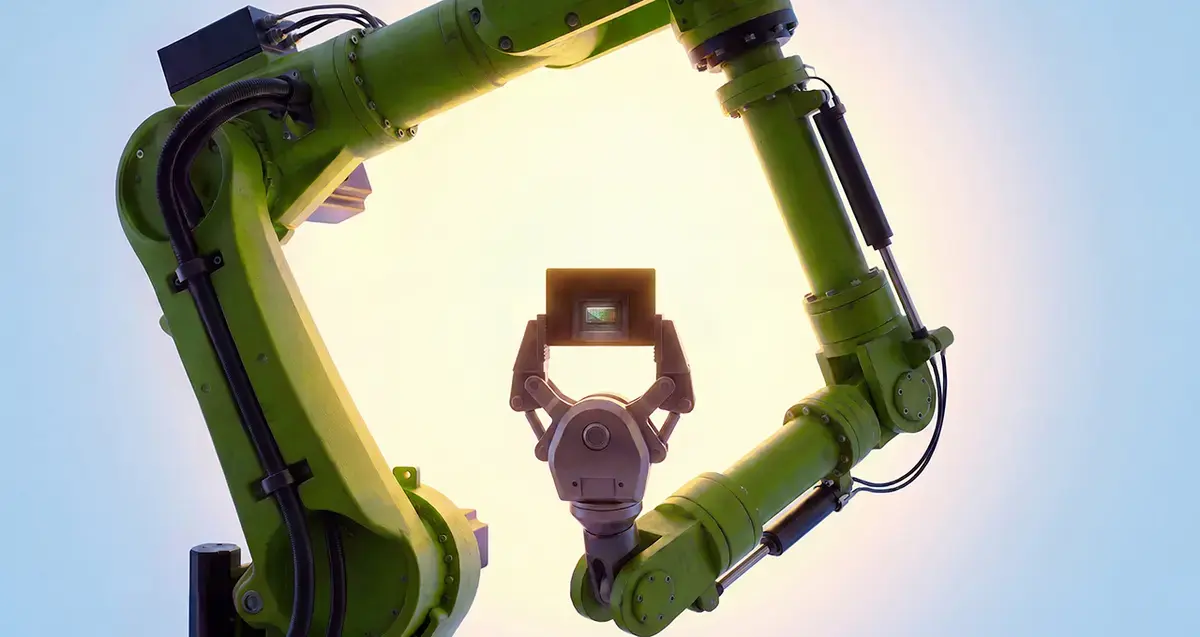
This new platform significantly enhances the capacity of robotic systems to perceive and understand complex physical environments.
Jetson Thor T2000 Increases Efficiency at the Edge
Designed specifically for autonomous mobile robots and lighter industrial workloads, the Jetson Thor T2000 delivers a competitive 400 TFLOPs of AI performance. This model features 16 GB of memory and maintains an impressive power efficiency profile, consuming only 40 Watts. This low energy usage is particularly critical for mobile robotics where battery longevity is a primary operational constraint. 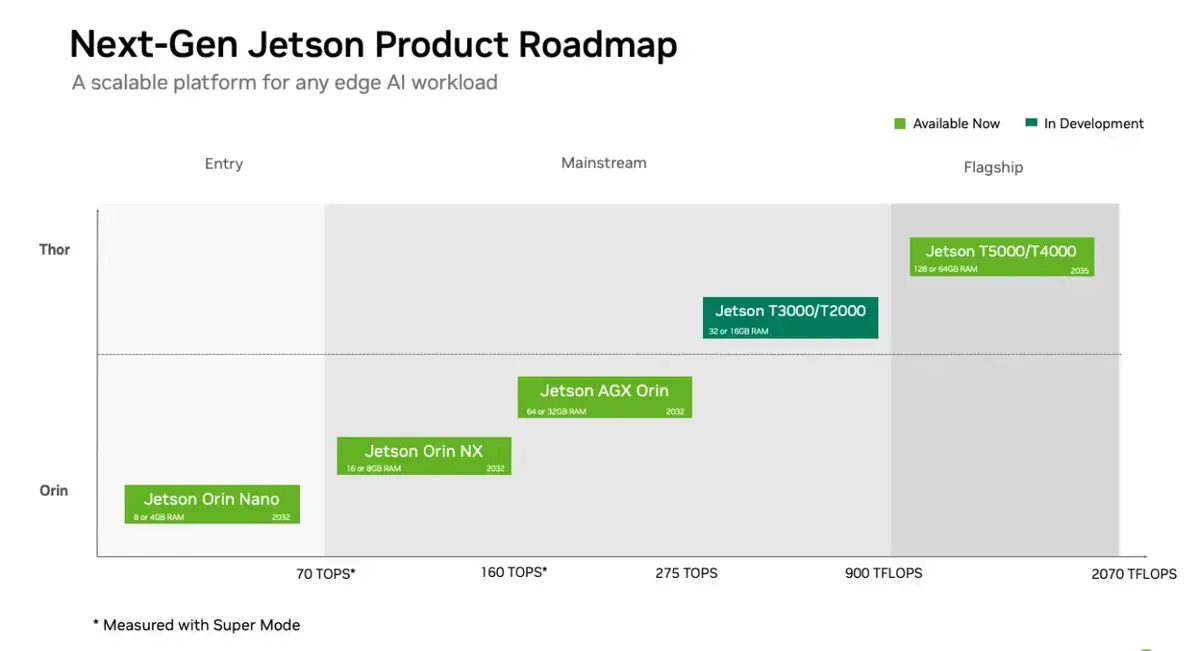
NVIDIA Software Optimizations Reduce Memory Utilization
Beyond hardware advancements, NVIDIA has focused on software-side improvements to enhance the utility of its Jetson product line. The introduction of new agent skills allows for comprehensive software stack optimization, which can lead to memory savings of up to 50 percent. These improvements allow businesses to achieve high-tier performance without the need for excessive hardware resources. 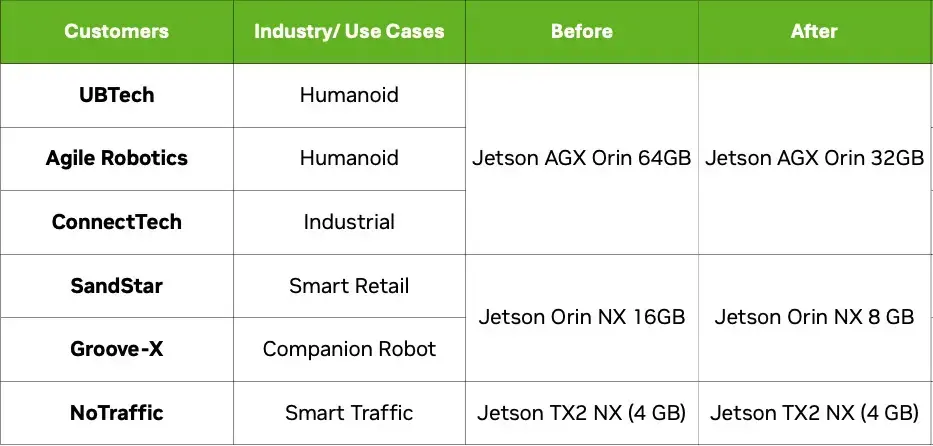
These software-driven optimizations allow organizations to achieve high-level performance while maintaining cost-effective hardware configurations.
Major companies such as UBTech and Agile Robots have already leveraged these optimizations to reduce memory usage by up to 15 GB. This shift enables developers to transition from high-end components to more accessible and cost-efficient hardware solutions without compromising functionality. While the Jetson Thor T3000 emulation mode is currently available to developers through the JetPack 7.2.1 release, the industry anticipates the full-scale arrival of these hardware modules by early 2027.
Do you believe that NVIDIA’s latest hardware release will trigger a fundamental transformation in the field of robotics? We invite you to share your thoughts and predictions regarding the future of Physical AI in the comments section below.
Your comment has been submitted,
it will be published after approval.