
Nvidia Launches New Era for Physical AI Simulation

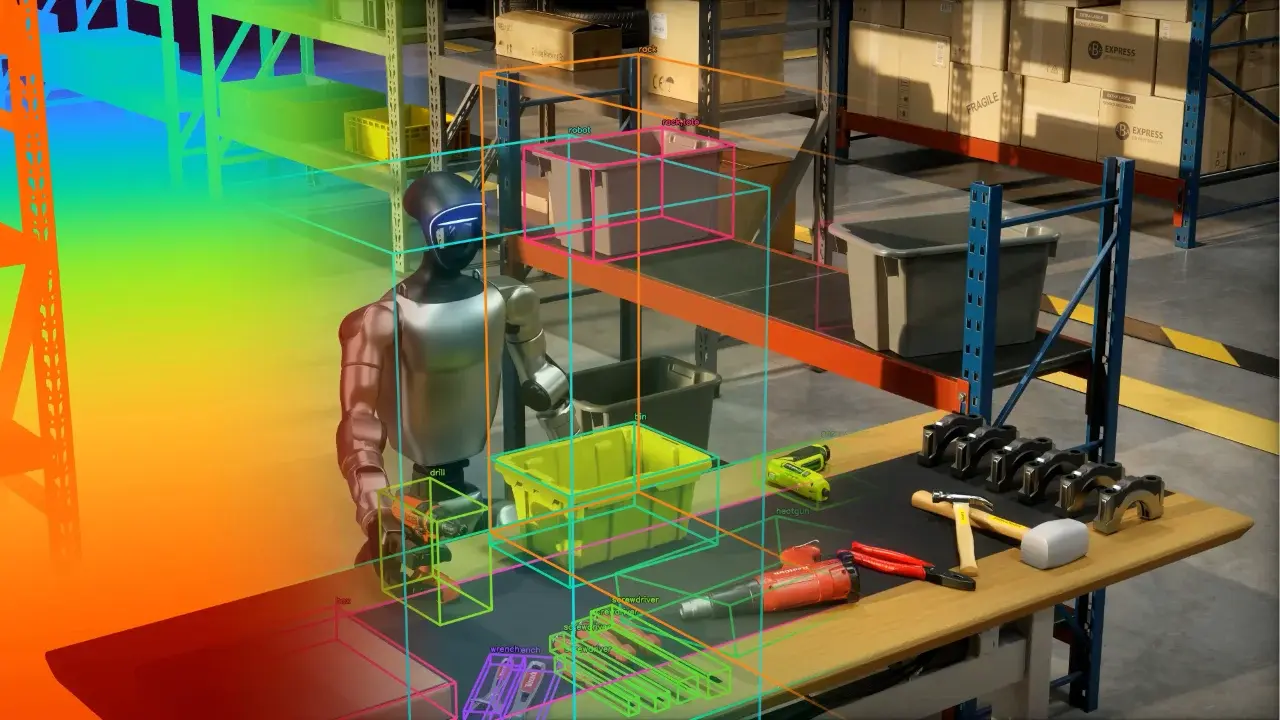
NVIDIA is officially ushering in the era of physical AI by updating its NVIDIA Agent Toolkit with advanced Omniverse libraries, as announced by the company this week. This significant expansion allows developers to integrate sophisticated 3D simulation and artificial intelligence capabilities directly into their existing software workflows. By providing tools that enable AI agents to build 3D worlds and prepare complex systems for simulation, NVIDIA is fundamentally changing how autonomous robots, smart factories, and self-driving vehicles are trained. These technologies ensure that intricate industrial systems can be rigorously tested and perfected within GPU-accelerated virtual environments before they are ever deployed into the real world.
- NVIDIA has expanded the Agent Toolkit with open-source Omniverse libraries including ovrtx and ovphysx to enhance AI simulation capabilities.
- Leading software developers like SideFX and PTC have integrated these new libraries into platforms such as Houdini and Onshape to streamline AI-driven design processes.
- The new toolkit supports high-performance execution across both local workstations and cloud-based hardware environments.
Simulation Environments Enable Physical AI Development
The transition toward autonomous systems requires that industrial automation tools function flawlessly upon deployment. NVIDIA CEO Jensen Huang has emphasized that the physical AI era will be established first within virtual simulation environments. Through the updated Agent Toolkit, AI agents gain the capability to inspect 3D scenes, identify potential mechanical failures, and prepare digital assets for realistic simulation. By utilizing open-source libraries available on GitHub, developers ensure that objects are modeled with precise physical attributes such as mass, friction, and material properties, allowing AI to automatically scan and optimize assets for high-fidelity testing.
Virtual simulation acts as the primary training ground for the next generation of autonomous robotic infrastructure.
Technical Components Support Advanced Simulation Layers
The updated software suite introduces specific components tailored for various simulation needs. The NVIDIA RTX Sensor Simulation (ovrtx) enables the generation of synthetic data from cameras, lidar, and radar, which is essential for training autonomous perception systems. Meanwhile, the GPU-accelerated physical engine (ovphysx) facilitates accurate interactions between objects by calculating collision, friction, and movement in real-time. Additionally, the CAD-to-SimReady functionality converts standard engineering designs into OpenUSD-based formats, effectively bridging the gap between static product design and dynamic AI simulation environments.
Industry Leaders Adopt Integrated Design Workflows
Major players in the 3D and CAD software markets are already incorporating these libraries to modernize their design pipelines. SideFX is leveraging the ovrtx and ovphysx tools to help technical artists create more complex simulation content within Houdini. Simultaneously, PTC Onshape has adopted these integrations to allow engineers to conduct AI-powered testing while products are still in the early design phase. Furthermore, emerging ventures such as Palatial and Moonlake AI are utilizing these AI agents to automate the production of SimReady assets, significantly reducing the time required for industrial modeling.
Cross-industry collaboration is accelerating the standardization of OpenUSD for physical AI applications.
Hardware Support Ensures Seamless Performance
NVIDIA is also advancing its support for the open-source 3D software Blender through a new integration guide. This initiative demonstrates how NeMo-based AI agents can function within standard graphic design applications. These workflows are designed for scalability, running efficiently on everything from local workstations to massive data centers. The ecosystem will see further expansion this autumn with the arrival of new NVIDIA RTX Spark systems from partners like ASUS, Dell, and HP, alongside the robust performance of DGX Station hardware featuring GB300 processors.
As the industry shifts toward virtual-first development for robotics and automation, how do you see the role of physical AI changing the future of manufacturing in your field? Share your insights and professional perspective in the comments below.
Your comment has been submitted,
it will be published after approval.