
AMD Unveils Kria AI Platform for Next-Gen Autonomous Robotics

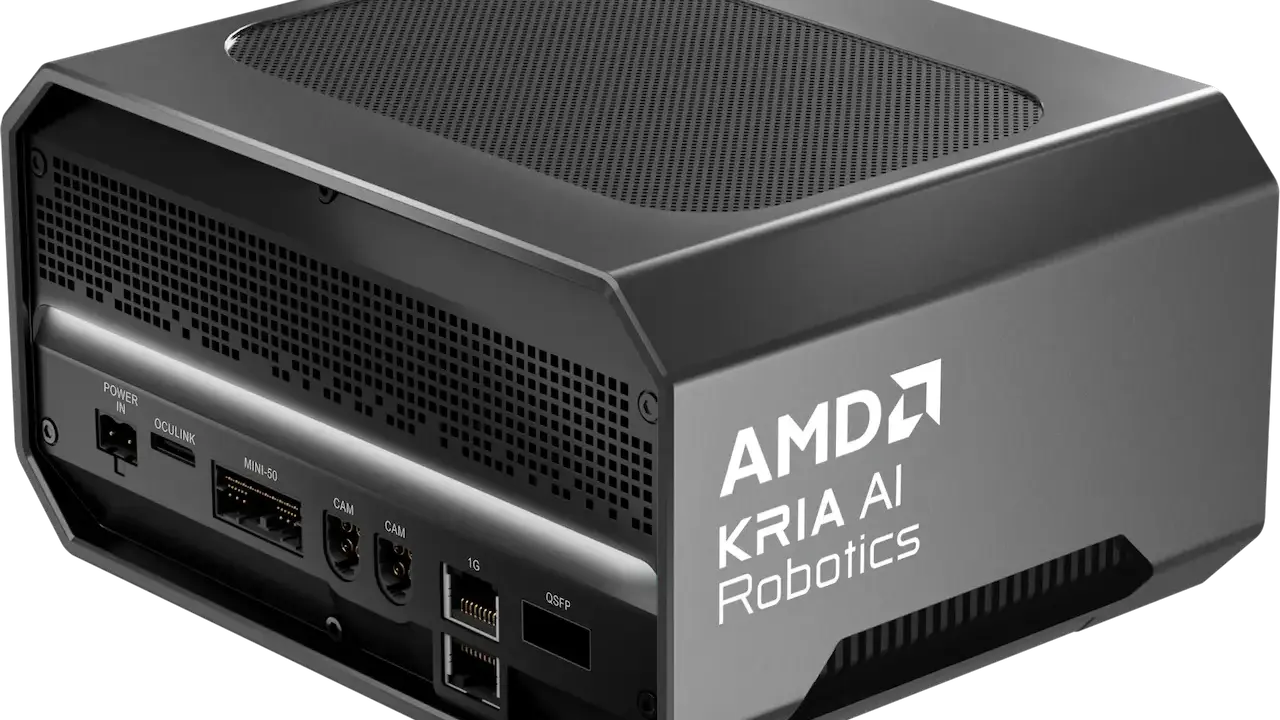
At the Advancing AI 2026 event, AMD officially introduced its new Kria AI platform, a comprehensive technological suite designed to fundamentally transform the future of physical artificial intelligence and autonomous robotics. Powered by the high-performance Ryzen AI Embedded X100 processor series, the system integrates CPU, GPU, NPU, and FPGA architectures to serve as both the muscular and cognitive brain of modern robots. This platform enables developers to execute complex decision-making processes and high-speed motor control within a single, unified environment, effectively bridging the gap between raw hardware capabilities and advanced software intelligence.
- The AMD Kria AI platform utilizes a heterogeneous architecture combining Ryzen AI Embedded X100 processors with open-source software support to enhance real-time robotic reliability.
- The system achieves over 8,000 control decisions per second and processes visual-language AI models in under 100 milliseconds.
- Benchmark tests indicate that the platform delivers up to 3.4 times higher real-time control reliability compared to competing solutions like the Nvidia Jetson T5000.
- General availability for the Kria AI System-on-Module and developer kits is scheduled for the fourth quarter of 2026.
Autonomous Robotics Systems are Entering a New Era
The industrial robotics sector is rapidly shifting from rigid, pre-programmed tasks to dynamic, autonomous systems capable of perceiving their environment and making split-second decisions. AMD’s new Kria AI solutions are designed to accelerate this transition. By leveraging years of expertise in surgical robotics and heavy industrial automation, AMD is placing its Kria AI System-on-Module (SOM) at the core of robotic perception and reasoning.
The integration of Zen 5 CPU cores and RDNA 3.5 graphics provides the necessary power to redefine robot-human interaction.
The Ryzen AI Embedded X100 series excels in power and thermal efficiency, which is vital for mobile autonomous units. This architecture allows robots to perform sensing, reasoning, and physical execution processes within milliseconds. 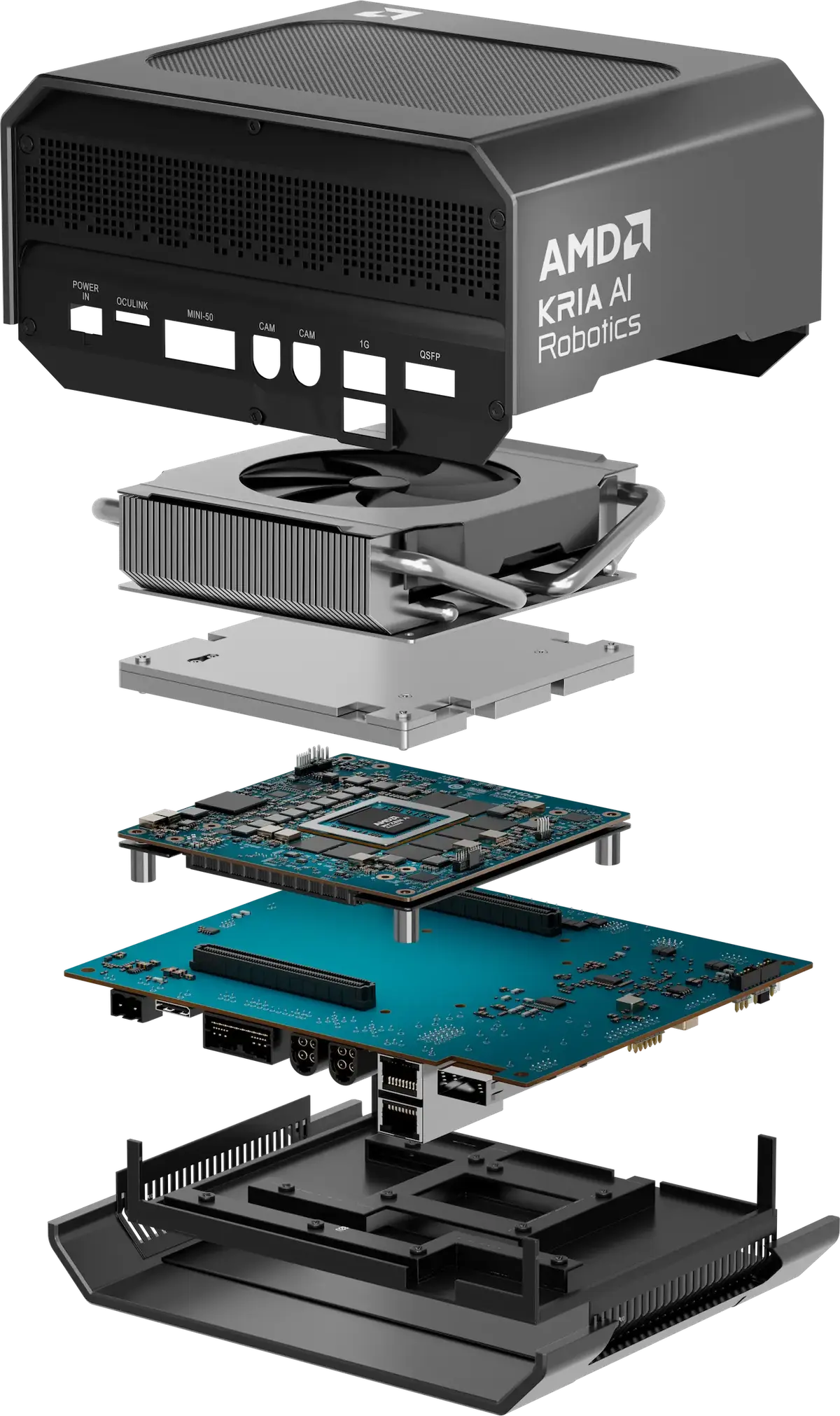
Heterogeneous Architectures Enable Seamless Real-Time Control
Low latency and rapid response are the most critical factors in modern robotics. The Kria AI SOM utilizes a unified memory architecture that minimizes the need for data transfer between different processing units. This streamlined design ensures that the system maintains high performance during heavy computational loads.
Compared to market alternatives, the platform showcases significant performance headroom. According to internal OpenNav benchmarks, the system maintains 2.3 times the capacity for running concurrent autonomous agents, ensuring that complex tasks do not compromise the stability of the robot’s core operations.
Open Software Ecosystems Facilitate Easy Transitions
AMD emphasizes developer flexibility by supporting industry-standard frameworks such as PyTorch, ONNX, ROS 2, and MoveIt. By utilizing the AMD ROCm software stack and the Robotics Software Suite, the company aims to lower the barrier to entry for engineers transitioning from legacy systems.
Existing codebases are largely preserved, as developers can migrate CUDA-based software to the ROCm environment with approximately 75 percent code retention.
This architectural openness significantly reduces the time required for companies to move from the conceptual prototyping phase to full-scale series production. AMD plans to work closely with system manufacturers and original design manufacturers (ODMs) to bring these solutions to the global market by late 2026.
How do you think the integration of advanced AI brains into autonomous robotic bodies will change the landscape of the manufacturing industry in the coming years? Share your thoughts in the comments section below.
Your comment has been submitted,
it will be published after approval.