
AMD Unveils Helios Rackscale to Redefine AI Infrastructure Power

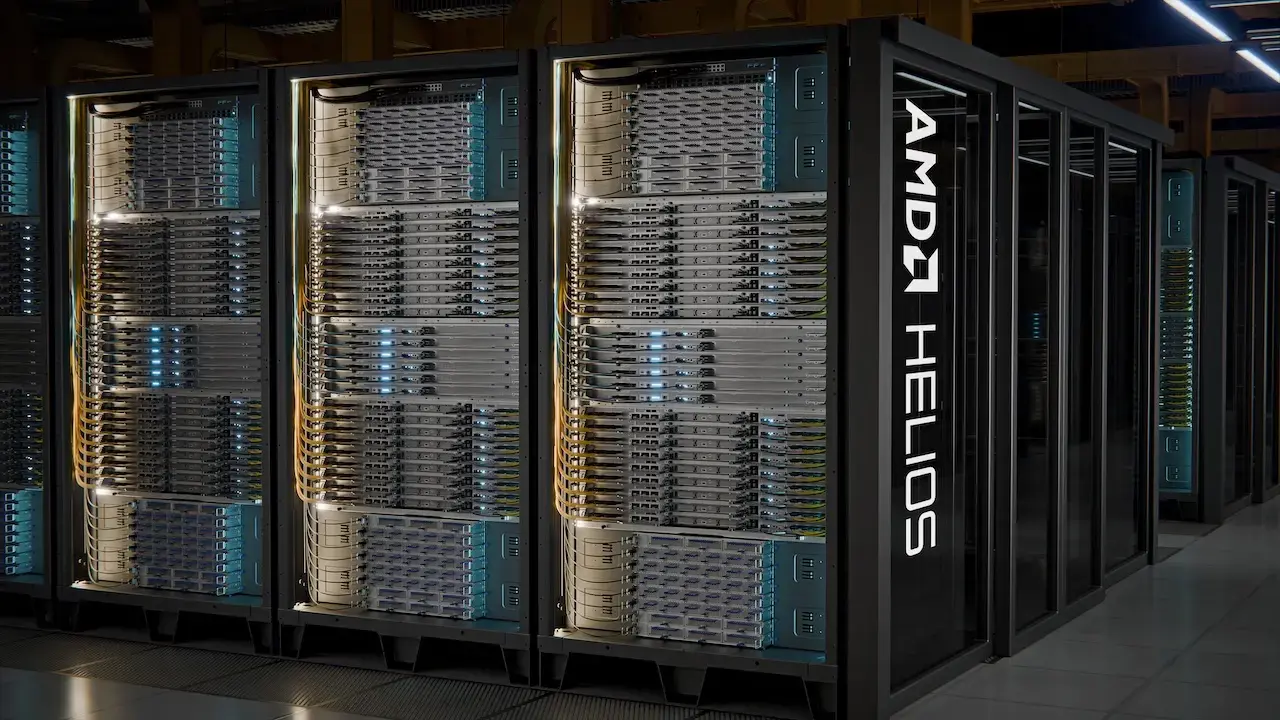
At the Advancing AI 2026 event, hardware giant AMD officially announced the launch of AMD Helios, a cutting-edge rackscale solution designed to meet the skyrocketing processing demands of modern artificial intelligence. As frontier AI models grow in complexity, AMD Helios provides an integrated, high-performance architecture capable of handling large-scale inference and foundation model training. By consolidating next-generation Instinct MI455X GPUs, 6th Gen EPYC server processors, Pensando networking technologies, and open-source ROCm software into a single, cohesive rack unit, AMD aims to establish a new industry standard for efficiency and computational throughput in data centers worldwide.
- The AMD Helios rackscale system integrates 72 Instinct MI455X GPUs with 6th Gen EPYC CPUs and Pensando networking hardware.
- Each Helios rack delivers a peak performance of 2.9 exaflops of FP4 processing power.
- The architecture utilizes open standards like UALink and Ultra Ethernet to prevent vendor lock-in.
- Helios provides up to 30 percent higher token generation efficiency per dollar compared to competing solutions.
Integrated Architectures Empower Modern AI Factories
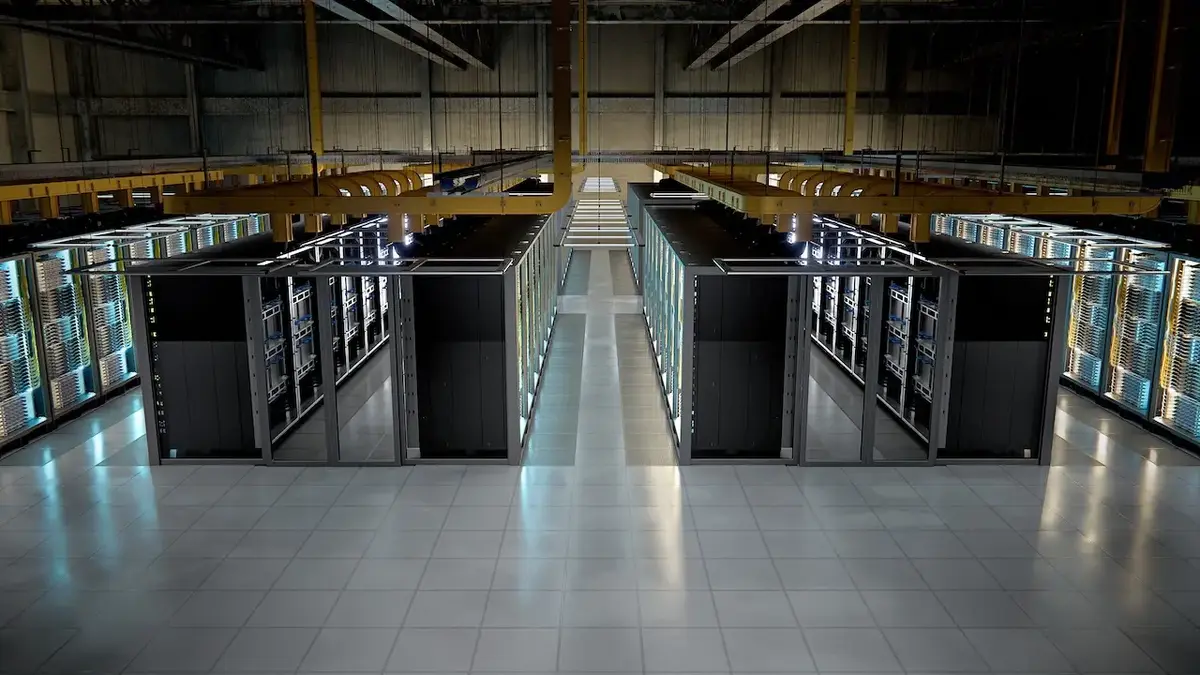
Traditional server configurations are increasingly struggling to manage the immense computational loads required by AI models that contain trillions of parameters. AMD Helios addresses this bottleneck by moving beyond standalone servers toward fully optimized, rack-scale systems. This approach allows organizations to scale their operations from a single cabinet to massive clusters reaching gigawatt capacity without sacrificing performance or energy efficiency.
The system architecture eliminates data bottlenecks by housing 18 specialized 4-GPU trays that ensure seamless communication across all 72 onboard GPUs.
Technical Specifications Push Performance Boundaries
AMD has engineered Helios to set new benchmarks in both processing capacity and memory bandwidth. According to official technical specifications, a single Helios cabinet achieves 2.9 exaflops of peak FP4 performance and 1.4 exaflops of FP8 performance. Furthermore, the system is equipped with 31 terabytes of HBM4 memory, providing a massive 1.7 petabytes per second of memory bandwidth to support rapid data processing.
When measured against industry competitors such as the NVIDIA Vera Rubin NVL72, the AMD Helios platform demonstrates significant advantages. It offers 15 percent higher peak FP4 performance and 50 percent more HBM capacity, alongside a 50 percent increase in scale-out bandwidth. These specifications are critical for large-scale training tasks where communication latency between nodes often restricts total system output.
Open Standards Reduce Operational Costs
Efficiency in modern AI infrastructure is increasingly measured by the performance produced per dollar spent. AMD Helios optimizes this metric by delivering up to 30 percent more token generation compared to rival systems, effectively lowering the long-term operational costs for data center providers. By choosing an open-source trajectory, AMD ensures that companies are not trapped within proprietary, closed-loop ecosystems.
The reliance on open standards like Ultra Ethernet and the UALink over Ethernet initiative provides developers with unprecedented flexibility.
By integrating AMD Pensando Vulcano 800 AI network cards, the platform guarantees compatibility with a wide range of hardware, allowing businesses to build secure and scalable AI environments. This strategic move highlights AMD’s commitment to transparency and modularity in an industry often defined by rigid hardware constraints.
Given the massive leap in performance and energy efficiency promised by the new AMD Helios architecture, how do you think this will shift the competitive landscape of the AI hardware market in the coming years? Share your thoughts in the comments section below.
Your comment has been submitted,
it will be published after approval.