
France Blocks Tesla FSD Amid Safety Concerns Across Europe


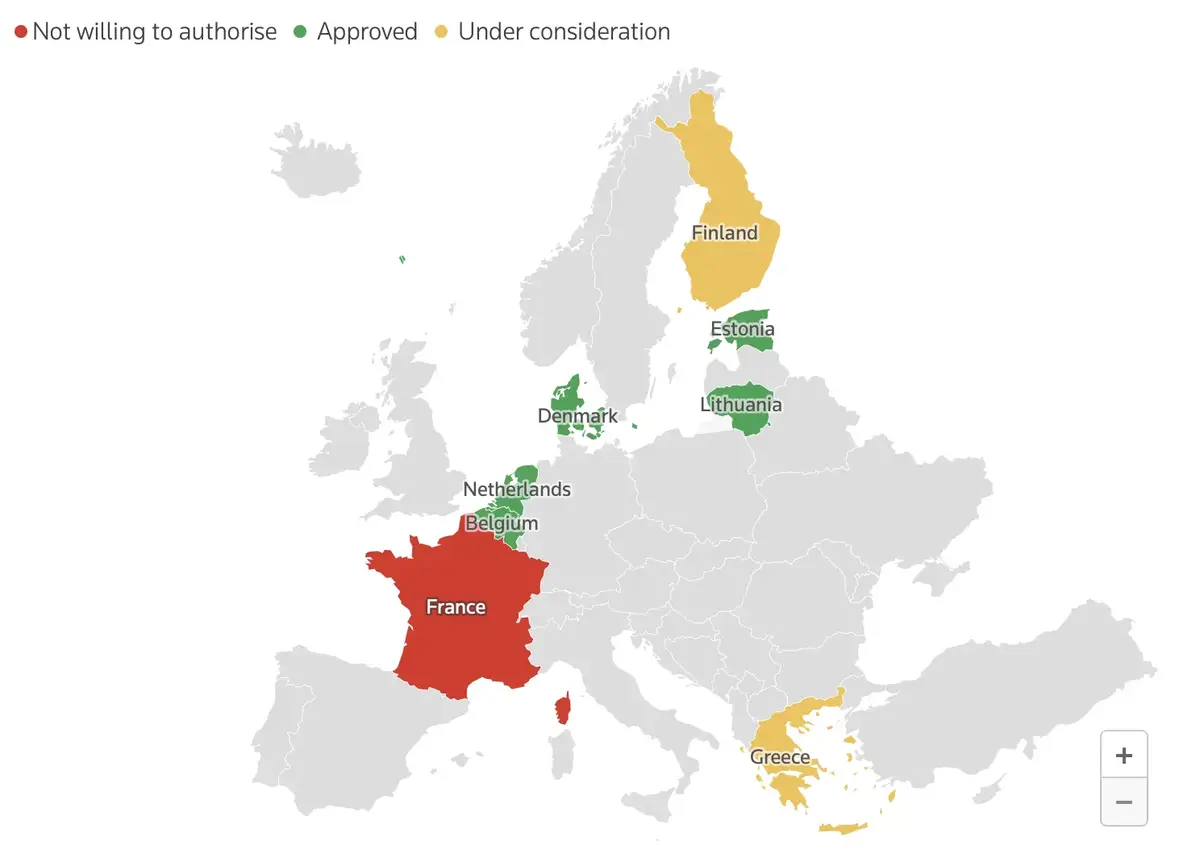
Tesla’s ambitious Full Self-Driving (FSD) system has encountered a significant regulatory hurdle in Europe as France officially refuses to approve the technology in its current form. While countries like the Netherlands, Denmark, and Estonia have previously granted preliminary approvals based on technical reviews, the French Transport Ministry has rejected the software, citing critical safety shortcomings. This decision by one of the European Union’s largest automotive markets deals a major blow to Tesla’s goal of achieving a unified, continent-wide deployment of its autonomous driving suite. The ongoing dispute highlights a growing fragmentation in how European nations evaluate advanced driver-assistance systems.
- The French government rejected Tesla’s FSD software due to documented concerns regarding speed limit adherence and driver attentiveness.
- Regional regulatory approval remains inconsistent as some EU nations accept the system while others demand stricter, unified safety protocols.
- Turkey’s adoption of autonomous driving technology relies on EU and UNECE standards, meaning the European deadlock directly delays local implementation.
The refusal from France effectively stalls the momentum for a standardized European rollout of Tesla’s autonomous features.

French Authorities Demand Stricter Safety Standards
Officials in France have explicitly stated that the current iteration of Tesla’s software fails to guarantee public safety. During rigorous testing, the system demonstrated an ability to exceed local speed limits, effectively ignoring traffic regulations. Furthermore, investigators observed that the software struggles to maintain optimal driver engagement in dense urban environments, particularly when navigating complex roundabouts and performing high-frequency lane changes.
France is now calling for a comprehensive, binding safety protocol to be established at the United Nations (UNECE) and European Union levels. By rejecting the precedent set by the Netherlands, France aims to prevent a patchwork of national approvals, insisting instead on a high-standard, uniform certification process that addresses these technical deficiencies before the software can be legally deployed on public roads.
Regulatory Fragmentation Impacts European Markets
The current landscape of FSD approval in Europe is defined by a lack of cohesion. While the Netherlands has moved forward by issuing temporary permits, and Baltic nations have aligned with these findings, major players like Germany remain in a holding pattern. German regulators are waiting for updated UNECE regulations, mirroring the cautious approach now championed by Paris. This divide creates a complex environment for manufacturers seeking to scale autonomous technologies across borders.
Turkish Regulatory Timelines Face Further Delays
The impact of this European impasse extends directly to Turkey, which aligns its automotive type-approval legislation with EU and UNECE standards. Because Turkish authorities, including the Ministry of Industry and Technology, rely on these international benchmarks, the lack of a standardized European approval for FSD means that a legal framework for the technology in Turkey will remain elusive in the near term.
Furthermore, the specific concerns raised by French officials regarding urban traffic complexity resonate deeply within the Turkish context. Navigation through chaotic intersections and managing unpredictable driver behavior in major Turkish cities pose significant challenges that the current software may not be prepared to handle. Consequently, the dream of utilizing full autonomy on Turkish roads appears to be drifting further into the future, leaving many owners who purchased the FSD package waiting for a regulatory breakthrough that has yet to materialize.
Given the ongoing safety debates in Europe, do you believe that autonomous systems like FSD can ever truly master the unpredictable nature of urban traffic in your city? Share your thoughts and experiences in the comments section below.
Your comment has been submitted,
it will be published after approval.