
Regulatory Pressures on App Store Impact Apple’s Financial Growth

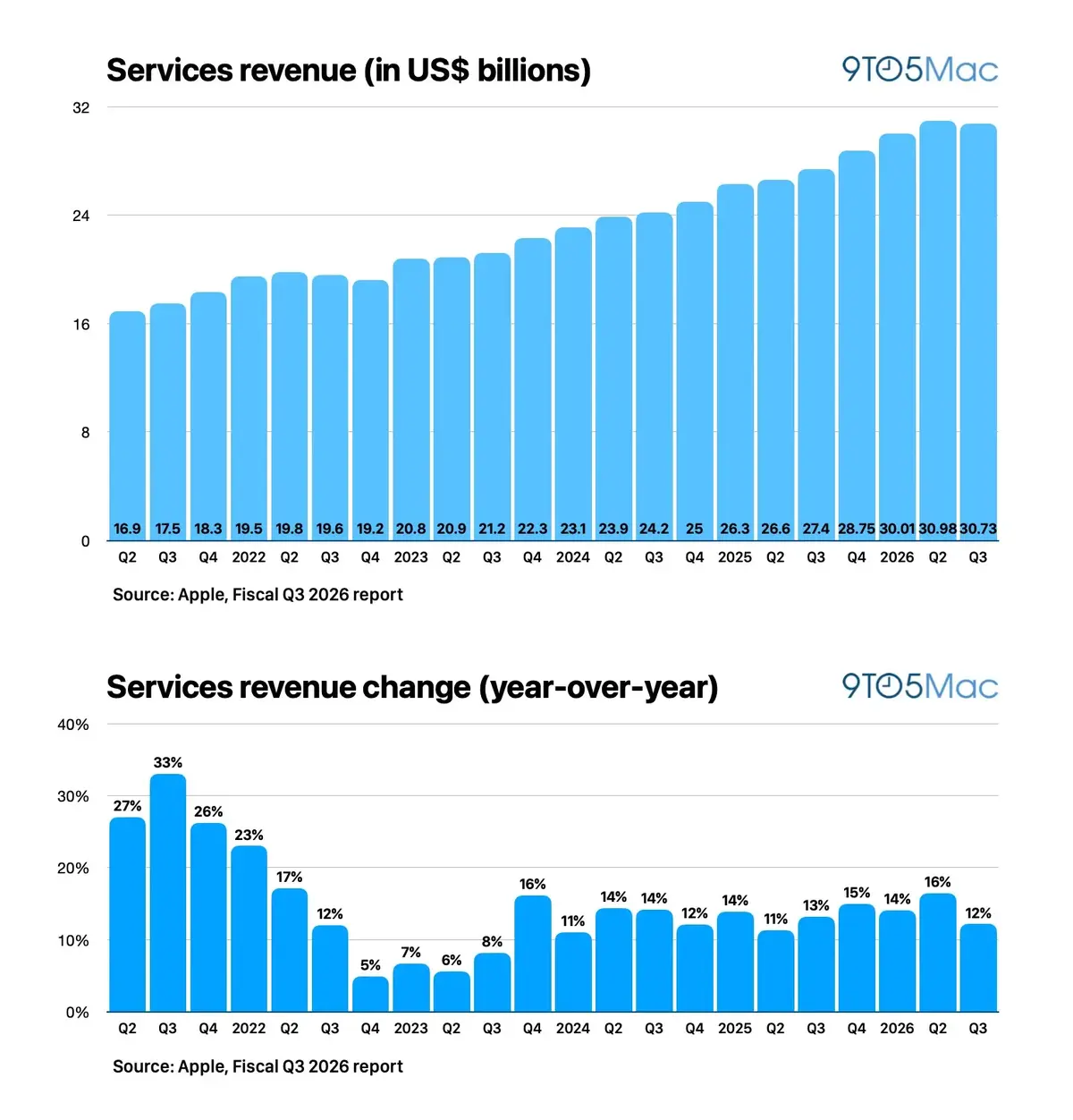
During its latest quarterly earnings call, Apple officially addressed how ongoing legal regulations concerning its App Store business model are beginning to affect the company’s financial trajectory. Apple CFO Kevan Parekh confirmed that legislative shifts in the United States and global markets have started to influence service revenue growth. Although the company achieved a record-breaking $30.7 billion in services revenue for the third quarter of the 2026 fiscal year—a 12% year-over-year increase—it also marked the first sequential quarterly decline since 2022, highlighting the mounting pressure from regulators and shifting market dynamics across key international territories.
- Apple reported a record $30.7 billion in quarterly services revenue despite a sequential decline in growth.
- New international regulations and legal challenges in the U.S. are directly impacting the App Store’s revenue model.
- The absence of high-performing film revenue compared to the previous year contributed to slower growth figures.
- Apple continues to navigate court-mandated adjustments regarding external payment links and commission structures.
Regulatory Changes Slow Down App Store Performance
The deceleration in the services sector is largely attributed to the evolving performance of the App Store. Kevan Parekh identified multiple factors contributing to this trend, specifically citing the current saturation and challenges within the mobile gaming industry. Furthermore, the mandatory implementation of new business models in regions such as the European Union, Japan, and Brazil has forced Apple to permit alternative distribution channels and third-party payment options, which fundamentally alters their historical revenue capture.
Legislative mandates in the European Union and beyond are forcing a structural evolution of Apple’s long-standing mobile ecosystem.
In the United States, the legal battle involving Epic Games continues to create uncertainty. The Supreme Court has agreed to hear Apple’s appeal regarding the requirement to allow external payment links for applications. Currently, the company operates under existing court mandates that govern how it handles commissions from non-in-app purchase transactions, keeping the long-term profitability of these channels in a state of legal flux.
Film Revenue Fluctuations Affect Overall Financial Results
While App Store regulations serve as a primary concern, they are not the sole driver of the observed slowdown. Financial comparisons have been complicated by the release calendar of Apple’s original content. Last year, the theatrical release of the F1 film generated significant revenue, providing a difficult benchmark for this year’s performance. Parekh noted that the lack of a similar blockbuster production in the current period contributed to the performance gap, as the F1 project had positively skewed results in both the June and September quarters of the previous year.
The absence of comparable blockbuster film revenue significantly distorted the year-over-year growth metrics for the services division.
Apple estimates that the App Store accounts for roughly one-third of its total services revenue, with the gaming segment serving as the primary contributor. Despite the legal headwinds, the company remains resilient, noting that the App Store still reached a record-high revenue level during the June quarter. As the company navigates these complex legal waters, the core challenge remains balancing regulatory compliance with the protection of its integrated digital ecosystem.
How do you believe these regulatory changes will reshape the future of digital marketplaces, and what long-term impact will they have on Apple’s developer ecosystem? Share your thoughts in the comments section below.
Your comment has been submitted,
it will be published after approval.