
Spotify Introduces AI Persona Labels to Boost Platform Transparency


Spotify officially announced a significant shift in its content moderation strategy this week by introducing new labeling systems designed to identify AI-generated music accounts. As the platform grapples with the surge of synthetic media, it will now apply specific “AI Persona” tags to profiles that rely exclusively on artificial intelligence for content creation. This initiative, implemented globally, aims to distinguish human artists from automated entities, ensuring that listeners can identify the origin of the music they stream. By removing these AI-driven accounts from personalized recommendation algorithms, Spotify seeks to protect the visibility of authentic musicians while maintaining the overall integrity of its massive audio ecosystem.
- Spotify will apply “AI Persona” labels to accounts identified as producing music primarily through artificial intelligence.
- The platform will exclude AI-generated profiles from its personalized recommendation engine to prioritize human-created music.
- A new “Likely AI Persona” badge will serve as a temporary classification during the ongoing verification process.
- Verified artist badges will be granted to creators who demonstrate consistent listener activity and engagement.
Spotify Develops New Audit Processes for Artificial Intelligence
To enforce these new standards, the platform is deploying sophisticated internal tools that analyze artist profiles, including usernames and visual assets. These systems utilize a combination of automated AI-based detection and manual review by human moderators to ensure accuracy. 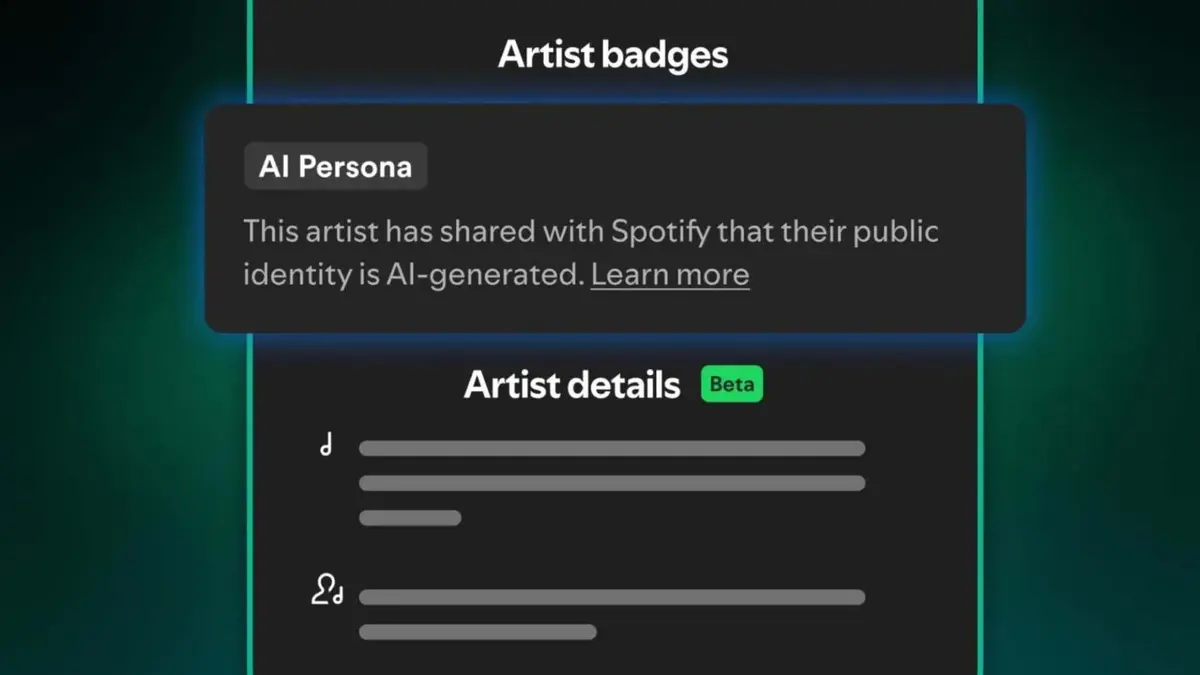
When the platform detects uncertainty regarding the nature of an account, it will employ a transitional classification. Specifically, profiles suspected of being synthetic will be marked with a “Likely AI Persona” badge until a definitive determination is reached. This layered approach ensures that the platform remains transparent while avoiding false positives that could unfairly penalize legitimate emerging artists.
The new verification measures demonstrate a firm commitment to maintaining high-quality standards in the digital music industry.
Verified Artist Badges Increase User Trust
The initiative extends beyond merely labeling AI content; it also strengthens the prominence of authentic creators through a new verified artist badge system. Unlike previous verification models, this badge will not be issued automatically to every user. It is specifically reserved for artists who maintain consistent, organic listener activity and show healthy engagement levels within the community.
The company projects that once the system is fully operational, more than 99 percent of the artists actively searched for by users will carry this verified status. By separating genuine creative work from automated output, the company intends to foster a more reliable environment for both listeners and musicians. This strategy serves as a direct response to the growing demand for transparency in an era where synthetic content is becoming increasingly difficult to distinguish from professional human artistry.
The integration of these tools marks a pivotal moment for streaming platforms as they navigate the complexities of generative technology. As these policies take effect, the industry will likely observe a shift in how synthetic music is consumed and how human artists are discovered on the platform.
How do you feel about these new AI-driven transparency measures, and do you think they will successfully preserve the value of human artistry in the music industry? Share your perspective in the comments section below.
Your comment has been submitted,
it will be published after approval.