
Google Unveils Tensor G6 Chip for Pixel 11 Series

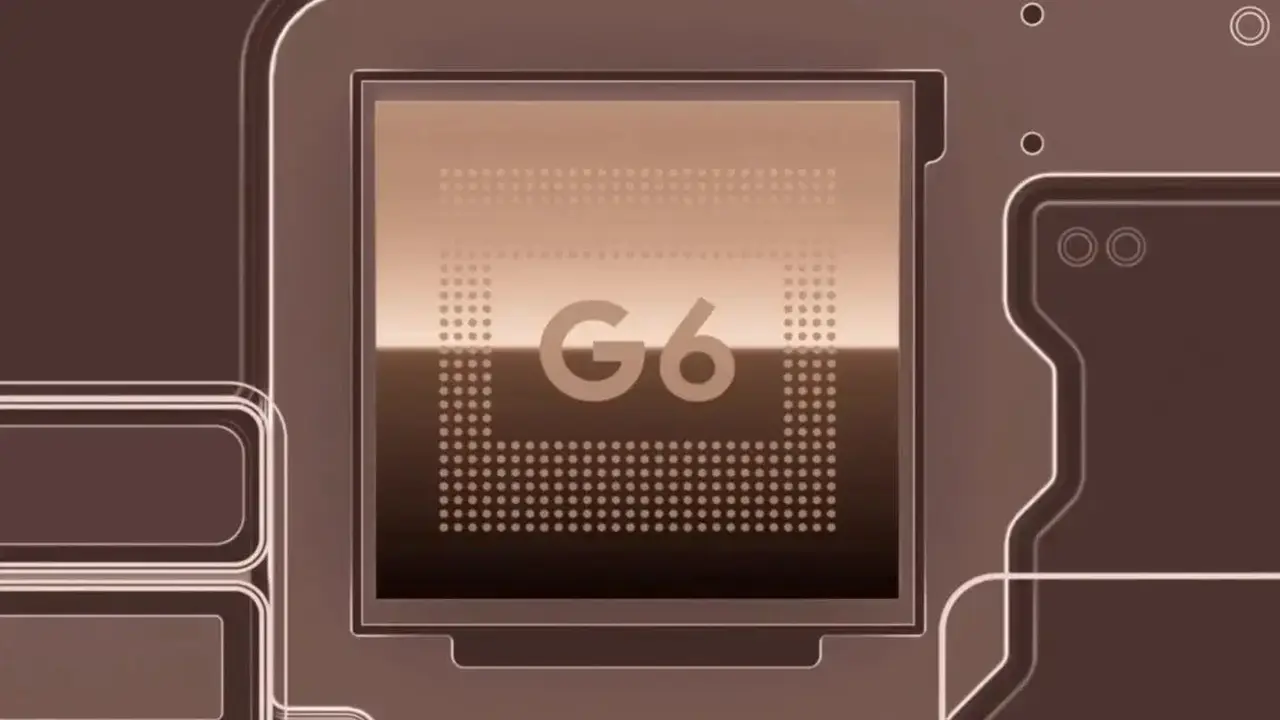
Google has officially introduced the Tensor G6, its latest mobile processor designed to power the new Pixel 11 smartphone lineup. As the most advanced chip in the company’s proprietary silicon history, the Tensor G6 focuses on delivering a significant leap in artificial intelligence performance and overall processing speed. By integrating a revamped CPU, an enhanced TPU, and the latest Gemini Nano model, the processor aims to optimize on-device task execution. This hardware evolution marks a strategic shift for Google, emphasizing higher computational capacity alongside improved energy efficiency for its flagship mobile devices.
- The Tensor G6 processor achieves up to 25 percent higher performance in web browsing compared to the previous generation.
- The on-device TPU capacity has increased by 50 percent, enabling AI tasks to run 3.5 times faster.
- Google has integrated the Titan M3 security chip to support post-quantum cryptography for advanced device protection.
The Tensor G6 represents a fundamental shift toward more efficient on-device intelligence.
Tensor G6 Delivers Faster Processing Speeds
Performance benchmarks provided by Google indicate that the Tensor G6 is a substantial upgrade over the Tensor G5. Beyond the notable 25 percent speed boost during web navigation, users can expect application launch times to decrease by approximately 15 percent. These optimizations are largely attributed to the updated architecture that prioritizes responsive multitasking and smooth system navigation.
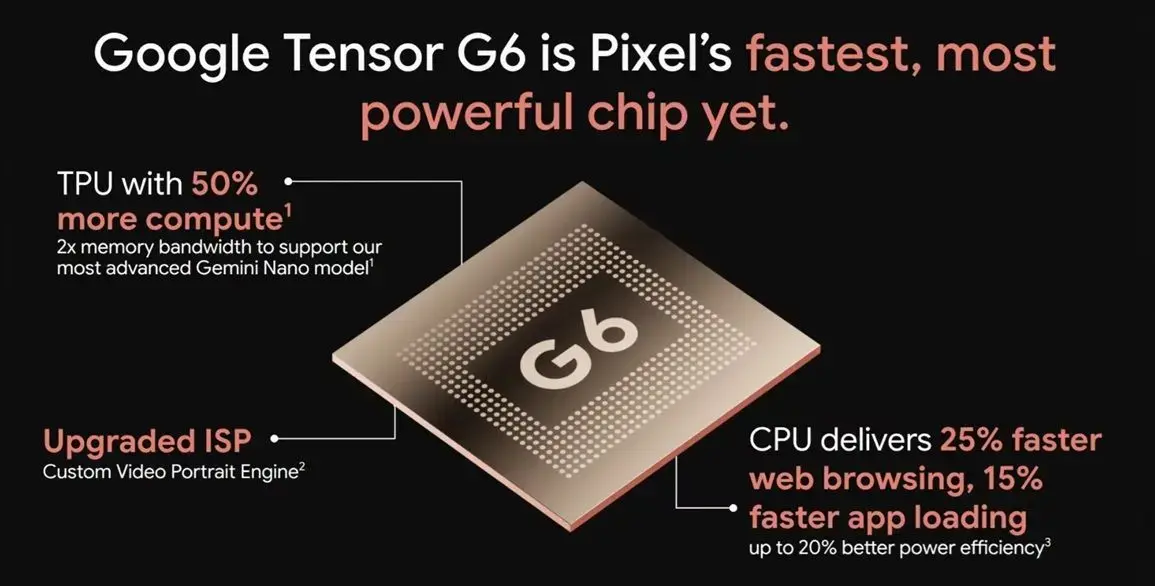
The most impressive gains are evident within the Tensor Processing Unit (TPU). With a 50 percent increase in total calculation capacity, the chip handles complex AI workloads with ease. When paired with the specialized Gemini Nano model, the device can execute artificial intelligence functions 3.5 times faster than its predecessor, all while reducing power consumption by a similar margin. This balance of speed and efficiency ensures that extended AI usage does not compromise battery longevity.
Computational Photography Receives New Enhancements
The influence of the Tensor G6 extends well into the camera systems of the Pixel 11 series. The improved image signal processor (ISP) enables sophisticated features such as 30x Super Zoom on standard models and an impressive 120x Pro Zoom on the Pixel 11 Pro and Pro XL variants. 
These capabilities rely on advanced image processing models that utilize the chip’s raw power to reconstruct detail at extreme distances. Additionally, the integration of new sensors and software algorithms allows the Night Sight feature to capture images 4.5 times faster than previous generations, significantly improving photography in low-light environments. The processor also powers the high-end Pixel 11 Pro Fold, ensuring consistent performance across the company’s foldable flagship lineup.
Titan M3 Chip Ensures Future-Proof Security
Google has bolstered the hardware security of its devices by pairing the Tensor G6 with the new Titan M3 security chip. This combination creates a robust foundation for hardware-based protection. A notable addition is the implementation of post-quantum cryptography, which prepares the device to defend against potential threats posed by future quantum computing capabilities. By addressing these long-term security risks today, Google establishes a new standard for mobile data protection.
We are curious to hear your thoughts on these performance upgrades; does the integration of advanced on-device AI influence your decision when choosing a new smartphone? Please share your insights and opinions in the comments section below.
Your comment has been submitted,
it will be published after approval.