
Kioxia Unveils GP1 SSD Delivering 10 Million IOPS for AI

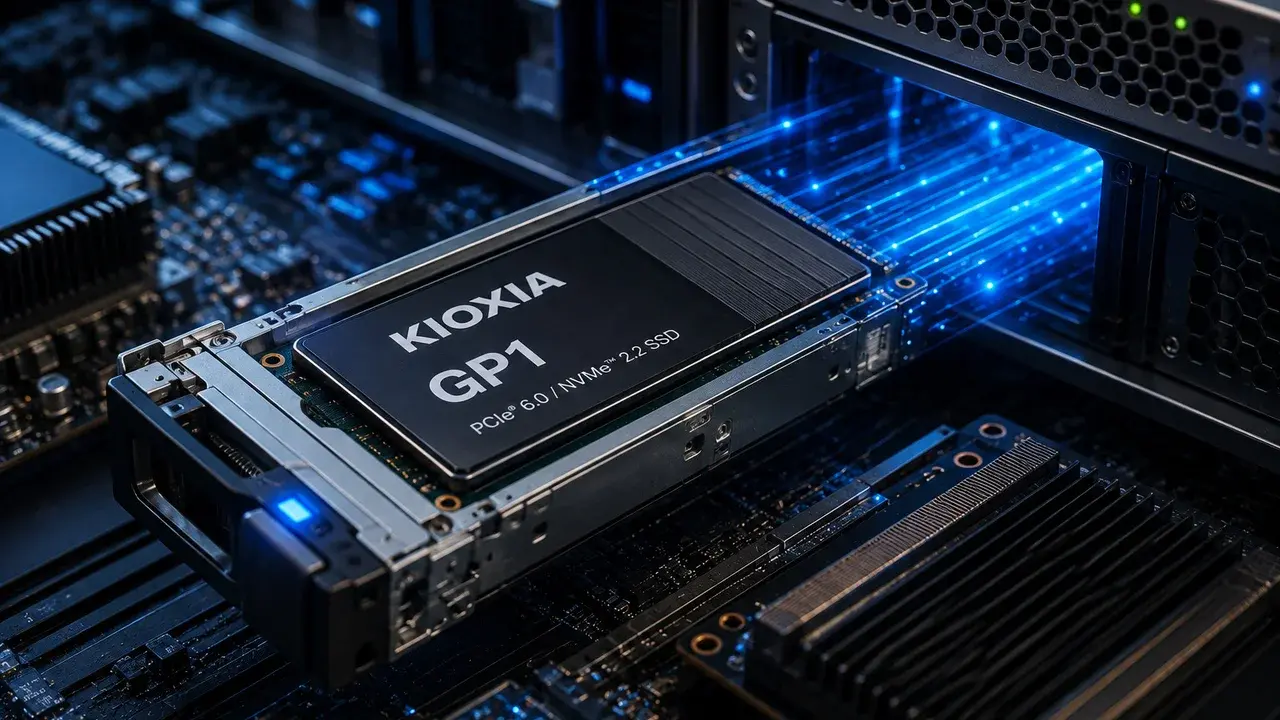
KIOXIA Europe GmbH has officially announced the launch of its new GP1 Series NVMe SSD, a cutting-edge storage solution specifically engineered to provide direct GPU access for high-performance artificial intelligence infrastructures. Introduced as the inaugural member of the KIOXIA GP Series, this drive utilizes the advanced PCIe 6.0 interface to meet the rigorous demands of modern AI workloads. By leveraging the company’s proprietary controller and second-generation XL-FLASH technology integrated with SLC NAND memory, the GP1 series achieves a remarkable 10 million random read IOPS at a 512-byte block size, setting a new benchmark for data processing efficiency in compute-intensive environments.
- The GP1 Series leverages PCIe 6.0 technology to achieve 10 million random read IOPS.
- KIOXIA designed the drive to serve as a high-bandwidth flash layer for AI systems.
- The hardware supports a durability rating of 50 drive writes per day (DWPD).
- Future iterations of the architecture aim to scale performance toward 100 million IOPS.
The Architecture Delivers High Performance and Durability
The technical specifications of the GP1 Series reflect a shift toward hardware capable of sustaining extreme data throughput. Built on the NVMe 2.2 standard, the drive is designed to eliminate storage bottlenecks that typically plague large-scale AI training and inference processes. By acting as a high-bandwidth flash expansion layer, the GP1 enables systems to access expansive datasets more efficiently while simultaneously maximizing GPU utilization rates.
Durability remains a core feature of this enterprise-grade hardware. With a rating of 50 drive writes per day (DWPD), a 3TB model offers an impressive total write endurance of approximately 109.5 petabytes over its two-year warranty period. This robustness ensures that the storage unit maintains consistent performance under the continuous, intensive write operations characteristic of modern machine learning tasks.
The integration of high-IOPS storage directly into the AI pipeline significantly reduces the time required for data to transit from storage to processing units.
Physical Design Options Support Diverse Deployments
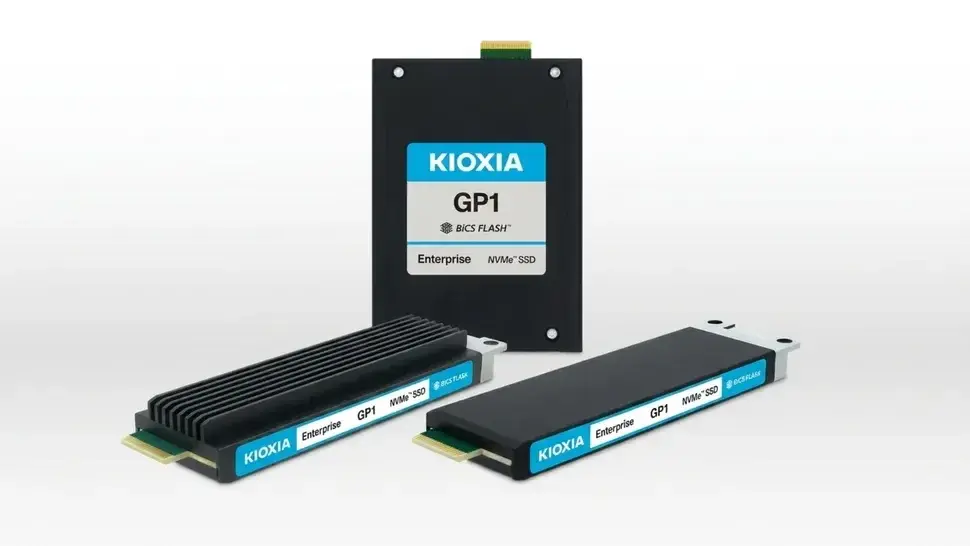
KIOXIA plans to release the GP1 series in both E3.S and E1.S form factors, featuring height options of 9.5 mm and 15 mm. Flexibility in cooling is prioritized, as both the E3.S and the 9.5 mm E1.S models are engineered to support liquid cooling systems, while all configurations maintain full compatibility with standard air-cooled enterprise server environments.
The company has scheduled the distribution of evaluation samples to select enterprise partners through the end of 2026. A comprehensive public demonstration of the product’s capabilities is slated for the upcoming FMS conference in California. These milestones reflect the company’s commitment to aligning its storage roadmap with the performance requirements requested by major AI infrastructure providers, such as Nvidia.
Long-term Goals Aim for Scalable Growth
Looking toward the future, the architectural foundation of the GP1 series is designed to be highly scalable, with theoretical potential to reach 100 million IOPS in future product generations. Achieving these ambitious milestones will likely necessitate the development of entirely new categories of memory technology that extend beyond current SSD design limitations. As the industry moves toward these extreme performance levels, the hardware ecosystem must evolve in tandem with software requirements.
As the demand for faster data processing continues to reshape AI infrastructure, we invite you to share your thoughts on whether a 10 million IOPS threshold is sufficient to overcome current compute bottlenecks or if further breakthroughs are required.
Your comment has been submitted,
it will be published after approval.