
Tesla Releases FSD v14.3.7 Update With Faster Response Times

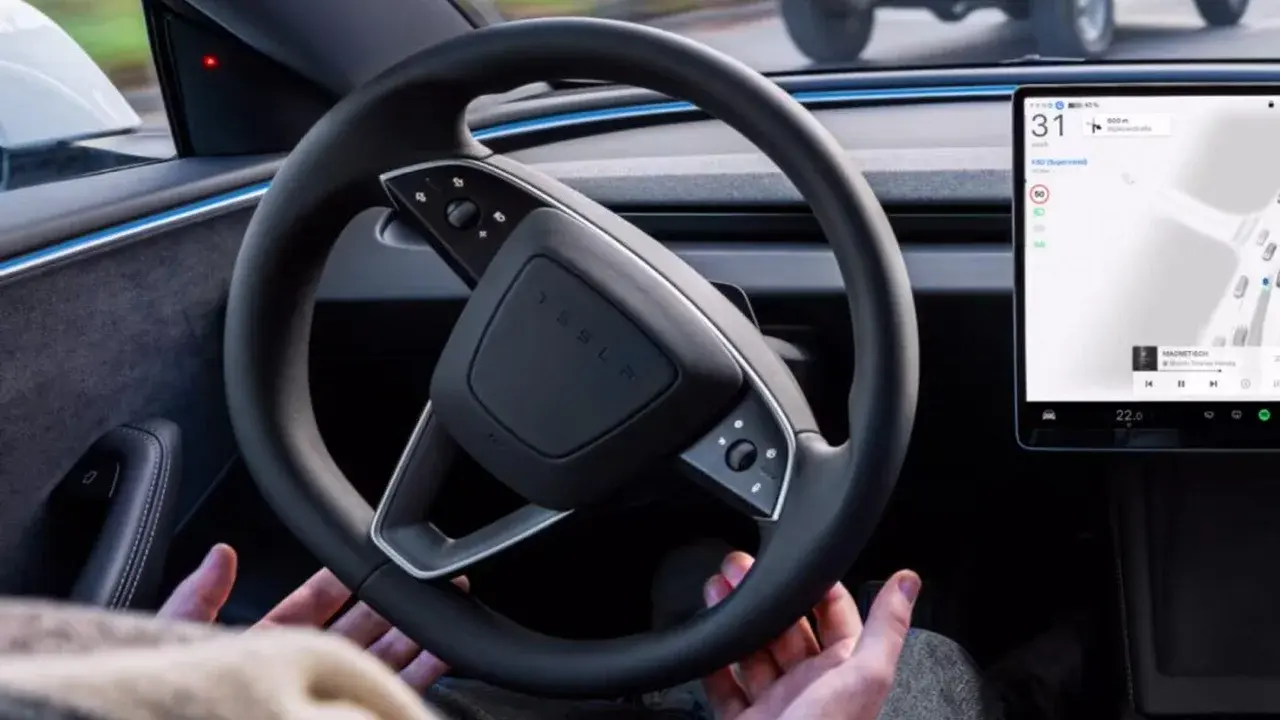
Tesla has officially launched its highly anticipated Full Self-Driving (FSD) v14.3.7 update as part of the 2026.21.6 software package. This release introduces significant performance enhancements aimed at refining the vehicle’s artificial intelligence models, environmental perception, and overall driver monitoring systems. By deploying these improvements, Tesla seeks to provide a more consistent and secure autonomous driving experience for users across diverse traffic scenarios. The update represents a major technical milestone, specifically targeting the efficiency of system reactions and the precision of maneuverability in complex urban environments, reinforcing Tesla’s commitment to advancing its autonomous driving technology through continuous software iteration.
- Tesla integrated a rewritten AI compiler based on MLIR to improve overall system response times by approximately 20 percent.
- The update enhances the Actually Smart Summon feature by increasing the maximum operational speed to 13 kilometers per hour.
- Engineers refined the driver monitoring system to improve eye-tracking accuracy under challenging lighting conditions or when the driver wears glasses.
- The software update consolidates the architecture for FSD, Actually Smart Summon, and future Robotaxi models into a unified framework.
Technical Architecture Undergoes Significant Optimization
At the heart of the FSD v14.3.7 release is a major overhaul of the system’s underlying software infrastructure. By updating the Reinforcement Learning (RL) phase of the neural network, Tesla has significantly bolstered the vehicle’s success rate in varying driving conditions. Furthermore, the vision encoder has been upgraded to sharpen the system’s ability to interpret traffic signs and process 3D geometric data with greater accuracy.
The implementation of a rewritten AI compiler provides a measurable 20 percent boost in computational reaction speeds.
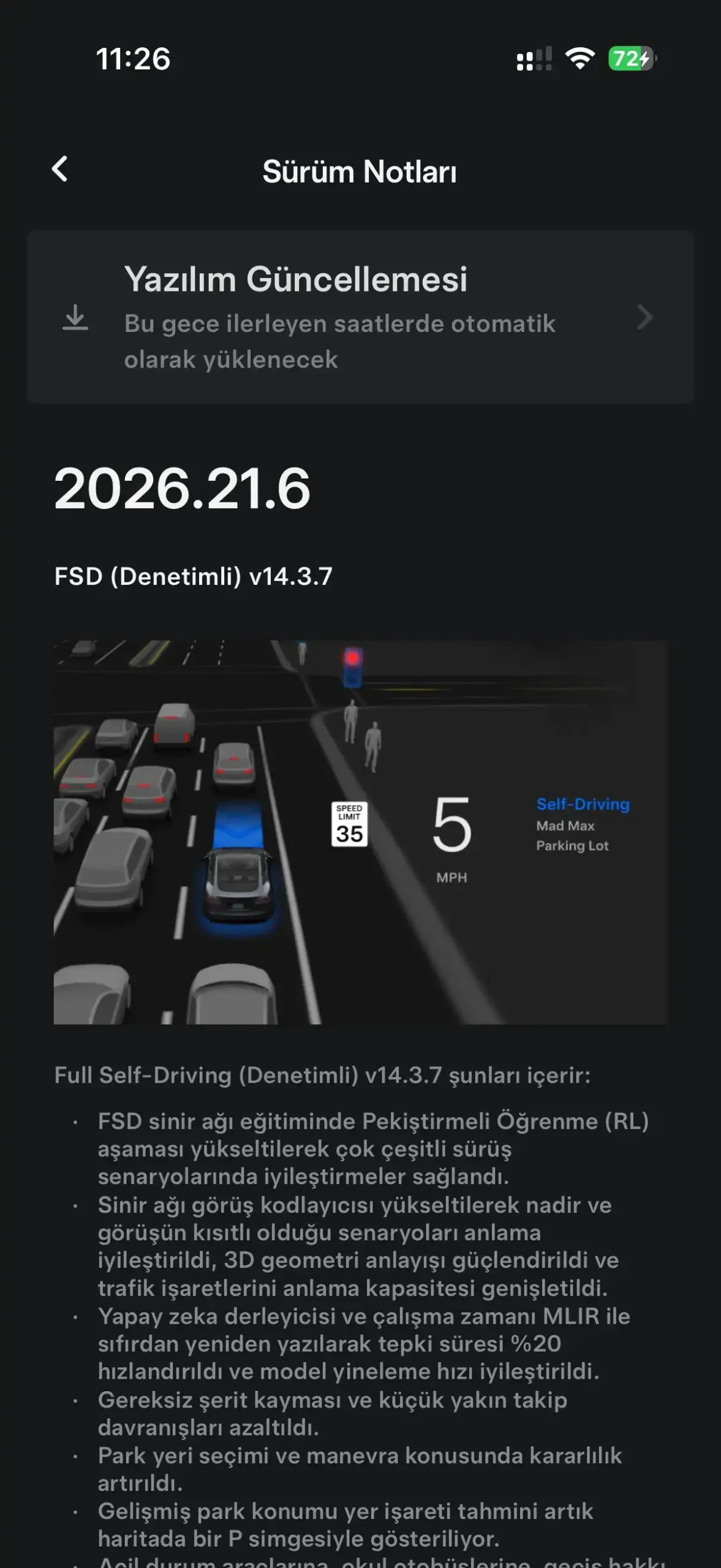
Beyond internal processing, the vehicle’s physical maneuvers have seen substantial refinement. Tesla has optimized lane-keeping logic to minimize unnecessary lane changes, while park selection and maneuvering capabilities have become noticeably more stable. Users will now notice that suitable parking spots are clearly identified on the map with a designated P symbol, simplifying the autonomous parking experience.
Safety Protocols Receive Substantial Enhancements
Safety remains a primary focus for this software iteration. The vehicle now demonstrates more proactive behavior when encountering emergency vehicles, school buses, and other traffic participants that violate right-of-way rules. Enhanced training on challenging scenarios has also improved the detection of small animals and unusual roadside objects.
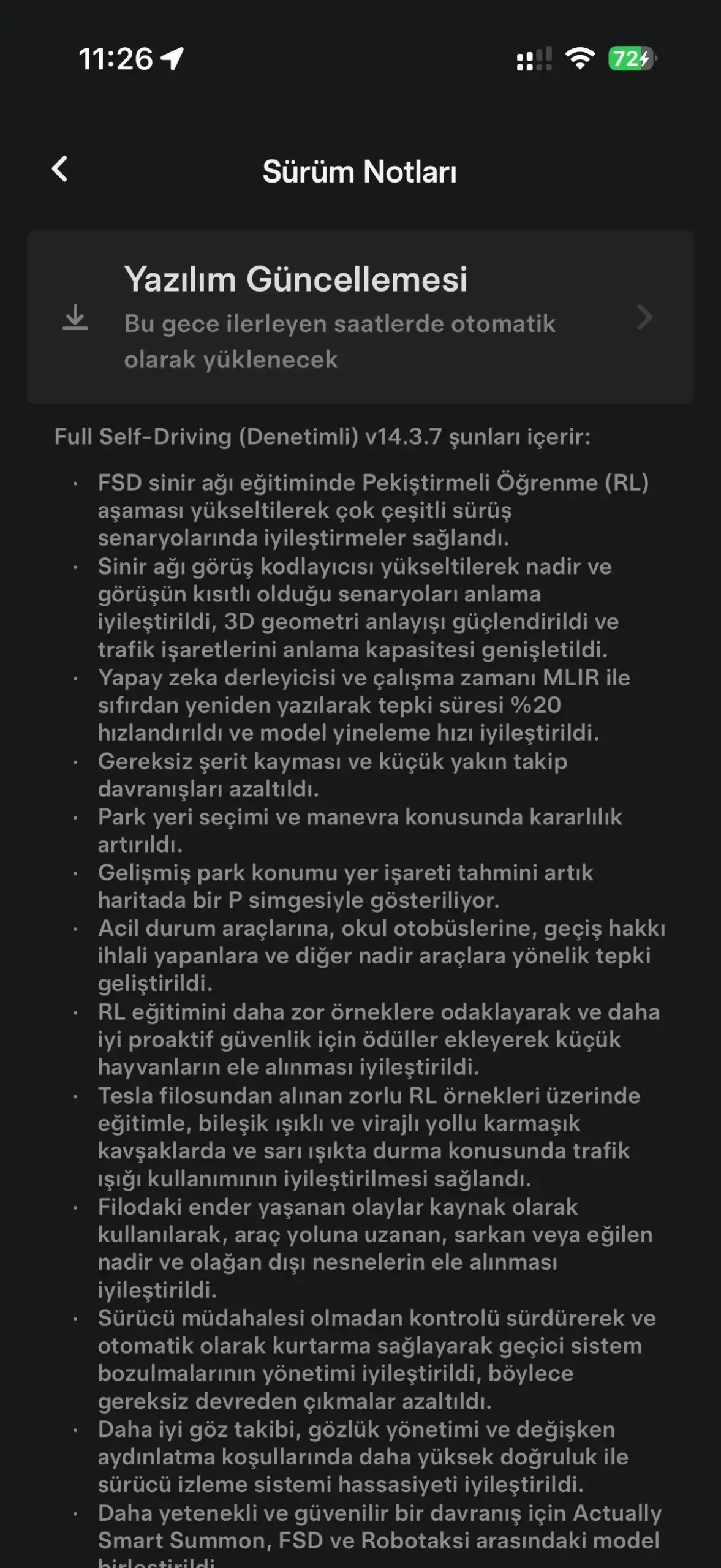
Complex intersections and composite traffic lights are now handled with higher precision, particularly regarding critical decisions like stopping at yellow lights. In instances where temporary system errors occur, the software now features an automatic recovery mechanism that minimizes disengagements and reduces the need for manual driver intervention.
Enhanced driver monitoring ensures consistent performance even when visibility conditions are sub-optimal.
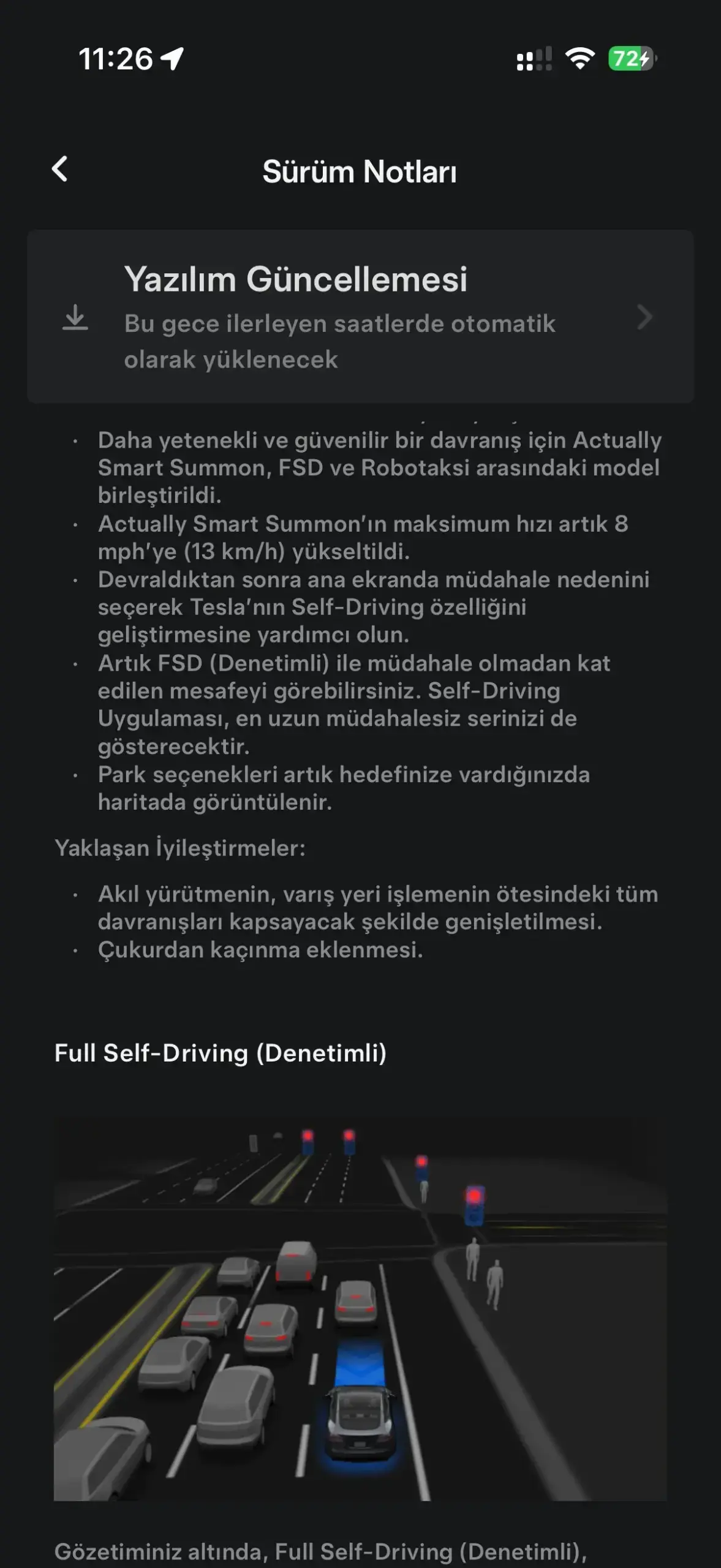
Tesla has also introduced new transparency features for drivers. When the FSD system disengages, users are prompted to indicate the cause of the intervention directly through the main interface. The system then generates detailed reports regarding the total distance covered without intervention, helping drivers track their longest autonomous driving streaks.
Looking ahead, the company has confirmed that it is consolidating its FSD and Robotaxi models. Future updates are expected to include advanced pothole avoidance and an expanded scope for the Smart Summon suite, further pushing the boundaries of what is possible with current vehicle sensors.
We are eager to hear your thoughts on these new safety features and performance upgrades. Do you believe these updates represent a significant leap forward for autonomous driving in your daily commute? Share your experiences and insights in the comments section below.
Your comment has been submitted,
it will be published after approval.