
Intel Razor Lake Processors Will Utilize TSMC N2X Technology


Intel has officially confirmed that its upcoming next-generation Razor Lake processors will be manufactured using TSMC’s advanced N2X node technology. Succeeding the Nova Lake series, these high-performance chips are designed to push the boundaries of computing power, marking a significant shift in Intel’s manufacturing strategy. Industry reports indicate that these processors will introduce the “bLLC” (Big LLC) cache technology to the laptop market for the first time. By leveraging the superior capabilities of the N2X node, Intel intends to achieve clock speeds exceeding the 6 GHz threshold, positioning itself to challenge AMD’s Halo chip series in both gaming and high-end professional computing sectors.
- Intel will manufacture the upcoming Razor Lake processor series using the high-performance TSMC N2X fabrication node.
- The new architecture introduces “bLLC” cache support to the mobile platform to enhance gaming performance.
- Razor Lake processors will be released in two distinct architectural versions, categorized as standard and AX variants.
Razor Lake Processors Will Rely on N2X Technology
The transition to TSMC’s N2X process represents a strategic pivot for Intel, as this node is specifically engineered to prioritize peak performance and high current capacity over simple power efficiency. By utilizing this cutting-edge manufacturing process, Intel aims to push its silicon to the absolute limit of frequency potential. 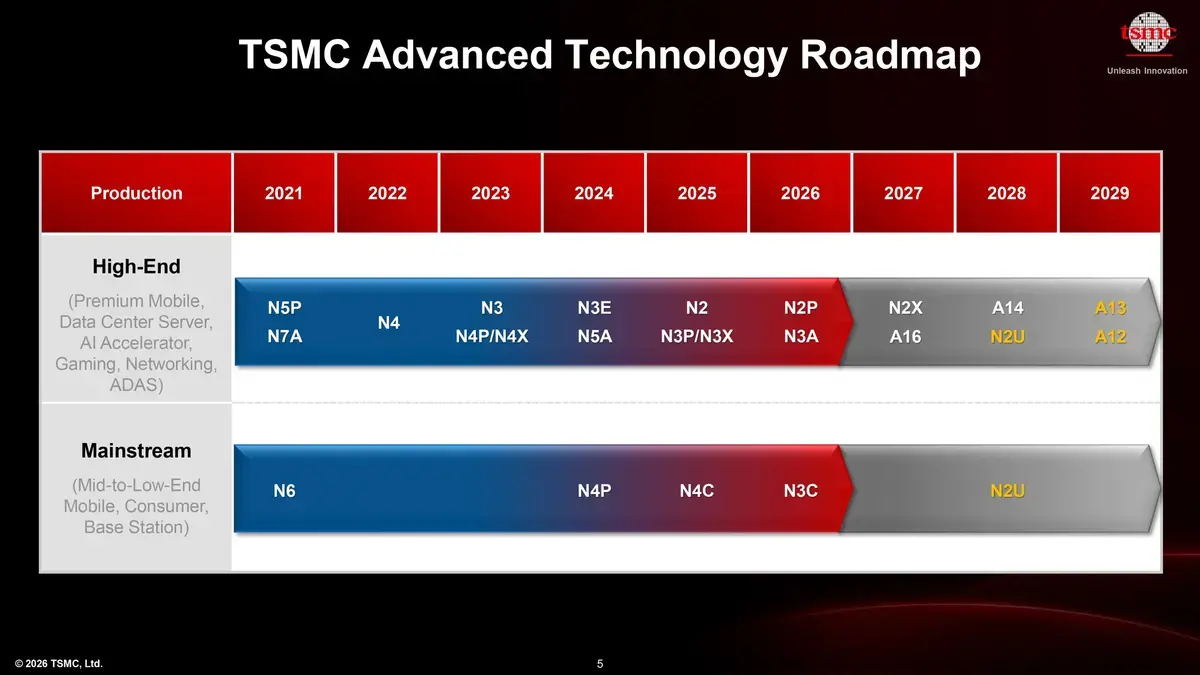
Razor Lake processors are expected to break the 6 GHz clock speed barrier.
Technical specifications leaked from development sources suggest a clear divide in the product lineup. Standard models, labeled as S/H series, will feature a combination of Griffin Cove P-Cores and Arctic Wolf E-Cores. Conversely, the “AX” series, which is clearly intended to compete directly with AMD’s Halo architecture, will utilize the more powerful Coyote Cove P-Core design. This dual-track strategy ensures that Intel can provide specialized performance tiers tailored to specific user requirements, ranging from thin-and-light power users to hardcore mobile gamers.
Laptop Performance Will Improve With Big Cache
The introduction of the “Big LLC” (bLLC) cache technology into the mobile sector is set to redefine what users can expect from high-end laptops. Initially debuted for the desktop-focused Nova Lake-S series, this technology will now be integrated into portable systems to drastically reduce latency during intensive data processing tasks.
The implementation of bLLC technology targets performance gains comparable to 3D V-Cache solutions in mobile devices.
This development serves as a direct response to AMD’s successful Ryzen HX3D series. By enabling L3 cache capacities that reach 144 MB in single-block configurations and up to 288 MB in dual-block setups, Intel is addressing one of the most critical bottlenecks in mobile gaming. This massive increase in on-die memory is expected to provide substantial frame rate improvements in titles that are highly sensitive to cache latency.
Titan Lake Architecture Will Unite Future Designs
Looking further into the company’s roadmap, the upcoming Titan Lake architecture is poised to serve as the platform where P-core and E-core designs reach full integration. This generation is expected to feature the sophisticated Golden Eagle E-Core architecture, supported by the high-performance Copper Shark P-Core structure. This design evolution underscores Intel’s commitment to modularity and architectural efficiency in future silicon generations.
We are interested in hearing your thoughts on whether Intel’s move to N2X technology and the adoption of bLLC cache will effectively challenge AMD’s current dominance in the gaming processor market.
Your comment has been submitted,
it will be published after approval.