
Snapdragon 8 Elite Gen 6 Pro and Dimensity 9600 Pro Leak


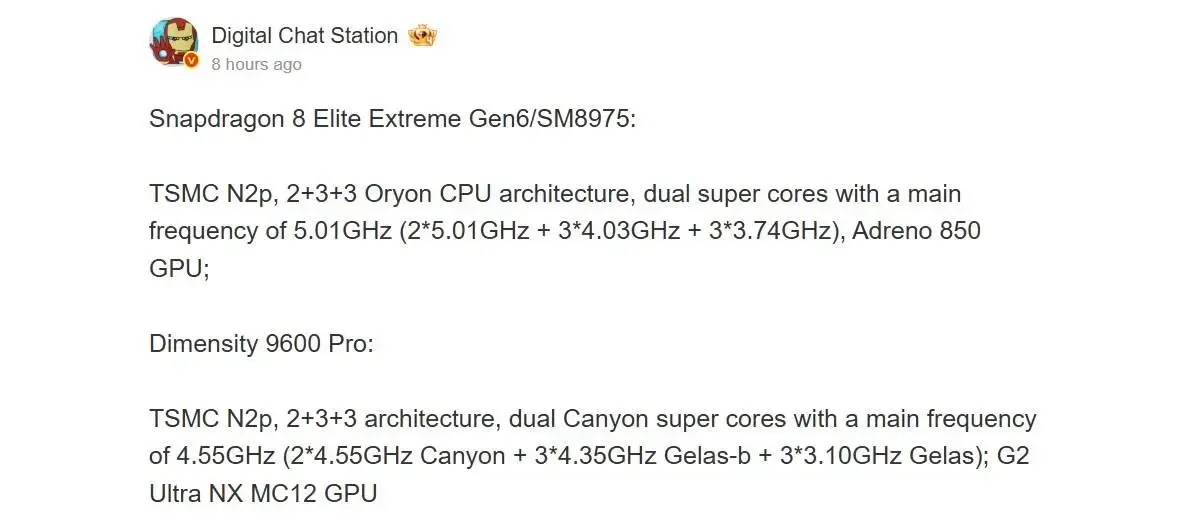
The mobile hardware industry is bracing for a massive performance shift as technical details regarding the upcoming Snapdragon 8 Elite Gen 6 Pro and MediaTek Dimensity 9600 Pro have surfaced. According to insights from the prominent industry leaker Digital Chat Station, these next-generation flagship processors will leverage TSMC’s advanced 2nm N2P manufacturing process. Both Qualcomm and MediaTek are poised to set new industry standards by integrating complex architectures designed to handle heavy computational workloads. As these chipsets move into production, the rivalry between the two tech giants intensifies, signaling a significant evolution in mobile processing power and efficiency for future smartphone lineups.
- Both Snapdragon 8 Elite Gen 6 Pro and Dimensity 9600 Pro utilize the advanced TSMC 2nm N2P fabrication technology.
- Qualcomm incorporates two Prime cores capable of exceeding the 5GHz frequency threshold in its latest design.
- MediaTek integrates specialized Arm-based core architectures to enhance its Dimensity 9600 Pro performance metrics.
Qualcomm Targets the 5GHz Performance Milestone
Qualcomm is pushing the boundaries of mobile computing with the Snapdragon 8 Elite Gen 6 Pro, internally identified as SM8975. This octa-core processor introduces a revolutionary 2+3+3 core configuration, highlighted by two primary cores clocked at an impressive 5.01GHz. This design represents a substantial leap over the predecessor, the 8 Elite Gen 5, effectively establishing a new benchmark for mobile gaming and intensive multitasking. The chip aims to redefine how smartphones manage heavy data loads without compromising system stability.
Visual fidelity is managed by the new Adreno 850 GPU, which employs a sophisticated three-slice architecture. To ensure seamless performance during high-resolution tasks, Qualcomm has integrated 18MB of dedicated graphics memory alongside an 8MB Last Level Cache. Furthermore, reports suggest that a standard variant, codenamed SM8950, is also in development to provide a more cost-effective alternative for various device tiers.
MediaTek Relies on Advanced Arm Architectures
The MediaTek Dimensity 9600 Pro focuses heavily on custom Arm core designs to maintain its competitive edge. Leaked specifications indicate that the system is anchored by two Canyon cores reaching frequencies of 4.55GHz, supported by a mix of Gelas and Gelas-b cores to optimize power consumption. This architecture is specifically engineered to balance peak performance with long-term energy efficiency, which is critical for modern flagship devices.

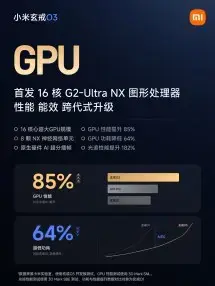
A standout feature of this chipset is the Arm G2-Ultra NX MC12 GPU. This 16-core graphical powerhouse reserves significant resources for AI-driven technologies, such as frame interpolation and image upscaling. By delegating these tasks to hardware-based accelerators, MediaTek demonstrates a clear commitment to enhancing mobile gaming quality through optimized silicon design.
New Manufacturing Processes Transform Mobile Experiences
The transition to the 2nm N2P process by TSMC serves as the foundation for these technological advancements. By reducing the physical size of transistors, both manufacturers can significantly lower thermal output while boosting sustained performance. These improvements are essential for next-year flagship smartphones that will demand high power for complex AI features and high-fidelity gaming.
As these companies refine their respective cache optimizations and tensor-based accelerators, the gap between mobile devices and desktop-class performance continues to narrow. The industry eagerly awaits the official release dates for these components to see how these architectural theories translate into real-world user experiences.
How do you evaluate the shift toward 5GHz clock speeds in mobile processors, and which brand do you expect to dominate the flagship market this year? Share your thoughts and predictions in the comments section below.
Your comment has been submitted,
it will be published after approval.