
WhatsApp Introduces New Scam Alert Feature for Android Users

Meta has officially launched a new WhatsApp scam alert feature, which is currently being rolled out to users enrolled in the Android beta program. This security enhancement, identified in version 2.26.34.1, is designed to protect users by proactively detecting and flagging suspicious messages originating from unknown numbers. By integrating advanced detection mechanisms directly into the messaging platform, the company aims to provide a more secure environment for its global user base. This initiative represents a significant step in the ongoing efforts by Meta to mitigate the increasing prevalence of fraudulent activities and unsolicited malicious content on the popular mobile application.
- The Scam Alert feature utilizes on-device machine learning models to identify potential fraudulent messages without compromising user privacy.
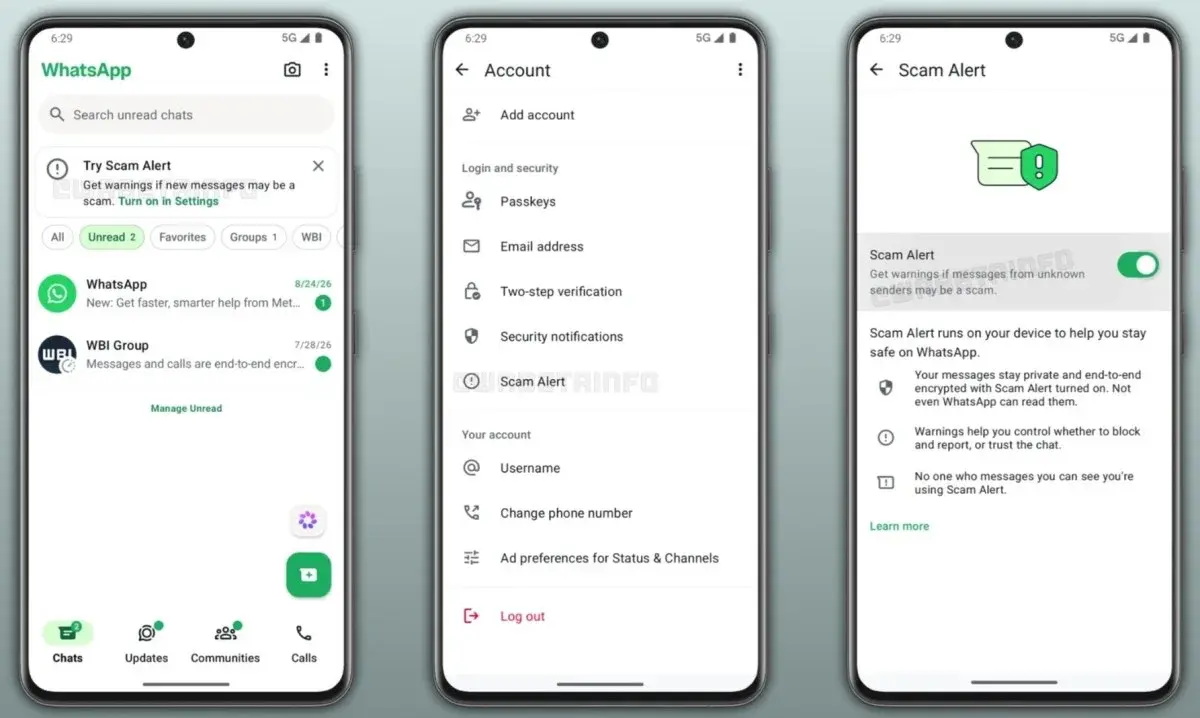
- Users must manually enable this security tool through the settings menu within the WhatsApp Android application.
- The system functions in full compliance with end-to-end encryption protocols to ensure that no message content is transmitted to external servers.
How the New Scam Alert Feature Functions
The core objective of the Scam Alert feature is to provide a discrete notification when the system identifies a message that exhibits characteristics of a potential scam. Importantly, this notification process remains entirely private, meaning the sender of the suspicious message receives no indication that their communication has been flagged. This design choice ensures that users can assess potential threats without escalating interactions with malicious actors.
To ensure flexibility, Meta has made this feature optional, requiring users to navigate to the account settings to toggle it on. Once activated, users maintain complete control over how to handle flagged messages. They are provided with options to mark the communication as trustworthy, report the sender to WhatsApp, or block the contact entirely. This user-centric approach empowers individuals to manage their digital security according to their personal risk tolerance.
Privacy Standards Are Maintained Through Local Processing
A primary concern for many users regarding security features is the potential for data monitoring. Meta has clarified that the Scam Alert tool operates exclusively via an on-device machine learning model. This architecture ensures that the content of private messages never leaves the user’s device for classification purposes. Consequently, the system does not report message data to Meta or any third-party entities, upholding the platform’s commitment to end-to-end encryption.
For those who choose to mark a chat as safe, there is an additional option to share the last five messages with WhatsApp to help refine the model’s accuracy. This action is entirely voluntary and is categorized as a user-initiated process to contribute to the collective security of the platform. By utilizing this feedback loop, the company aims to improve the detection capabilities of the algorithm over time while maintaining strict user confidentiality.
Future Rollout Plans Are Still Being Finalized
While the feature is currently accessible to a specific group of beta testers, Meta has not yet announced a definitive date for a wider release. However, the current progress within the Android beta channel indicates that the tool is maturing rapidly. As fraudulent schemes become more sophisticated, the implementation of such automated defense layers becomes increasingly vital for the average user. This update reflects a broader strategy by WhatsApp to reinforce its infrastructure against emerging cybersecurity threats. As testing continues, the company expects to refine the system further before making it a standard component of the global application experience.
We would love to hear your thoughts on these new security measures; do you believe this proactive alert system will effectively curb the rise of fraud on the platform, or do you have other suggestions for improving digital safety?
Your comment has been submitted,
it will be published after approval.