
MicroDuck Robot Smashes Sales Records with $2.6 Billion Launch

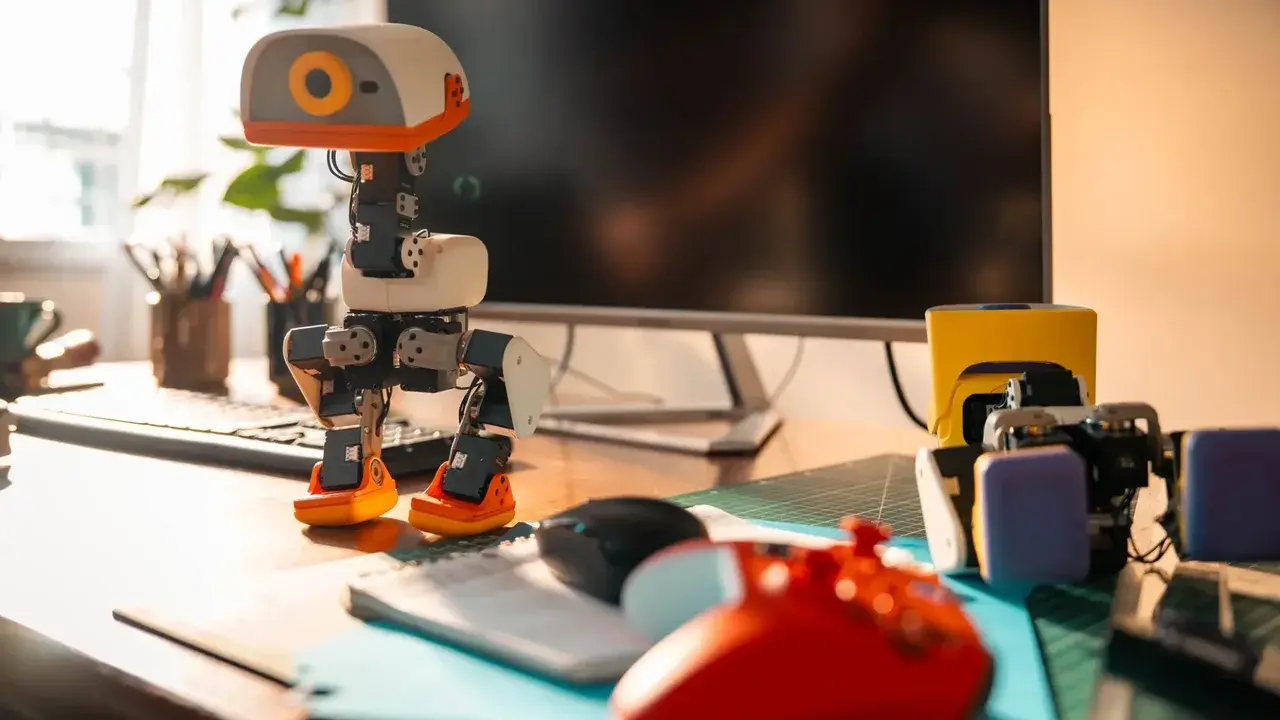
The newly unveiled MicroDuck robot, a sophisticated bipedal companion developed by Pollen Robotics under the Hugging Face ecosystem, has achieved unprecedented success by generating $2.6 billion in sales within its first 24 hours of availability. Launched on August 27, 2026, this compact, open-source device is designed to function as an interactive home assistant and learning platform. By utilizing advanced reinforcement learning algorithms, the robot autonomously navigates domestic environments and performs complex tasks through a process of trial and error, marking a significant milestone in the field of accessible, consumer-grade robotics and home-based artificial intelligence.
- The MicroDuck robot generated $2.6 billion in revenue during its initial 24-hour launch window.
- The device features a bipedal design equipped with 15 actuators and a comprehensive suite of sensors including LiDAR and cameras.
- Pollen Robotics plans to begin shipping the units to customers starting in December 2026.
Technical Specifications Define the Robot’s Capabilities
Designed as a versatile household companion, the MicroDuck measures 25 centimeters in height and incorporates a highly advanced internal architecture. Its hardware suite includes 15 distinct actuators that allow for complex movement and physical interaction with the environment. The robot is equipped with a camera, LiDAR sensor, Bluetooth, Wi-Fi, and NFC technology, enabling it to function as a fully autonomous computing unit that can perceive and adapt to its surroundings.
A standout feature of the hardware is its articulated jaw, which allows the device to grasp and transport various objects, facilitating direct physical engagement with the household environment. Furthermore, the robot is built upon an open-source software framework, providing developers and enthusiasts with the flexibility to customize its behavior and add new capabilities beyond the pre-programmed movements included out of the box.
Reinforcement Learning Powers the Robotic Platform
The core intelligence of the MicroDuck is derived from reinforcement learning, a method that enables the machine to improve its performance over time. By interacting with its environment and receiving feedback, the robot identifies objects and refines its motor skills to execute increasingly difficult tasks. This design choice positions the MicroDuck not only as an entertainment device but as a serious development platform for those interested in robotics research and machine learning applications.
Market Demand Exceeds Initial Expectations
Priced at $399, the initial demand for the MicroDuck has far exceeded industry projections, underscoring a growing consumer appetite for sophisticated home robotics. The manufacturer has stated that if production and logistics pipelines remain stable, the first batch of units will reach consumers by December. As the unit integrates into homes, experts are closely watching how its presence will impact the domestic automation and consumer robotics sectors, particularly regarding how users choose to expand the robot’s utility through the open-source community.
As home robotics technology continues to evolve at this rapid pace, we are curious to hear your perspective on this shift. Do you believe that specialized AI-driven companions like the MicroDuck will become a standard household necessity in the coming decade, or do you have concerns regarding their presence in our private living spaces? Please share your thoughts in the comments section below.
Your comment has been submitted,
it will be published after approval.