
Delivery Timelines for KAAN and HÜRJET Engines are Officially Finalized

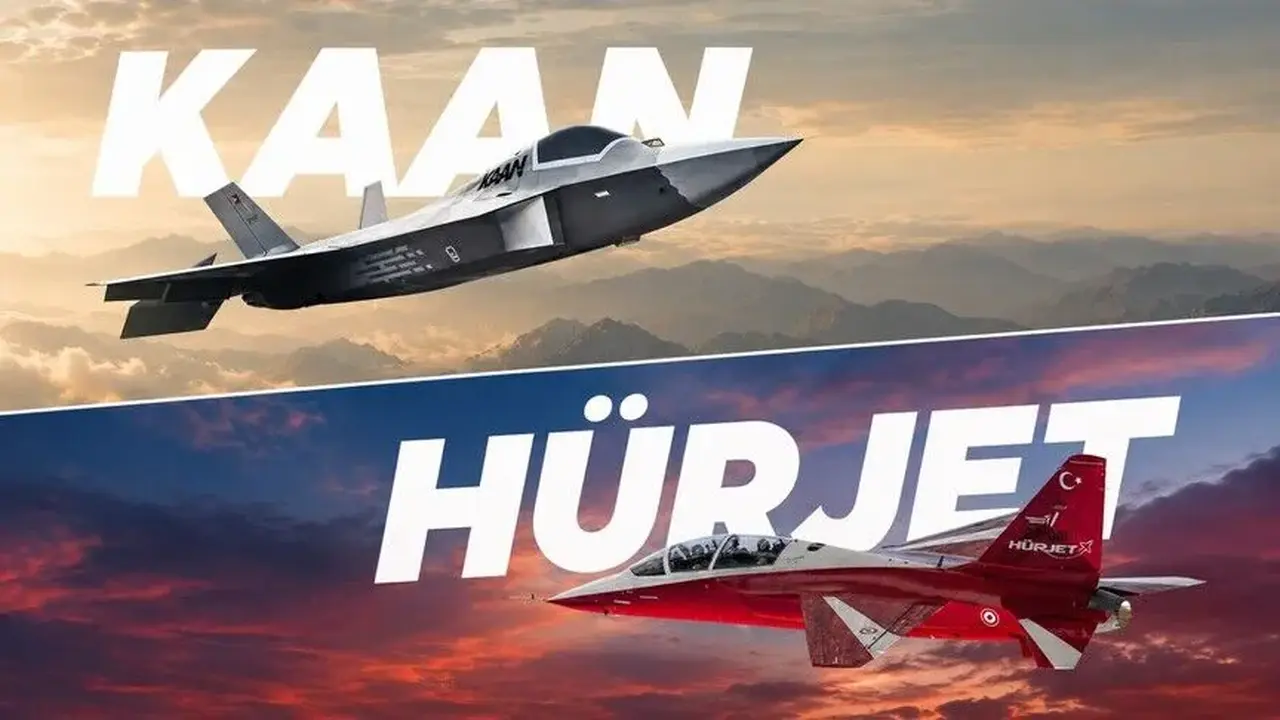
Turkish Aerospace Industries (TUSAŞ) has reached a pivotal milestone in its national combat aircraft projects as the delivery schedules for the engines of KAAN and HÜRJET have been clarified. During a recent update in Ankara, officials confirmed that the procurement of engines for these high-priority defense platforms is progressing according to the strategic roadmap. GE Aerospace has signaled its commitment to the program, ensuring that the necessary powerplants will be available for the upcoming phases of serial production. This development secures the immediate future of Turkey’s fifth-generation fighter jet and its advanced supersonic trainer, marking a significant step in the nation’s aerospace history.
- GE Aerospace will deliver F110-GE-129 engines for the first forty KAAN aircraft according to the established program timeline.
- The United States Congress completed its review process for the procurement of eighty additional engines without facing any legislative obstacles.
- Integration of the F404 engine for the HÜRJET platform has reached full completion as flight tests continue as planned.
- Deliveries of KAAN jets powered by the indigenous TF35000 engine are expected to commence in 2033.
KAAN Project Gains Momentum with F110 Engine Deliveries
The KAAN project, Turkey’s ambitious fifth-generation stealth fighter program, has entered a critical new phase regarding its propulsion systems. TUSAŞ General Manager Mehmet Demiroğlu recently announced that ten F110 engines have already arrived in Ankara to support the initial testing and early production stages. Furthermore, the path has been cleared for the acquisition of eighty additional engines, which will be vital for the transition into the serial production phase. This follow-on procurement received the necessary clearances from the United States Congress, ensuring that the supply chain remains uninterrupted for the foreseeable future.
Kement Akdemir, the Regional Strategy and Business Development Director for GE Aerospace Defense and Systems, confirmed today that the F110-GE-129 engines intended for the first forty KAAN aircraft will be delivered in strict accordance with the TUSAŞ program schedule. This synchronization between the engine supplier and the aircraft manufacturer is essential for meeting the 2028 delivery target for the first batch of operational aircraft. By securing these engines, TUSAŞ can maintain its rigorous testing schedule and move closer to achieving full operational capability for the Turkish Air Force.
HÜRJET Completes Essential Engine Integration Milestones
Parallel to the progress seen in the KAAN program, the HÜRJET advanced trainer and light combat aircraft project has also achieved significant technical success. GE Aerospace announced that the integration of the F404 engine into the HÜRJET airframe is now fully complete. This specific engine model serves as the primary powerplant for the aircraft’s flight testing phase and its current serial production configuration. The successful integration allows the flight test program to proceed without technical delays, providing the necessary data to refine the aircraft’s performance envelopes.
TUSAŞ is not limiting the HÜRJET to a single configuration, as the company is actively exploring specialized variants for different mission profiles. Most notably, discussions have begun regarding the integration of the more powerful F414 engine for a potential naval version of the HÜRJET. This sea-based variant would require the increased thrust provided by the F414 to operate effectively from aircraft carriers or multi-purpose amphibious assault ships. These evaluations demonstrate the versatility of the HÜRJET design and its potential to serve in various roles within the Turkish Armed Forces.
Spain Export Licensing Processes Continue for HÜRJET
The international prospects for the HÜRJET program are also gaining traction, particularly regarding potential exports to Spain. GE Aerospace has confirmed that the licensing and permit processes required for the delivery of engines to Spain are currently ongoing. This regulatory step is a vital component of the broader agreement, as it ensures that the aircraft produced for international partners will have guaranteed access to the necessary propulsion technology. The completion of this process will be a major indicator of HÜRJET’s competitiveness in the global defense market.
Domestically, TUSAŞ is accelerating its production efforts to meet internal requirements. While flight tests for the existing prototypes continue, the company plans to introduce more airframes into the testing cycle. According to the current development plan, TUSAŞ aims to conduct the first flights of four new prototypes by the end of 2026. This expansion of the test fleet will allow for simultaneous evaluations of different subsystems, effectively shortening the time required for final certification and full-scale deployment.
Long-Term Strategy Targets Full Domestic Engine Production
While the current iterations of KAAN and HÜRJET rely on engines of American origin, the Turkish defense industry remains focused on its long-term goal of total self-sufficiency. The reliance on the F110 and F404 engines is viewed as a transitional phase to ensure that the platforms reach operational status as quickly as possible. However, the roadmap for the KAAN project includes a definitive shift toward indigenous technology. The TF35000 engine, currently under development in Turkey, is intended to power later blocks of the aircraft.
The current timeline suggests that KAAN jets equipped with the domestic TF35000 engine will begin their delivery cycle in 2033. This transition will significantly reduce external dependencies and provide Turkey with greater strategic autonomy in its defense exports and operations. By utilizing established international engine solutions in the short term while investing heavily in domestic alternatives for the future, Turkey is following a dual-track strategy that balances immediate operational needs with long-term technological sovereignty.
How do you think the integration of indigenous engines will impact Turkey’s position in the global defense market by 2033? Share your thoughts and technical perspectives in the comments section below!
Your comment has been submitted,
it will be published after approval.