
Sony Develops PSP3 Handheld Featuring 7 TFLOPS Performance

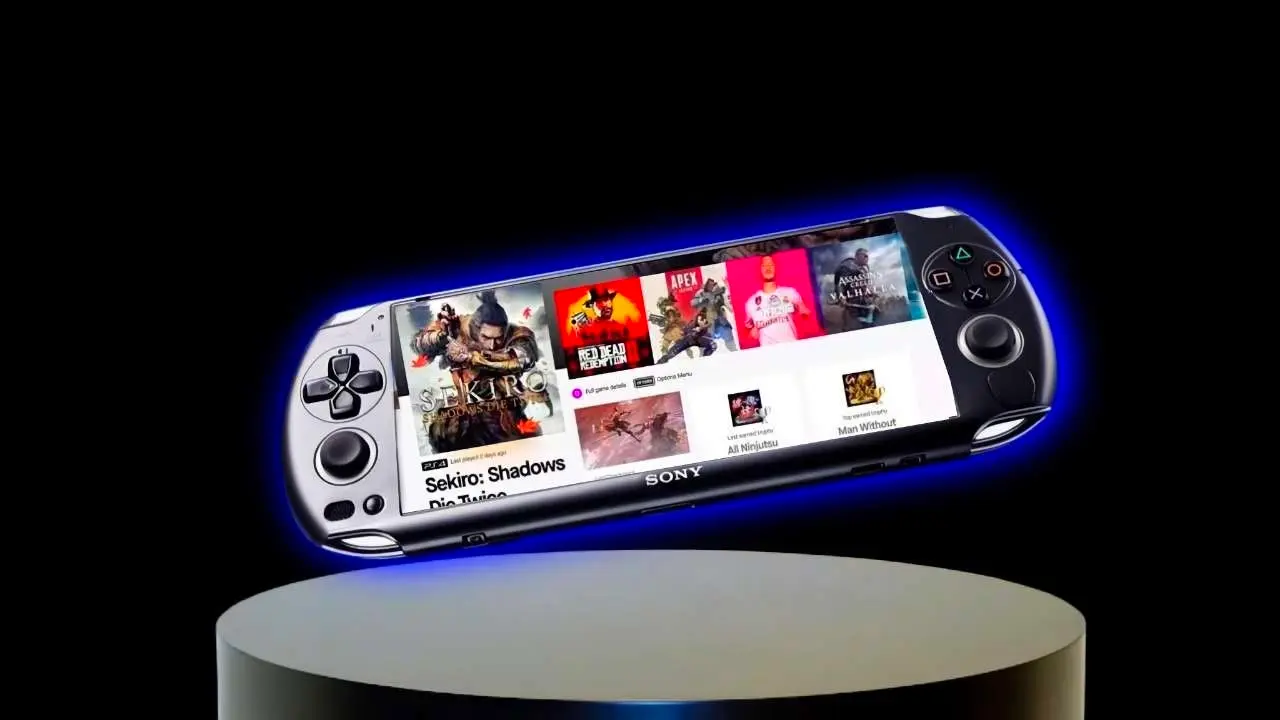
Sony is reportedly venturing back into the portable gaming market with a high-performance device codenamed Project Canis, widely expected to be branded as the PSP3. According to recent industry leaks, this console aims to redefine mobile gaming through a sophisticated AMD-designed chipset utilizing the cutting-edge RDNA 5 graphics architecture. By leveraging the advanced PlayStation Spectral Super Resolution (PSSR 3) technology, the device is engineered to upscale lower-resolution renders to crisp Full HD quality. As Sony prepares to challenge existing market leaders, this upcoming hardware promises to bridge the gap between dedicated mobile play and home console-level fidelity.
- The PSP3 console utilizes a custom AMD chipset featuring the advanced RDNA 5 graphics architecture.
- Its internal graphics unit reaches a peak performance of 6.75 TFLOPS while docked.
- The hardware employs PSSR 3 technology to upscale 540p native rendering to Full HD resolution.
- A total of 24 GB of LPDDR5X memory provides high-speed bandwidth for demanding gaming applications.
Technical Specifications Define the Hardware Capability
At the core of the PSP3 lies a specialized processor based on the Zen 6 microarchitecture, specifically configured with four Zen 6C cores and two Zen 6LP cores. This design prioritizes thermal efficiency, allowing the console to operate within a versatile power envelope of 15 to 25 Watts. 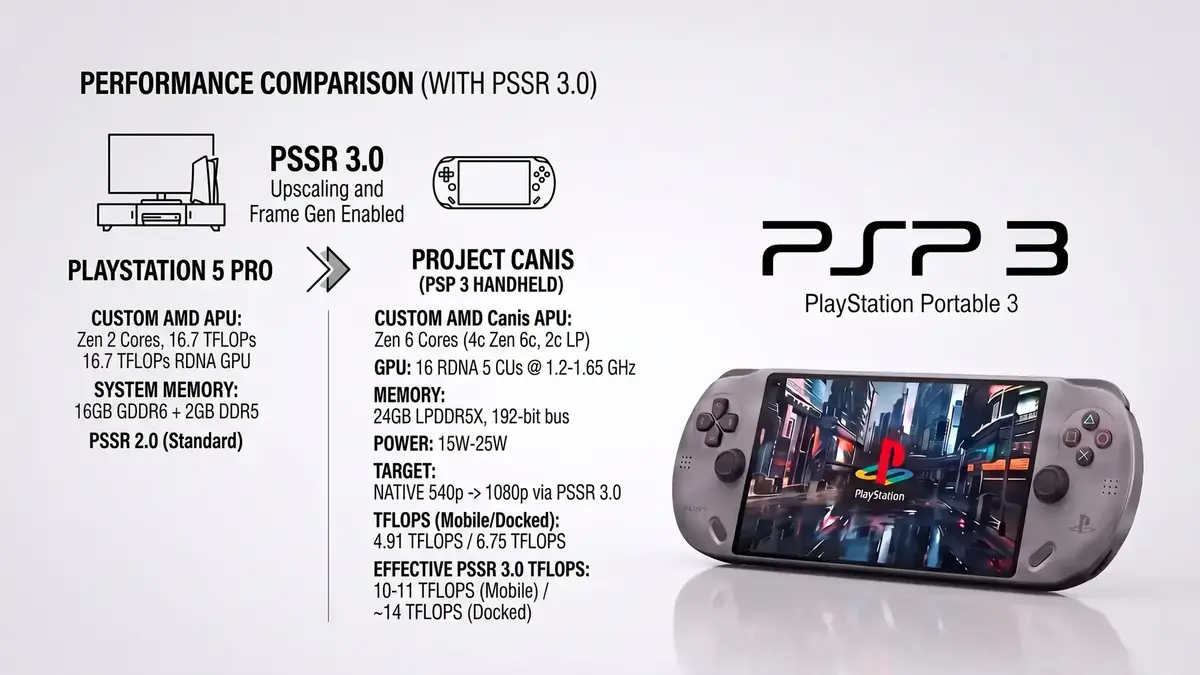 The graphics department is equally impressive, featuring 16 Compute Units that benefit from the architectural enhancements of RDNA 5. Through these structural improvements, the device achieves a theoretical output of 6.75 TFLOPS, ensuring that complex graphical assets are processed with high efficiency.
Imaging Technologies Optimize Visual Clarity
To maintain a balance between battery longevity and graphical fidelity, the console is designed to render games at a native resolution of 540p. This baseline is subsequently processed by Sony’s proprietary PSSR 3 AI-driven upscaling engine, which reconstructs the image into a sharp, full-detail Full HD output. Specialized AI hardware blocks within the silicon ensure that textures remain distinct and visual artifacts are minimized during this transition. Furthermore, reports suggest that the hardware architecture is forward-looking, potentially enabling support for future titles designed for the PlayStation 6 ecosystem.
Operational Modes Expand Performance Versatility
The console offers distinct performance profiles, operating at 1.2 GHz in handheld mode and scaling up to 1.65 GHz when connected to a docking station. Data throughput is managed by a 192-bit memory bus connected to 24 GB of LPDDR5X RAM, which effectively prevents bottlenecks during high-intensity scenes. While the underlying system supports frame generation technology, industry analysts emphasize that a stable base frame rate of 50 to 60 FPS is essential for a fluid user experience. As Sony moves forward with these ambitious hardware choices, the portable gaming landscape stands on the precipice of a significant technological shift that could disrupt the current dominance of handheld competitors.
How do you feel about Sony’s potential return to the handheld market with the PSP3? Do you believe this hardware can successfully compete against the Nintendo Switch, or would you prefer a different focus from the company? Please share your thoughts and technical expectations in the comments section below.
Your comment has been submitted,
it will be published after approval.