
WhatsApp Tests Third-Party Agents Feature for iOS Users


WhatsApp has officially initiated testing for a new third-party agents feature on the iOS platform, allowing users to interact directly with custom digital assistants. Introduced in the WhatsApp beta for iOS version 26.37.10.70, this functionality enables individuals to create and manage up to five personalized agents directly within the application. Currently, this feature is limited to a select group of beta users across specific regions as the platform evaluates the integration of automated assistants into its standard messaging environment. This development marks a significant expansion of WhatsApp’s utility, moving beyond simple human communication toward more advanced, agent-driven interactions.
- WhatsApp is testing the integration of third-party agents for iOS beta users.
- Users can configure up to five unique digital assistants per account.
- Conversations with these agents do not utilize end-to-end encryption protocols.
- The feature remains in a limited testing phase with no global release date announced.
Custom Agents are Configured Through Application Settings
The ability to integrate third-party agents was previously previewed for Android users, but it has now officially arrived on iPhones via the TestFlight beta distribution channel. Users can navigate to the application settings menu to initiate the creation of a new agent. During this setup process, they are required to assign a name and a profile picture to their digital assistant, allowing for a personalized management experience. Once the configuration is finalized, the platform generates a unique API key that serves as the bridge between the user’s account and the external hosting service.
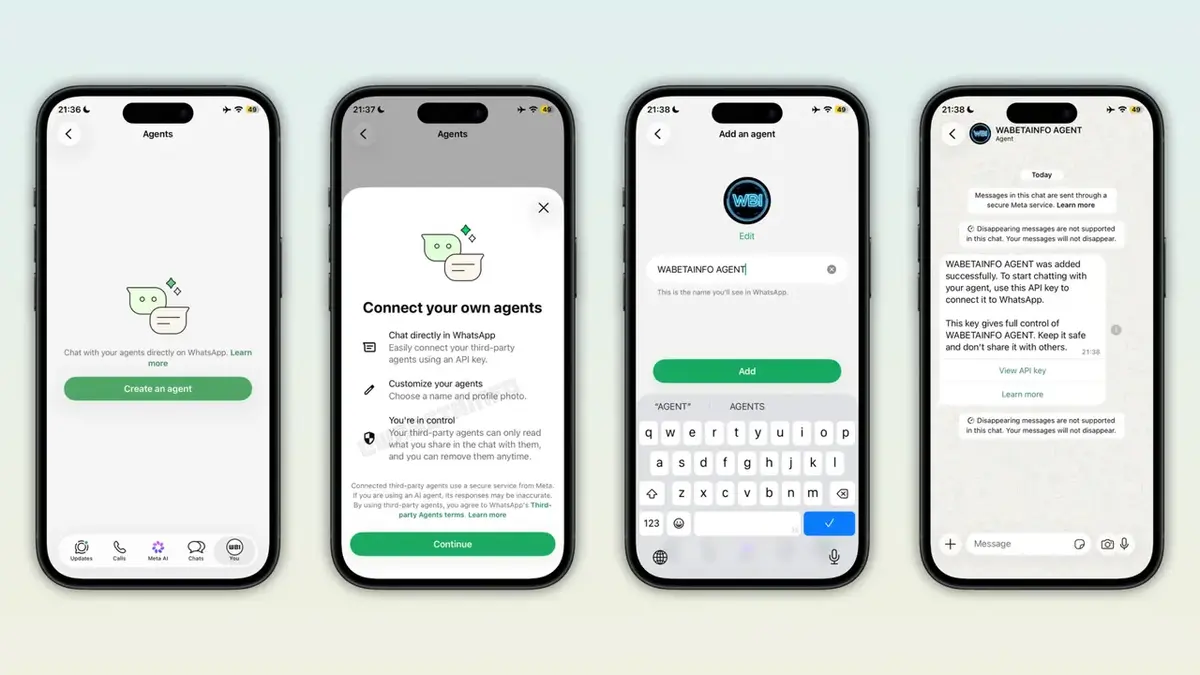
API Keys Provide Necessary Connectivity and Control
Each agent created within the system relies on a unique API key for operational functionality. Users can easily access this key through the app’s interface, copy it, and integrate it into their preferred external service provider. This token grants the agent the necessary authorization to communicate within the WhatsApp ecosystem. Given the security implications of such access, the platform emphasizes that these keys should remain private and never be shared with unauthorized third parties. Furthermore, users retain full control over their security, with the option to reset and generate new API keys whenever they deem it necessary.
Data Privacy Standards Differ for Automated Interactions
It is important to note that interactions with these third-party agents differ significantly from standard private chats. Unlike regular messages, conversations held with digital agents are not protected by end-to-end encryption. Instead, these messages are processed through a secure service managed by Meta, which means that developers of these agents may have access to the content shared within those specific threads. Despite this, the agents operate under strict isolation protocols, meaning they cannot access the user’s contact list, media files, or other private conversations. Additionally, the disappearing messages feature is currently unavailable for these agent-based chats.
Global Availability Remains Under Gradual Development
As the feature is currently in its nascent testing stages, it is only available to a restricted number of beta participants. WhatsApp has not yet shared a formal timeline regarding when this functionality will be rolled out to the general public or global iPhone users. The company continues to monitor user feedback closely to refine the platform’s performance and address security concerns. The iterative nature of this release suggests that further enhancements will be implemented as the team assesses how these agents function in a real-world messaging context.
How do you feel about the integration of third-party agents into your daily messaging routine? If you have thoughts on how this technology will reshape your digital interactions, please share your perspective in the comments section below.
Your comment has been submitted,
it will be published after approval.