
ROKETSAN’s KARAOK Missile System Successfully Engages Aerial Target for First Time

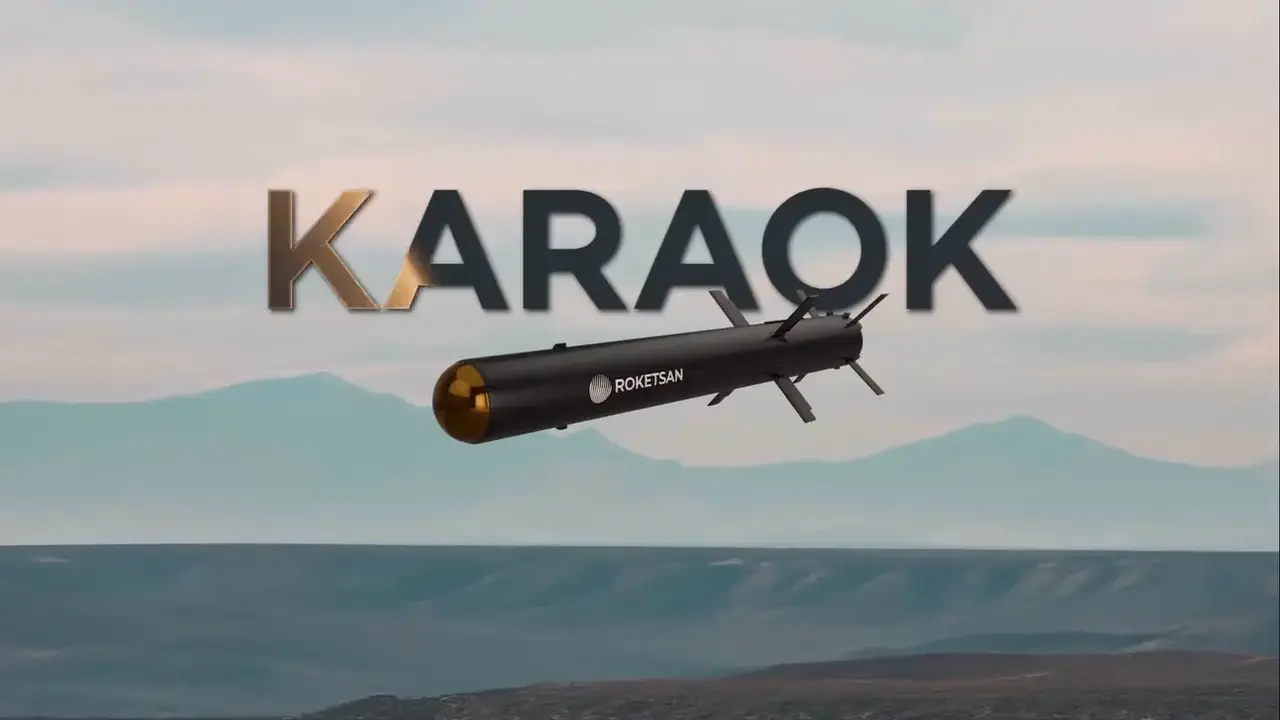
ROKETSAN’s advanced KARAOK Short-Range Anti-Tank Missile System achieved a significant milestone by successfully hitting an aerial target for the first time. This groundbreaking test, announced by the company on September 23, 2026, demonstrates the system’s expanded engagement capabilities, moving beyond its established effectiveness against ground targets. The successful interception of an air threat signifies a broader utility for KARAOK, enabling it to address a more diverse range of battlefield challenges and reinforcing its strategic importance in modern defense scenarios.
- ROKETSAN’s KARAOK Short-Range Anti-Tank Missile System successfully intercepted an aerial target for the first time.
- This development significantly expands KARAOK’s operational scope beyond its primary role against armored ground targets.
- General Manager Murat İkinci confirmed the successful test, highlighting the system’s enhanced multi-threat engagement capability.
KARAOK System Gains New Air Engagement Capability
Following the successful test, Murat İkinci, ROKETSAN’s General Manager, announced the expansion of KARAOK’s operational domain. He highlighted that the system, primarily designed as a portable anti-tank weapon for short-range armored targets, has now proven its versatility against aerial threats. According to ROKETSAN’s technical specifications, KARAOK boasts a 2.5-kilometer range, a 125 mm caliber, and features an infrared imager seeker head. This advanced seeker enables the system to operate effectively day and night, engaging both stationary and moving targets.
Historically, KARAOK’s mission profile included targets such as tanks, armored vehicles, combat vehicles, and concrete bunkers. The recent test, however, indicates that a new class of targets can now be integrated into the system’s operational scope. Consequently, KARAOK, while primarily an anti-tank system, can now be considered for use against aerial targets under suitable conditions, enhancing its multi-role functionality on the battlefield.
#KARAOK: Karada ve havada tam isabet! 🎯🚀
Muharebe sahasının çevik gücü KARAOK, ilk kez bir hava hedefini başarıyla vurdu.
Kara hedeflerine karşı etkinliğini hava hedeflerine de taşıyan KARAOK ile farklı tehditlere karşı çok yönlü angajman kabiliyetimizi güçlendiriyoruz. 🇹🇷 pic.twitter.com/NH3x6ixN3G
— ROKETSAN (@roketsan) September 23, 2026
KARAOK Introduces a Distinct Air Defense Concept
The successful engagement of an aerial target by KARAOK presents a unique operational concept that diverges from conventional air defense systems. While air defense architectures typically involve various range and altitude layers, the ability of portable systems like KARAOK to engage aerial threats provides an additional engagement option, particularly against low-altitude moving targets. This capability could prove crucial in scenarios requiring agile and localized air defense solutions.
However, ROKETSAN’s announcement did not disclose specific technical parameters regarding the test, such as the type of aerial target used, the engagement distance, or other critical details. Therefore, further tests and official statements are anticipated to draw more comprehensive conclusions regarding the operational scope of KARAOK’s air defense capabilities.
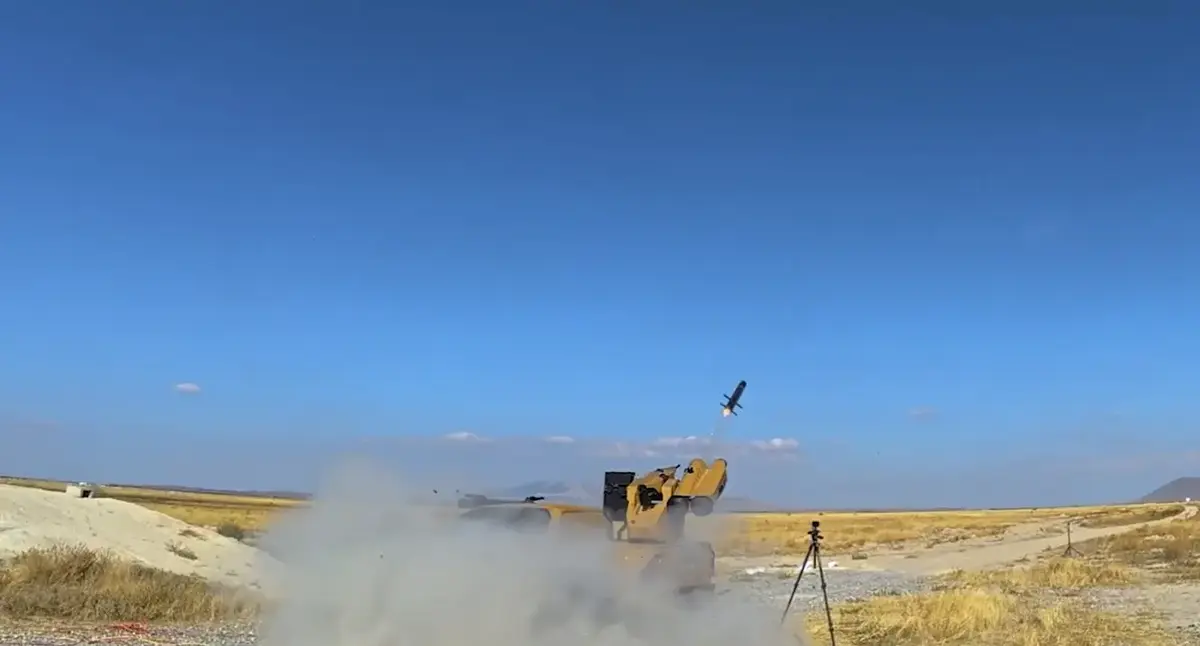
KARAOK’s Primary Mission Remains Anti-Tank Operations
Despite its newly demonstrated air engagement capability, KARAOK’s fundamental development objective continues to be an effective portable anti-tank system for armored ground targets. ROKETSAN’s data confirms that the system operates on a ‘fire-and-forget’ principle, with its infrared seeker head adeptly tracking its designated target. The KARAOK’s warhead is specifically designed with a tandem structure to penetrate advanced armor, ensuring maximum destructive power against heavily protected vehicles.
The system had previously seen its initial deployment by elements of the Turkish Armed Forces during the EFES 2026 Exercise. The recent test, which demonstrated KARAOK’s ability to engage aerial threats in addition to ground vehicles, underscores a growing trend in defense technology. This trend emphasizes the increasing importance of multi-purpose munitions and weapon systems that can be effectively employed against diverse target types, providing enhanced flexibility and efficiency on the modern battlefield.
What are your thoughts on KARAOK’s expanded capabilities to include aerial targets? How do you envision this development impacting future battlefield strategies or the role of portable defense systems? Share your insights and opinions in the comments below.
Your comment has been submitted,
it will be published after approval.