
Chinese Manufacturers Test Steel-Cased Batteries to Boost Capacity

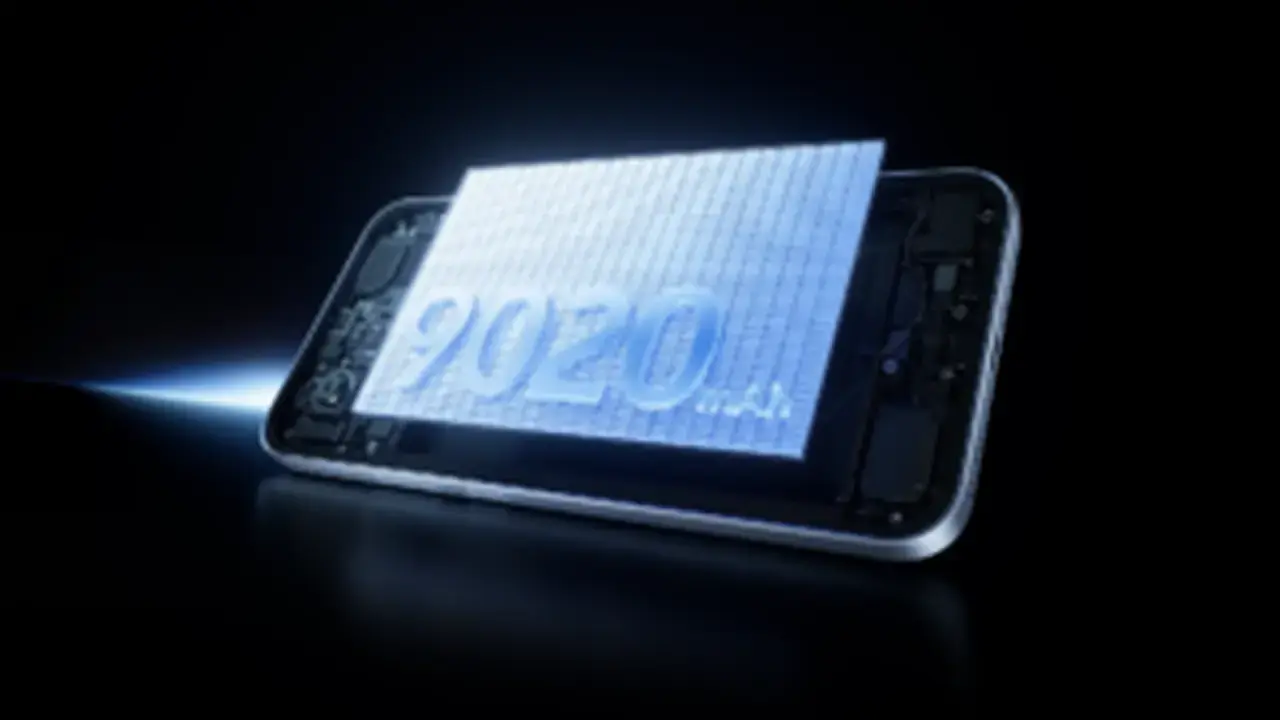
Leading Chinese smartphone manufacturers have initiated testing on high-capacity steel-cased battery technology, a significant development in mobile energy storage. According to industry intelligence from Digital Chat Station, these companies are integrating steel casings with advanced stacked cell architecture to maximize energy density without increasing device dimensions. This move builds upon the metal-casing strategy recently introduced in high-end flagship devices, signaling a industry-wide pivot towards more efficient power management. By moving away from traditional battery winding methods, these manufacturers aim to significantly enhance daily performance, potentially setting a new benchmark for flagship smartphones in the near future.
- Chinese smartphone manufacturers are testing steel-cased battery technology to increase overall energy density.
- Stacked cell design improves the utilization of internal device volume compared to traditional winding methods.
- Integration of silicon-carbon anodes with steel casings facilitates capacities reaching up to 10,000 mAh.
Steel Casings Enhance Structural Battery Integrity
The pursuit of higher energy capacity has led engineers to re-evaluate the physical construction of power cells. Apple recently introduced a metal-enclosed battery for its iPhone 16 Pro, which serves as a protective housing while allowing for a more efficient internal layout. Chinese manufacturers are now iterating on this concept by utilizing steel, a material chosen for its superior rigidity and protective properties. This structural transition allows for a thinner profile while maintaining safety standards, effectively creating more room for active materials inside the battery cell.
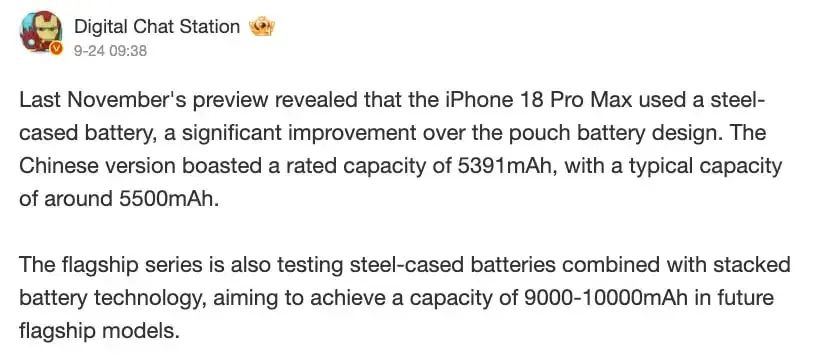
Traditional jelly-roll battery designs often leave significant empty space inside the casing. In contrast, the stacked cell architecture organizes battery layers in a dense, uniform arrangement. This approach eliminates dead space, enabling a higher volume of electrolytes and electrodes within the same physical footprint. For modern flagships that require extensive space for advanced camera arrays and cooling systems, this technology offers a critical competitive advantage.
High-Capacity Batteries Redefine Industry Standards
The evolution of battery chemistry has already pushed current capacities beyond the 7,000 mAh threshold, largely due to the implementation of silicon-carbon anode technology. As manufacturers refine these steel-cased and stacked-cell designs, industry experts anticipate that flagship handsets will soon feature batteries ranging between 9,000 mAh and 10,000 mAh. Such a jump in capacity would fundamentally alter user expectations regarding daily charging cycles and device longevity.
Competitors Invest in Emerging Power Technologies
Global tech giants are closely monitoring these advancements to maintain market relevance. Samsung, for instance, is focusing on optimizing its upcoming Galaxy S27 series, with reports suggesting a 5,700 mAh capacity for the Ultra model. By incorporating silicon-carbon technology—previously reserved for foldable devices—into its flagship lineup, Samsung aims to close the gap in energy efficiency. As manufacturers adopt metal-enclosed battery designs and innovative internal layouts, the industry is entering a new era where extended battery life becomes a standard feature rather than a luxury.
How would a 10,000 mAh battery capacity change the way you use your smartphone on a daily basis? Do you prioritize raw battery capacity over rapid charging speeds, or do you prefer a balance of both? Share your thoughts with us in the comments section below.
Your comment has been submitted,
it will be published after approval.