
75-Liter Giant Farm Drone Revolutionizes Agriculture in Turkey

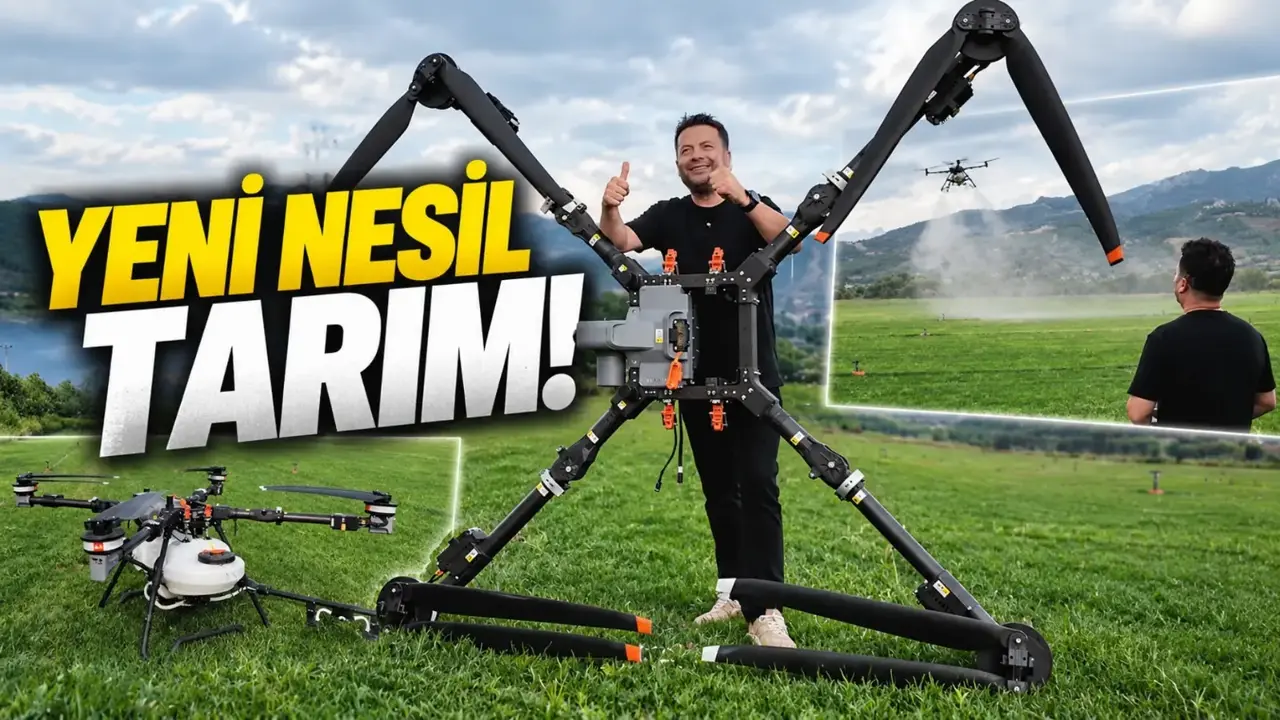
Autonomous technologies are rapidly redefining agricultural efficiency and cost structures, moving beyond traditional farming methods. Recently demonstrated in Turkish fields by the Cyberagri team alongside engineers from China, a state-of-the-art agricultural drone, boasting a colossal 75-liter liquid capacity and powerful propellers, has showcased its impressive field performance and capabilities. This advanced Giant Farm Drone represents a significant leap in smart farming, promising to enhance productivity and sustainability across the nation’s agricultural landscape.
- An advanced autonomous agricultural drone, developed by the Cyberagri team with Chinese engineers, features a 75-liter liquid capacity and sophisticated sensory technology.
- This technology eliminates crop damage caused by tractor tracks and achieves up to 30% savings in water and pesticide consumption through precision application.
- The drone can spray 30 to 40 acres in approximately 10 minutes, offering a rapid return on investment for commercial service providers within about two months.
During a detailed examination in the field, conducted with the Cyberagri team and the manufacturing engineers, the drone’s robust design and integrated systems were highlighted. Equipped with 63-inch oscillating propellers, it exhibits high resistance to wind, ensuring stable flight. Furthermore, its comprehensive intelligent farming features include LiDaR sensors, 360-degree radar technology, and integrated lighting for night operations, making it a fully capable smart agricultural machine.
Autonomous Operations Deliver Significant Field Efficiencies
Field tests involving spraying demonstrated the drone’s ability to complete its pre-mapped route with centimeter-level precision, returning seamlessly to its takeoff point. This autonomous navigation completely eliminates the damage caused by tractor wheel tracks, which traditionally crush approximately 5% of the crop. Moreover, the drone’s atomizing nozzle system allows for up to 30% savings in water and pesticide consumption, optimizing resource use.
A recirculation mechanism within the pesticide tank ensures the mixture remains homogeneous, preventing settling and guaranteeing an even distribution across the entire sprayed area. This precision contributes to more effective treatment and reduced waste.
Rapid Amortization Creates New Entrepreneurial Avenues
One of the most compelling advantages of the Cyberagri system is its operational speed and economic amortization process. This Giant Farm Drone can spray approximately 30 to 40 acres in just about 10 minutes on a single battery charge. For commercial service providers, proper planning can lead to the device amortizing its cost in roughly two months, presenting a highly attractive investment.
The versatility of the drone extends beyond spraying, as it includes a 150-liter solid fertilizer tank in its package. This enables it to perform seeding and fertilization operations, consolidating multiple tasks into one efficient platform. However, potential users must consider factors such as the high initial investment cost and flight limitations during challenging or excessively rainy weather conditions.
Investment Considerations Shape Future of Smart Farming
Offering a spraying flow rate of up to 40 liters per minute and a daily spraying capacity of up to 2000 decares, these technologies open significant income opportunities for a new generation of entrepreneurs eager to integrate technology with farming. Considering the losses incurred by tractors in the field and the escalating input costs, the proliferation of autonomous aerial vehicles in agriculture is poised to profoundly impact rural development and modernize farming practices.
What are your thoughts on the future of technology in agriculture, and how do you believe the widespread adoption of such advanced drones will impact rural development? Share your insights and comments below.
Your comment has been submitted,
it will be published after approval.