
TUSAŞ Unveils HÜRSAT: Turkey’s New Generation Observation Satellites

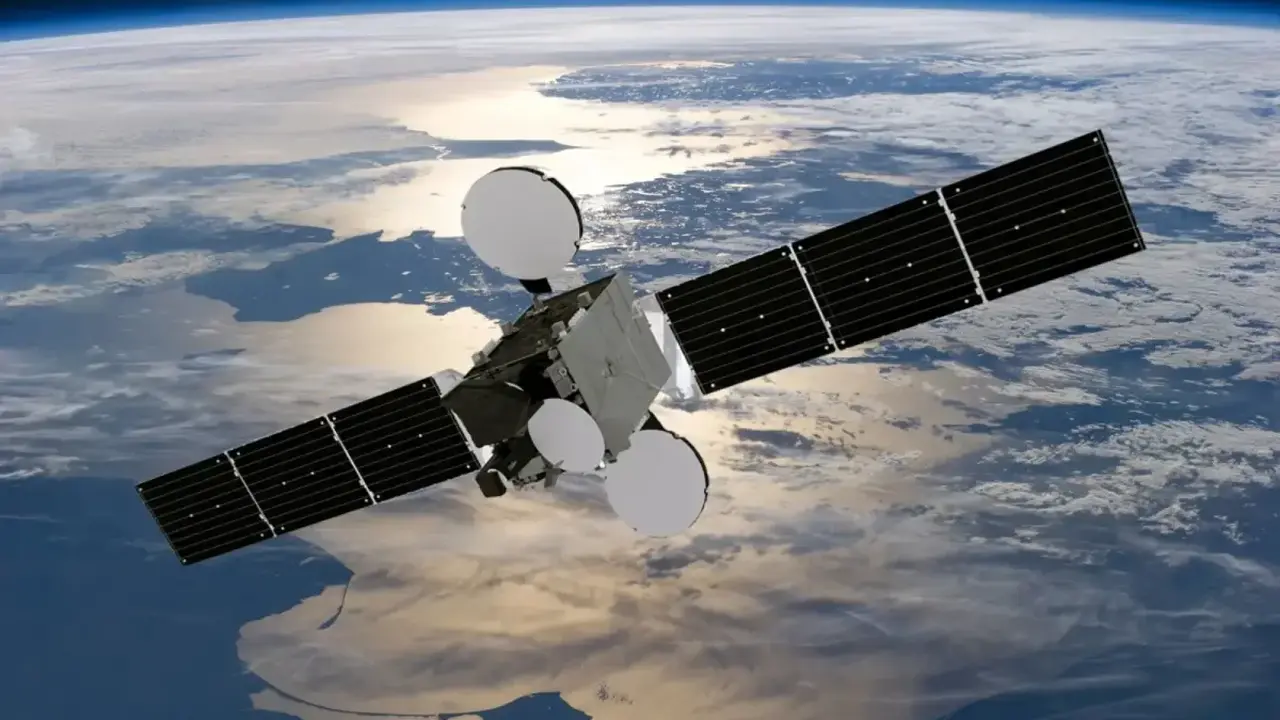
Turkish Aerospace Industries (TUSAŞ) has officially introduced its new satellite family, HÜRSAT, designed to enhance Turkey’s Earth observation capabilities. The unveiling took place at the International Astronautical Congress (IAC) 2026, where two distinct satellite concepts, HÜRSAT EO and HÜRSAT SAR, were highlighted. This initiative represents a significant step in expanding the nation’s space-based intelligence and monitoring infrastructure.
HÜRSAT is being developed as a more compact platform compared to TUSAŞ’s larger GÖKTÜRK-class satellites. This strategic approach aims to create a versatile satellite family that is lighter and scalable to meet diverse mission requirements. The development signifies TUSAŞ’s commitment to agile and adaptable space solutions.
Two Distinct Imaging Technologies Will Be Utilized
The first member of the HÜRSAT family, HÜRSAT EO, will be equipped with electro-optical imaging capabilities. Electro-optical systems are renowned for their ability to capture high-resolution Earth imagery, particularly under daylight conditions. This technology is crucial for detailed surveillance and reconnaissance.
The applications for HÜRSAT EO extend beyond military uses, encompassing civilian sectors such as border monitoring, urban planning, agricultural and forestry management, and disaster and environmental tracking. TUSAŞ already possesses substantial experience in high-resolution electro-optical imaging through its involvement with the GÖKTÜRK-1 satellite program, providing a solid foundation for the new HÜRSAT EO.
Complementing HÜRSAT EO, the second concept, HÜRSAT SAR, will leverage Synthetic Aperture Radar (SAR) technology. A primary advantage of SAR systems is their independence from sunlight, enabling data acquisition even in adverse weather conditions, including cloud cover. This all-weather capability ensures continuous Earth observation.
Together, HÜRSAT EO and HÜRSAT SAR will offer complementary imaging capacities, capable of operating effectively under various environmental and lighting conditions. This dual-technology approach ensures robust and reliable Earth observation data for a wide array of applications.
A Target Mass Under 200 Kilograms is Aimed For
A notable feature of the HÜRSAT project is its emphasis on low satellite mass. According to information provided by TUSAŞ, the HÜRSAT satellites are targeted to weigh less than 200 kilograms. This is a significant reduction compared to TUSAŞ’s previous generation of Earth observation satellites.
For context, the GÖKTÜRK-1 satellite operates in the approximately one-ton class, while GÖKTÜRK-2 has a mass of around 409 kilograms. The substantially lower mass of HÜRSAT is expected to reduce manufacturing costs and broaden the range of available launch opportunities.
The increasing availability of small satellite launch services makes platforms like HÜRSAT more accessible, allowing for more flexible deployment into orbit. This focus on miniaturization aligns with global trends in satellite development, emphasizing efficiency and cost-effectiveness.
The First HÜRSAT is Targeted for 2027
Information obtained by Defence Turk indicates that the first satellite from the HÜRSAT family is planned for launch in October 2027. Specific details regarding whether this initial launch will feature the EO or SAR configuration, as well as the launch vehicle and precise orbital parameters, have not yet been disclosed.
As the project progresses, HÜRSAT is expected to add a distinct capability to TUSAŞ’s existing GÖKTÜRK satellite constellation. The utilization of lower-mass platforms could be crucial for ensuring that Turkey’s Earth observation needs are met with the ability to refresh capabilities more frequently.
TUSAŞ’s Space Portfolio is Expanding
HÜRSAT represents a new class of platform within TUSAŞ’s expanding space portfolio. The company is already involved in several key projects, including the GÖKTÜRK-1, GÖKTÜRK-2, GÖKTÜRK-3, and GÖKTÜRK-Y Earth observation and reconnaissance satellites, as well as communication satellites like TÜRKSAT 6A.
The smaller and lighter design of HÜRSAT clearly indicates TUSAŞ’s strategic direction towards platforms of varying sizes. Further technical details regarding the number of satellites, their orbital paths, resolution capabilities, and operational applications are anticipated as the design and manufacturing phases of the project advance.
- TUSAŞ has introduced its new HÜRSAT satellite family, featuring both electro-optical (EO) and Synthetic Aperture Radar (SAR) concepts.
- The HÜRSAT satellites are designed to be compact and weigh under 200 kilograms, significantly lighter than previous TUSAŞ Earth observation satellites.
- The first HÜRSAT satellite is scheduled for launch in October 2027, though its specific configuration remains undisclosed.
- This new satellite family aims to enhance Turkey’s Earth observation capabilities for both military and civilian applications.
What are your thoughts on Turkey’s advancements in satellite technology with the HÜRSAT program? Share your insights and predictions in the comments below!
Your comment has been submitted,
it will be published after approval.