
Windows 11 26H2 Update Boosts Performance and Reduces RAM Usage

Microsoft has officially released the Windows 11 26H2 update, which introduces significant improvements to system memory management and overall responsiveness. Although the company did not explicitly highlight these changes in its marketing materials, users are experiencing a notable reduction in RAM consumption across various hardware configurations. This latest update optimizes background processes and system policies, allowing Windows 11 to operate with greater efficiency. By streamlining how the operating system handles idle memory, Microsoft has created a more stable computing environment that benefits both high-end workstations and entry-level devices alike.
- The Windows 11 26H2 update reduces idle RAM usage by up to 3 GB on supported systems.
- Microsoft integrated a new Low Latency Profile to accelerate processor clock speeds during interface interactions.
- Application responsiveness for software like Outlook and Edge improved by 40 percent.
- Users reported up to 70 percent faster load times for the Start menu and context menus.
Memory Management Enhancements Optimize System Resources
The core of this update lies in the refined approach to memory management. Internal analysis indicates that the operating system now effectively manages idle resources, freeing up between 2 GB and 3 GB of RAM compared to previous versions.  These optimizations are not limited to idle states; they extend to active workloads, ensuring that the system hardware is utilized more effectively during intensive tasks. By reducing the overhead of background processes, the update allows applications to access more memory, which directly contributes to a smoother multitasking experience for the average user.
Low Latency Profile Improves Interface Responsiveness
A major technical addition in this release is the implementation of the Low Latency Profile. This feature is specifically designed to minimize input lag by temporarily boosting CPU clock speeds when the user interacts with system elements. 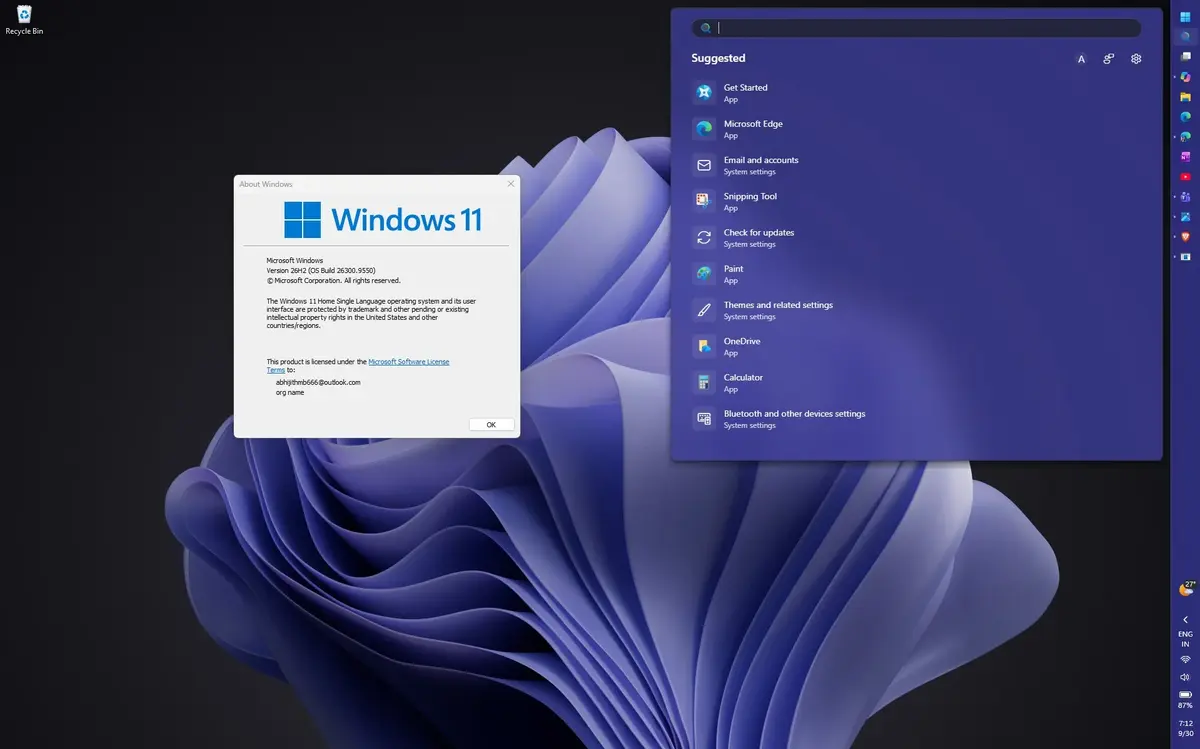 Whether a user is opening a new window, clicking a desktop icon, or accessing a right-click menu, the system reacts with increased speed. This mechanism has proven particularly effective in enhancing the fluidity of the user interface, with internal metrics showing that common tasks, such as navigating the Start menu, are now significantly more responsive than before.
Lower Hardware Requirements Benefit Older Devices
The performance gains provided by the 26H2 update are especially impactful for users running Windows 11 on modest or older hardware. Because the operating system is now less demanding on system memory, entry-level computers can maintain a consistent level of performance without frequent slowdowns. This efficiency boost ensures that the overall stability of the OS is maintained, even under heavy usage scenarios. By alleviating the burden on system resources, Microsoft has successfully created a more accessible and agile environment for a broader range of PC users. The combination of optimized RAM management and the new latency-focused profile ensures that the system feels modern and fast, regardless of the underlying hardware specifications. As the ecosystem continues to evolve, these granular improvements demonstrate a clear commitment to enhancing the user experience through smarter software engineering.
Have you noticed a significant improvement in your system’s speed or multitasking capability since installing the Windows 11 26H2 update? Share your experiences and specific hardware configurations in the comments section below.
Your comment has been submitted,
it will be published after approval.