
Google Launches Nano Banana 2.1 for Advanced Image Editing

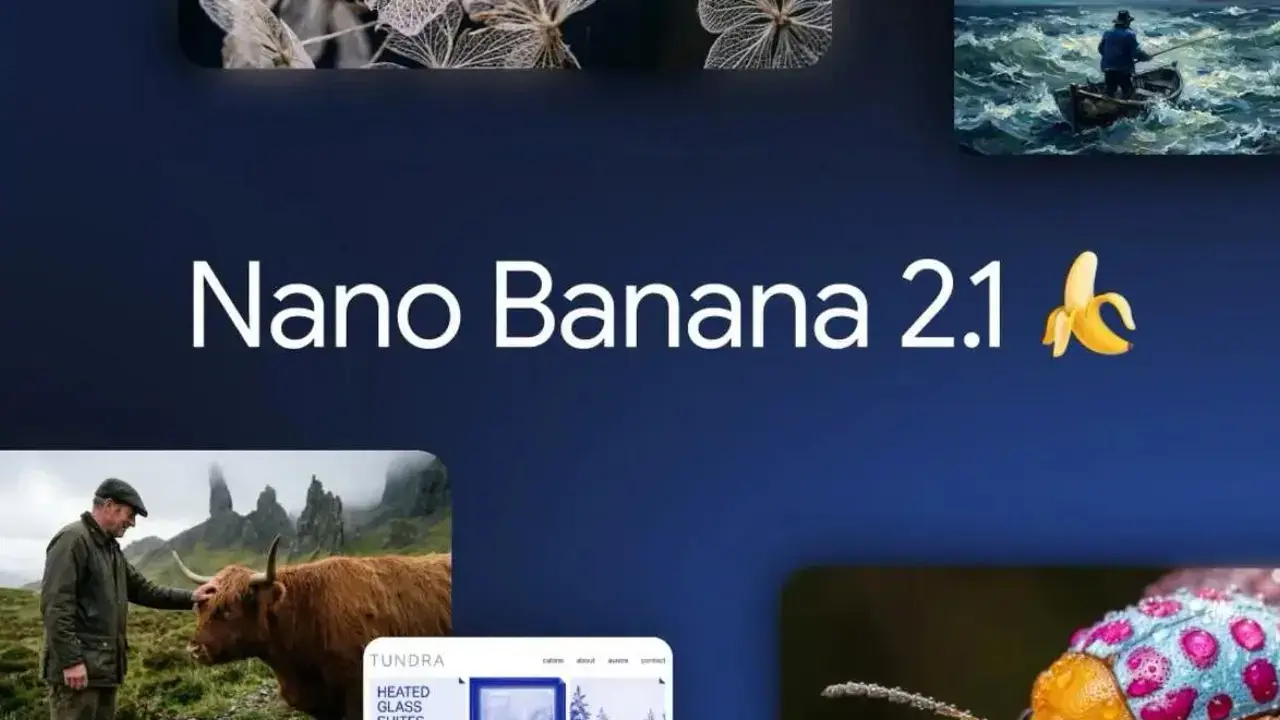
Google has officially released Nano Banana 2.1, a significant upgrade to its artificial intelligence-driven image generation and editing suite. Built upon the powerful Gemini 3.6 Image architecture, this latest version provides users with superior precision and consistency when performing complex visual edits. The rollout, which occurred this week, makes these advanced capabilities accessible through the Gemini application, Google Search’s AI Mode, and various enterprise-level platforms. By moving beyond simple generation, the Nano Banana 2.1 update empowers both professional designers and casual users to perform granular adjustments to specific areas of a canvas without altering the entire composition.
- Nano Banana 2.1 utilizes the Gemini 3.6 Image architecture to enhance precision in visual editing tasks.
- The model enables users to modify specific regions of an image while preserving the overall texture and integrity of the original content.
- Support for 1K, 2K, and 4K resolutions provides developers with greater flexibility across various enterprise applications.
- The system integrates multi-modal data processing to handle text, audio, video, and graphic inputs simultaneously.
Regional Editing Capabilities Have Been Enhanced
The standout feature of Nano Banana 2.1 is its ability to maintain object and subject consistency during the editing process. Previously, altering a specific portion of an image often resulted in unintended inconsistencies, such as shifts in lighting or distorted object details. With this update, the model ensures that when a user selects a localized area for modification, the surrounding textures and structural elements remain untouched and coherent. This improvement significantly reduces the time professionals spend on manual corrections when working on large-scale creative projects.
Technical Performance Standards Have Been Raised
Beyond regional editing, the underlying technical framework of the model has received substantial improvements, particularly in text rendering and physical world accuracy. The software now interprets and places text within images with higher precision than previous iterations. Furthermore, the model exhibits a deeper understanding of real-world physical laws, resulting in outputs that appear more realistic and grounded.  Developers can access these advanced tools using the gemini-nano-banana-2.1 identifier, allowing them to leverage multi-modal data processing. The system effectively synthesizes text, audio, video, and graphic inputs to generate high-resolution visual outputs that meet modern industry standards.
Corporate Platform Integrations Have Been Completed
Google has extended the reach of Nano Banana 2.1 beyond individual users by embedding its capabilities into its enterprise ecosystem. Platforms such as Google AI Studio, Flow, Stitch, and Google Ads have integrated this technology to streamline advertising and content production workflows. Additionally, users on the Gemini Enterprise Platform can now utilize these sophisticated editing tools directly within their existing workspace. This strategic move aligns with Google’s broader initiative to integrate advanced artificial intelligence tools into professional business environments, ultimately enhancing productivity and creative quality for corporate teams worldwide.
Have you had a chance to test the new editing features offered by Nano Banana 2.1 in your own projects? We would love to hear your thoughts on which specific AI-driven image editing capabilities you find most useful for your daily workflow, so please share your feedback in the comments section below.
Your comment has been submitted,
it will be published after approval.