
SpaceX Calls for Transparency to Improve Space Safety Standards


In an effort to mitigate the rising risks of orbital congestion, SpaceX has issued a formal call for all satellite operators to adopt transparent data-sharing protocols. As the number of active satellites in low Earth orbit increases, the aerospace firm led by Elon Musk is championing the development of a unified “Space-Safety” portal to ensure real-time coordination. By requiring standardized data exchanges among industry stakeholders, SpaceX aims to prevent collisions that could generate harmful debris. This initiative marks a significant step toward establishing global space safety standards as the commercialization of orbit accelerates and traffic density continues to challenge current management systems.
- SpaceX is urging global satellite operators to participate in real-time orbital data sharing to prevent potential collisions.
- The company intends to launch a dedicated “Space-Safety” portal to standardize traffic management across the industry.
- Starlink satellite orbits are being lowered from 550 kilometers to 480 kilometers to reduce debris risks and improve atmospheric disposal.
- New protocols are being implemented to accelerate the deorbiting process for inactive satellites.
Satellite Operators Are Sharing Orbital Data to Improve Transparency
The increasing density of objects in low Earth orbit has transformed space traffic management into a critical safety priority. SpaceX advocates for an ecosystem where operators can monitor the positions of other satellites in real-time through its proposed security portal. This approach enables satellites to maneuver autonomously or through coordinated actions to avoid hazardous encounters.
Company officials emphasize that such data sharing must evolve from a voluntary gesture into an industry-wide mandate to ensure long-term orbital sustainability. By fostering a culture of transparency, the industry can minimize the likelihood of incidents that threaten the operational viability of future space missions.
Starlink Satellite Altitudes Are Being Reduced to Minimize Collision Risks
Michael Nicolls, Vice President of Engineering for Starlink, recently outlined strategic shifts in the company’s operational security framework. A significant portion of the constellation, comprising approximately 4,400 units, is being moved from an altitude of 550 kilometers down to 480 kilometers. 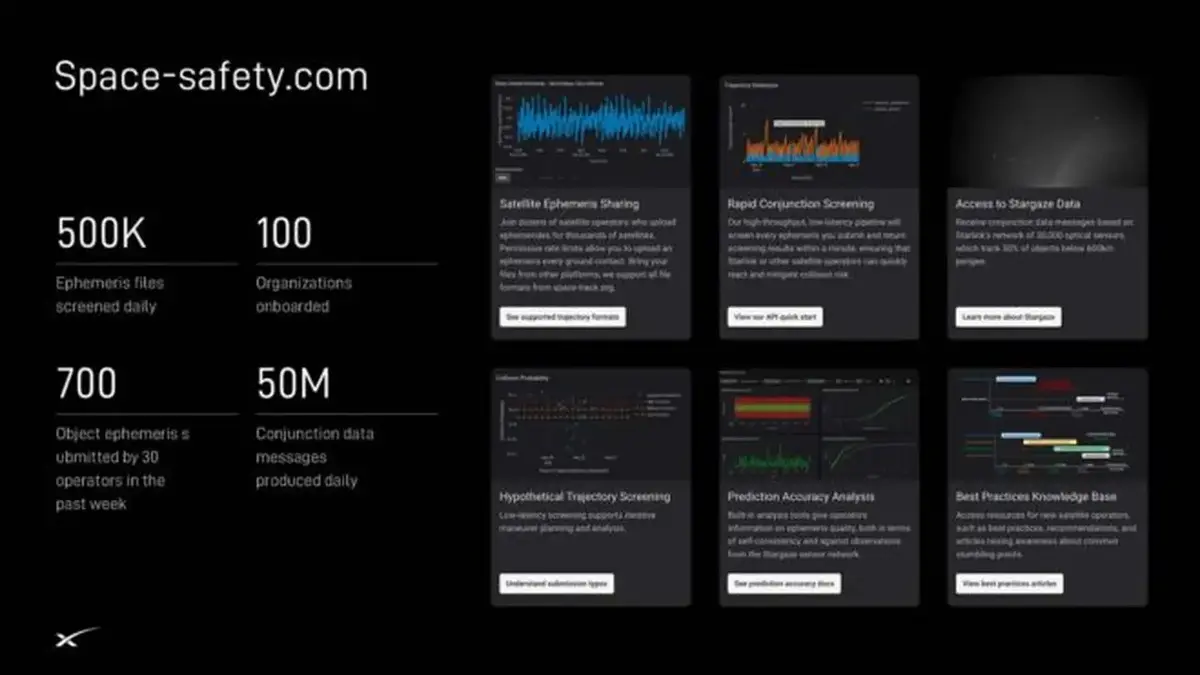 This decision is driven by the fact that lower altitudes contain less pre-existing debris, and satellites at this height burn up more efficiently upon re-entry in the event of a system failure.
Nicolls noted that out of more than 9,000 active satellites currently in operation, only two units have experienced significant failures, highlighting the high reliability of the current network. This strategic positioning serves as a proactive measure to maintain the highest safety standards in an increasingly crowded environment.
New Protocols Are Being Established for Sustainable Space Operations
The future of the space ecosystem depends heavily on the ability of operators to safely deorbit hardware once its mission life concludes. SpaceX is pushing for the adoption of universal protocols that prevent the accumulation of space junk across all satellite networks. For satellites that lose control, the integration of rapid response and active tracking systems is essential to protect other operational assets.
Industry representatives are now facing pressure to align with these safety standards, as the collective response to this call will likely dictate the regulatory future of orbital traffic. Establishing these frameworks is not merely an operational choice but a necessity for the preservation of space as a resource for global communication and scientific discovery.
Do you believe that these collaborative data-sharing initiatives by private companies are enough to eliminate the risks of orbital collisions, or should there be stricter international regulations? Share your thoughts on the future of space safety and exploration in the comments section below.
Your comment has been submitted,
it will be published after approval.