
Renault E-Space Concept Debuts as a Modern Electric MPV

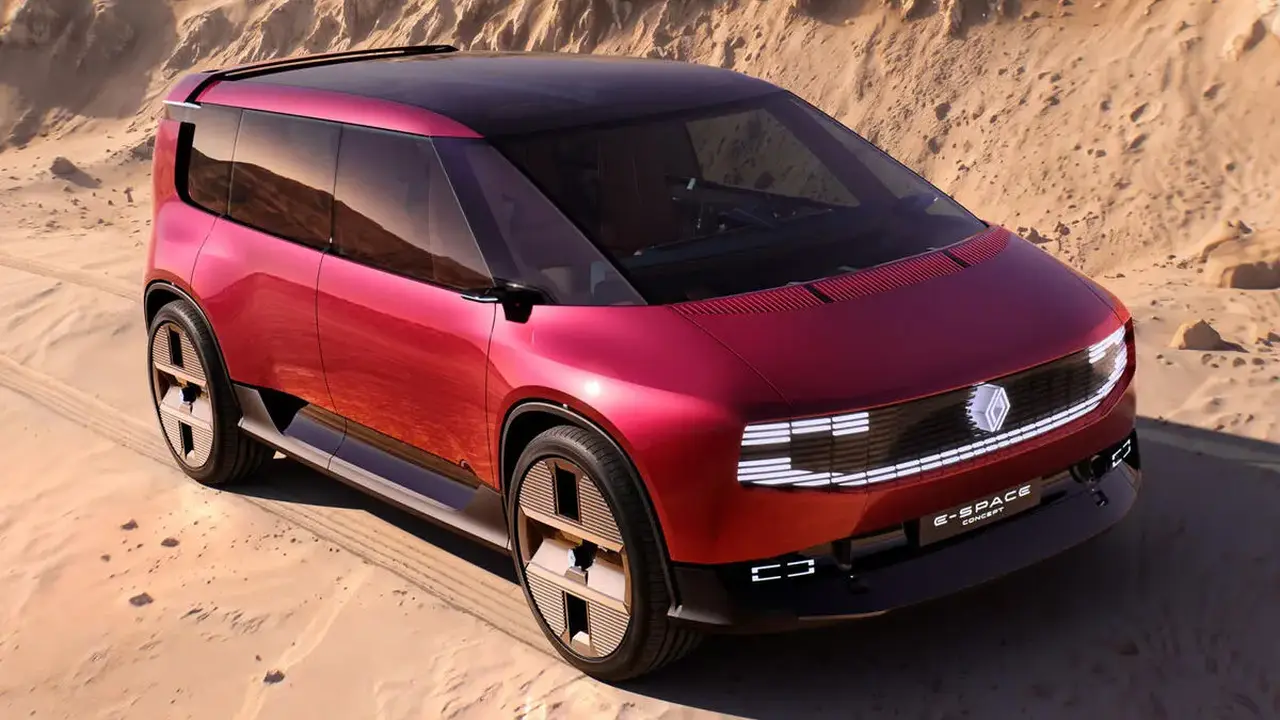
Renault introduced its new E-Space concept car at the 2026 Paris Motor Show, marking a significant return to the “monovolume” design that defined European family travel decades ago. As part of the brand’s futuREady strategy, this fully electric vehicle pays homage to the original 1984 Espace, which pioneered the minivan segment. While the automotive industry has leaned heavily toward SUVs in recent years, Renault is revisiting the single-volume form factor to maximize interior efficiency and comfort. The concept showcases how electric platforms can revolutionize cabin space for modern families through innovative design and sustainable technology.
- The Renault E-Space features a 4.70-meter monovolume body designed to maximize interior volume.
- Renault utilizes a flat floor layout with six identical seats to enhance passenger flexibility.
- No technical specifications regarding battery capacity or range were released during the show.
- The vehicle serves as a vision study for future family-oriented electric models.
Design Elements Depart from Current SUV Trends
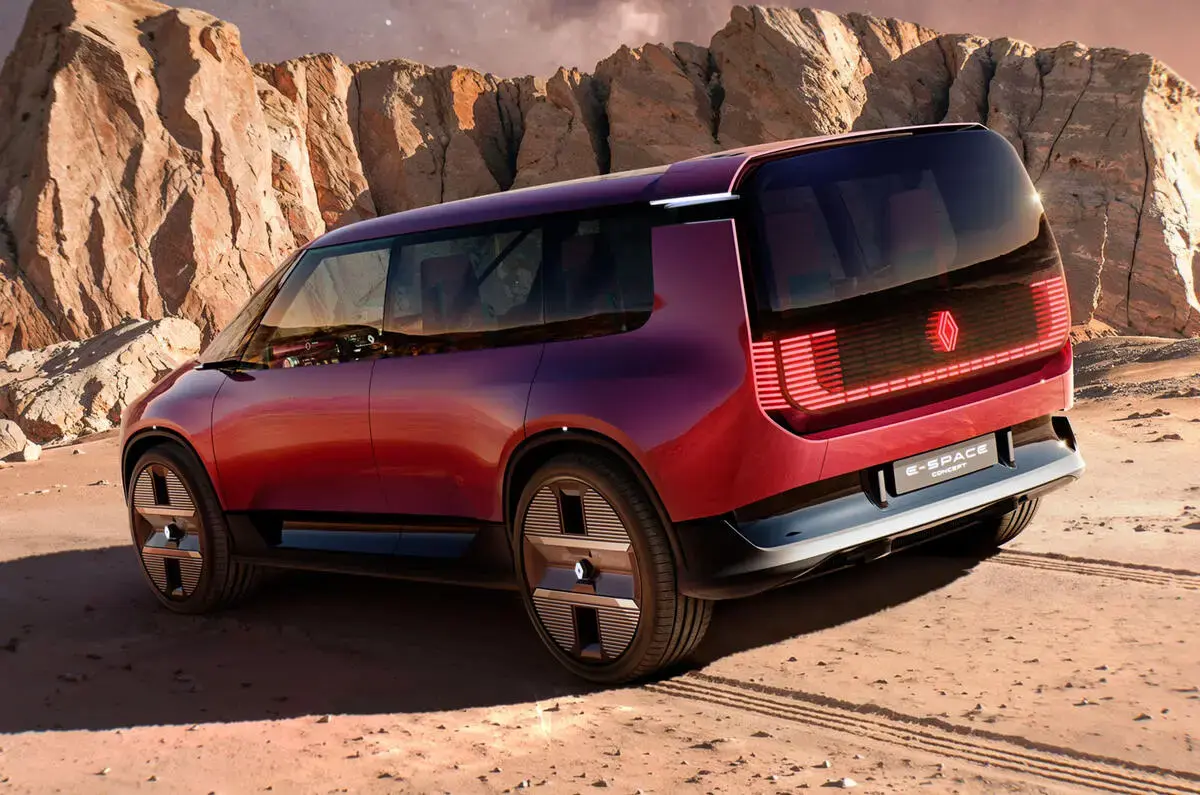
The Renault E-Space measures 4.70 meters in length and features a distinctive monovolume body style. Unlike the rugged, high-clearance aesthetic of modern SUVs, this concept focuses on a short and slanted nose that connects directly to a cavernous cabin. This aerodynamic silhouette is intended to reduce drag while providing the maximum possible footprint for passengers. The rear of the vehicle remains intentionally boxy and angular, a design choice made specifically to ensure that headroom and cargo capacity are not compromised by sloping rooflines.
Visual details on the exterior further emphasize its futuristic identity. The front and rear sections are adorned with U-shaped light strips that span the width of the vehicle. At the center of the nose, a pixelated, illuminated Renault logo serves as a focal point. The concept was showcased in a deep ruby shade called “Noir Rubé,” which gives the vehicle a premium and sophisticated presence. Even the naming convention is deliberate; the “E” represents the brand’s E-Tech electric lineage, while “Space” highlights the core philosophy of cabin roominess.
Interior Layout Maximizes the Benefits of Electric Platforms
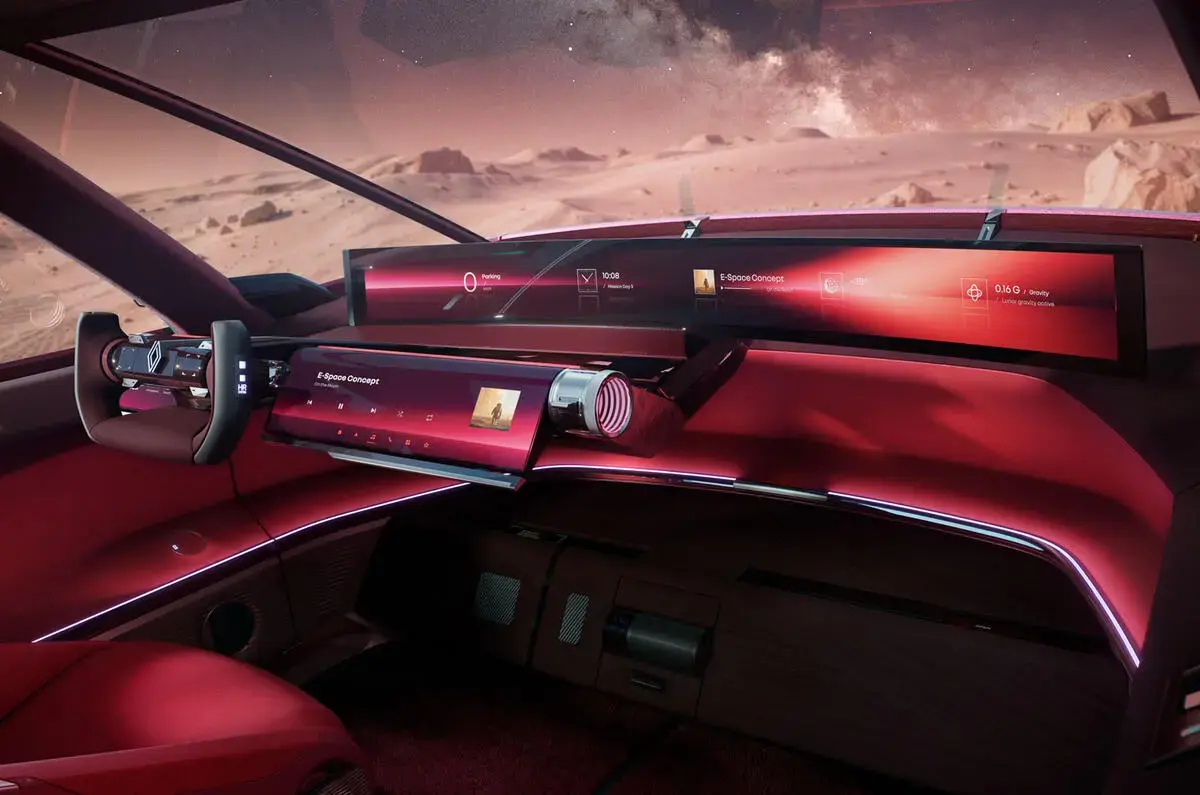
One of the primary advantages of a dedicated electric platform is the freedom it allows in cabin architecture. Because the battery pack is integrated into the chassis, the Renault E-Space features a completely flat floor. This eliminates the traditional transmission tunnel, allowing for a versatile seating arrangement. The concept includes six identical seats distributed across three rows. This ensures that every passenger, regardless of where they sit, enjoys the same level of comfort and ergonomic support.
The seats are designed with functionality in mind, as they can rotate slightly to make entering and exiting the vehicle easier for passengers. Furthermore, the interior can be reconfigured so that passengers can gather around a large central table, transforming the car into a mobile lounge. This flexible approach is a direct nod to the revolutionary 1984 Espace, which changed the industry with its removable seats and 180-degree swiveling front chairs. While the current sixth-generation Espace has transitioned into a large SUV, the E-Space concept seeks to reclaim its MPV heritage.
Renault Defines the Future Without Immediate Production Plans
Despite the polished look of the concept, Renault stated that there are currently no plans for immediate serial production of the E-Space. Consequently, the manufacturer did not disclose specific technical data such as electric motor output, battery capacity, or estimated driving range. Instead, the vehicle is positioned as a vision study meant to guide the development of future electric family cars under the company’s broader strategic roadmap.
The E-Space is actually the second single-volume family concept Renault has revealed in the past seven months. In March, the company introduced the R-Space Lab, a more compact 4.50-meter study with a five-seat configuration. By showcasing the E-Space alongside other heritage-inspired projects like the Renault 8 Gordini Concept and the Renault 4 JP4x4 Concept at the Paris stand, the brand is signaling a strong commitment to blending its historical DNA with future-proof electric drivetrains.
Nostalgia Drives the Potential Return of the Minivan
The recent success and high anticipation surrounding the electric revivals of the Renault 5, Renault 4, and Twingo suggest that nostalgia is a powerful motivator for modern car buyers. The E-Space takes this formula a step further by attempting to revive an entire vehicle class rather than just a single model name. For large families, the flat floor and equal-sized seating of a minivan often provide a more logical and practical package than the elevated but sometimes cramped seating of a standard SUV.
While Renault is keeping the door to production closed for the time being, the automotive world is watching closely. If the public reception at international shows remains high, the pressure to bring a dedicated electric MPV to market may become too significant to ignore. For now, the E-Space serves as a reminder that the “father of the MPV” still has plenty of ideas for the electric age.
Do you think the automotive industry should move back toward practical minivans like the E-Space, or do you prefer the styling of modern SUVs? Share your thoughts on the future of family transportation in the comments below!
Your comment has been submitted,
it will be published after approval.