
SolidAERO Launches Versatile CEPNI Tactical UAV Family


Turkish defense technology company SolidAERO has officially introduced the CEPNI family of fixed-wing tactical unmanned aerial vehicles (UAVs) to the operational field. Named after the historic Oghuz Turkic tribe, the platform recently completed its inaugural mission, where it successfully served as a target aircraft to support the development of a new air defense system. Developed to address diverse tactical requirements through a shared, modular airframe architecture, the CEPNI system emphasizes rapid deployment and operational flexibility. Designed for portability, the entire system can be transported in a standard container and assembled by a single operator in under 30 minutes, allowing for swift integration into tactical field environments.
- The CEPNI UAV family utilizes a modular airframe to support surveillance, target practice, and electronic warfare missions.
- Platforms eliminate the need for traditional runways by launching via pneumatic catapults or vehicle-mounted ramps.
- The system maintains operational effectiveness in high-interference environments by featuring a carbon fiber structure capable of reaching speeds of 185 kilometers per hour.
Three Distinct Configurations Serve Specific Operational Needs
The CEPNI family is categorized into three primary versions, each tailored to distinct battlefield functions. The Midrange variant focuses on Intelligence, Surveillance, and Reconnaissance (ISR) missions, boasting a payload capacity of 15 kilograms and a range spanning hundreds of kilometers. This version serves as the backbone for tactical situational awareness. 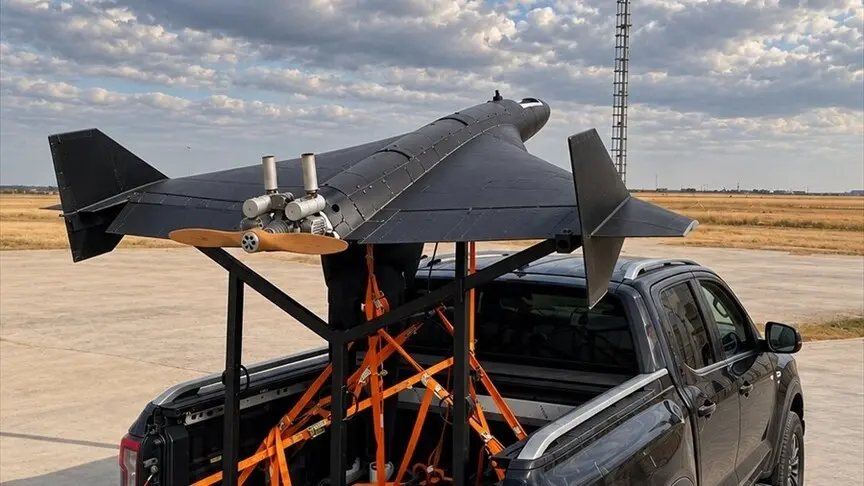 Complementing this is the Target variant, which provides a cost-effective solution for testing air defense capabilities. With a payload capacity of 5 kilograms and a range exceeding 100 kilometers, this version is designed for reuse, featuring a reinforced hull that permits safe recovery after landing. Finally, the Decoy variant is specifically engineered to mimic the radar signatures of various aerial threats, effectively saturating enemy radar systems and forcing adversaries to expend resources on false targets.
High-Speed Performance Supports Complex Training Scenarios
Engineered for high-intensity conflict zones, the CEPNI series is hardened against electronic warfare and signal jamming. The platform achieves a cruising speed of 185 kilometers per hour, providing a realistic representation of modern aerial threats. 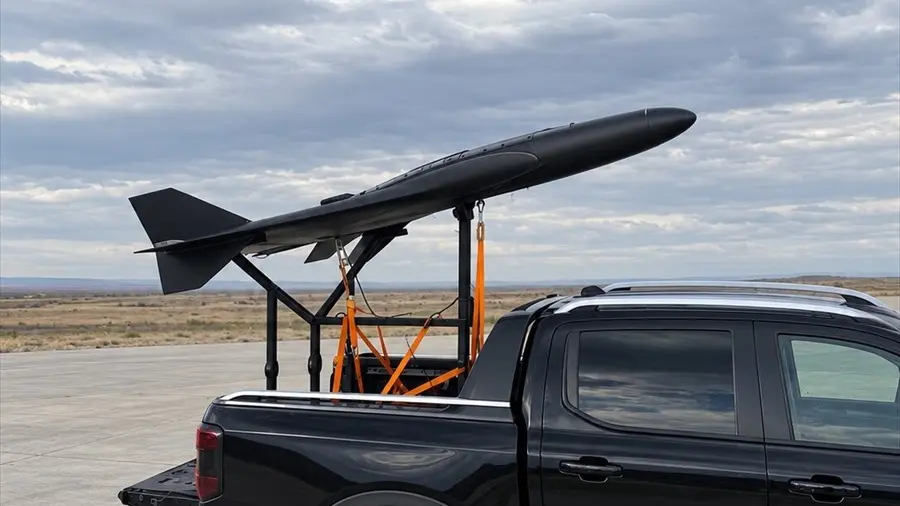 The Target variant is particularly notable for its ability to simulate the radar cross-sections of fighter jets, helicopters, and cruise missiles. By providing these dynamic, high-fidelity training targets, SolidAERO enables military forces to refine their air defense tactics against a wide spectrum of potential enemy profiles, significantly enhancing the readiness of air defense units.
Modular Design Reduces Logistics Requirements
The core philosophy behind the CEPNI development process is the reduction of logistical complexity. By utilizing a single common airframe for multiple mission types, defense units can streamline their inventory, maintenance, and training protocols. The removal of the requirement for traditional runway infrastructure is a critical advancement for tactical forces operating in austere or rapidly shifting environments. As the defense landscape continues to evolve, the integration of such versatile and rapidly deployable systems is expected to become a cornerstone of modern tactical operations, offering commanders increased agility and enhanced mission success rates.
We are interested in hearing your thoughts on how modular UAV technology like the CEPNI system will impact the future of tactical air defense; please share your insights in the comments section below.
Your comment has been submitted,
it will be published after approval.