
Intel, AMD, and Qualcomm Implement Global Processor Price Hikes

A wave of price increases has hit the semiconductor industry as major manufacturers Intel, AMD, and Qualcomm adjust their pricing structures for various processor lineups. According to reports from Taiwan’s Commercial Times, Intel initiated significant price hikes of up to 20 percent on several key series effective September 1, 2024. This industry-wide trend reflects rising production costs and high demand for advanced silicon. Alongside Intel’s broad adjustments, Qualcomm has increased the costs of its Arm-based Snapdragon platforms, and market indicators suggest that AMD is preparing similar pricing updates for its Ryzen and EPYC processor families to address current manufacturing pressures.
- Intel has raised prices by up to 20 percent across its Panther Lake, Meteor Lake, Arrow Lake, Alder Lake, and Twin Lake processor families.
- Qualcomm increased the cost of its Snapdragon X and X2 Elite platforms by approximately 10 percent starting October 1.
- AMD is expected to implement a 10 percent price increase for specific processors within its Ryzen and EPYC series.
- Rising costs are primarily attributed to advanced packaging technologies and increased global demand for artificial intelligence and server-grade hardware.
Intel Processor Families Experience Significant Price Adjustments
Intel has executed a comprehensive update to its price lists, affecting a diverse range of its product catalog. The most substantial increases, reaching between 15 and 20 percent, are observed in the Panther Lake series, which features sophisticated integrated graphics units. These changes demonstrate a strategic shift in how the company manages its high-performance segment.
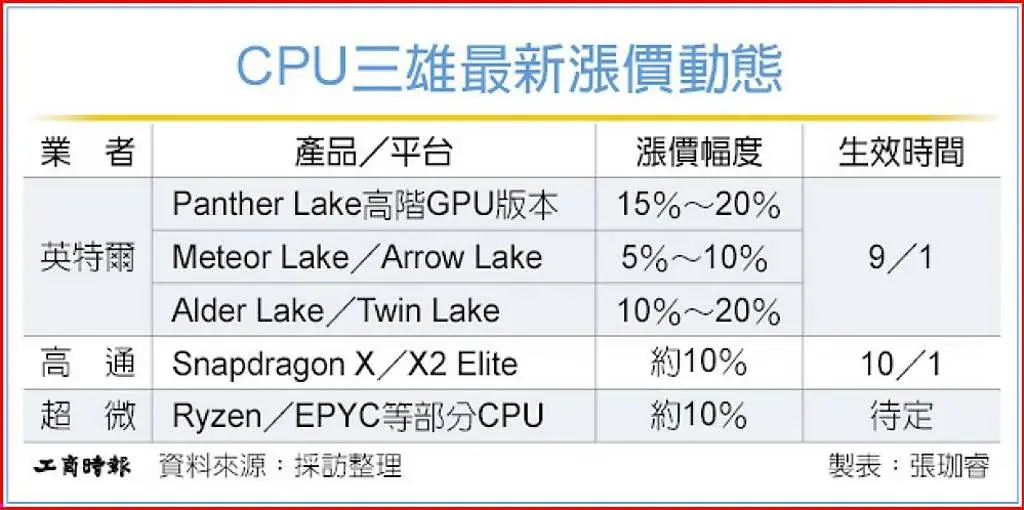
The adjustments are not limited to the flagship models, as the Meteor Lake and Arrow Lake series—which serve as the backbone for many modern thin-and-light laptops—have seen price hikes ranging from 5 to 10 percent. Similarly, the company’s Alder Lake and Twin Lake processors, which cover entry-level to mid-range computing needs, have been subjected to increases of 10 to 20 percent. It is important to note that these figures are not uniform, and the impact varies significantly depending on the specific model within each product family.
Qualcomm and AMD Adjust Pricing Strategies
Following the trend set by market leaders, Qualcomm has updated its pricing for its cutting-edge Arm-based solutions. As of October 1, the Snapdragon X and Snapdragon X2 Elite platforms, which are critical for the latest Windows-based laptop architectures, have seen a 10 percent price increase. This move signals that the supply chain pressures affecting traditional x86 manufacturers are equally impacting the burgeoning Arm-on-Windows segment.
AMD is also reportedly moving toward a 10 percent increase for its Ryzen and EPYC processor lines. This aligns with the broader industry consensus that silicon production costs are escalating. The growing necessity for advanced packaging technology, combined with the massive surge in global demand for AI-capable chips and high-performance server hardware, remains the primary driver behind these upward adjustments. As AI integration becomes standard across various sectors, the pressure on manufacturing facilities continues to intensify.
These developments may eventually influence the final retail price for consumers, although the immediate effect on desktop hardware remains somewhat unpredictable. As the industry grapples with these supply chain challenges, the cost of computing power appears to be on a consistent upward trajectory.
How do you expect these consecutive price hikes in the processor market to impact your upcoming hardware upgrade plans? Share your thoughts and predictions in the comments section below.
Your comment has been submitted,
it will be published after approval.