
TUSAŞ Sets Ambitious 2035 Production Targets for KAAN and More

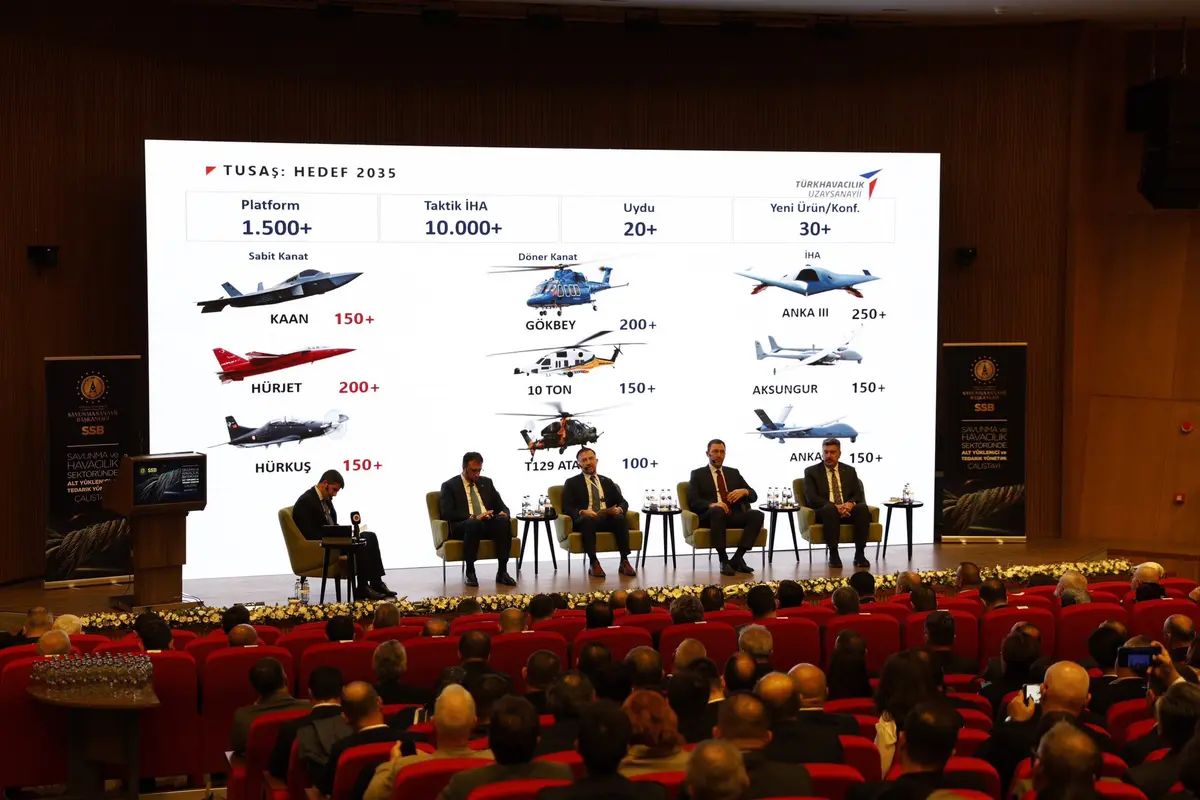
TUSAŞ General Manager Mehmet Demiroğlu unveiled the company’s comprehensive 2035 production roadmap during the Subcontractor and Supply Chain Management Workshop held recently. As Türkiye’s primary aerospace manufacturer, the firm plans to significantly scale its production capacity for aircraft, helicopters, unmanned aerial vehicles (UAVs), and satellite systems. The ambitious strategy outlines specific manufacturing targets including over 150 KAAN fighter jets, 200 HÜRJET advanced jet trainers, and more than 10,000 tactical UAVs by 2035. This long-term vision emphasizes TUSAŞ’s commitment to strengthening national defense capabilities while transitioning from prototype development to large-scale industrial manufacturing across multiple critical aviation platforms.
- TUSAŞ aims to manufacture more than 1,500 major air platforms across aircraft, helicopter, and UAV categories by 2035.
- The company plans to produce over 10,000 tactical UAVs as the largest volume component of its long-term manufacturing strategy.
- Production operations will rely on a restructured supply chain that delegates component assembly to a broader network of domestic subcontractors.
- The roadmap includes the delivery of over 150 KAAN national combat aircraft starting in the late 2020s.
KAAN and HÜRJET Lead the Fixed-Wing Aircraft Strategy
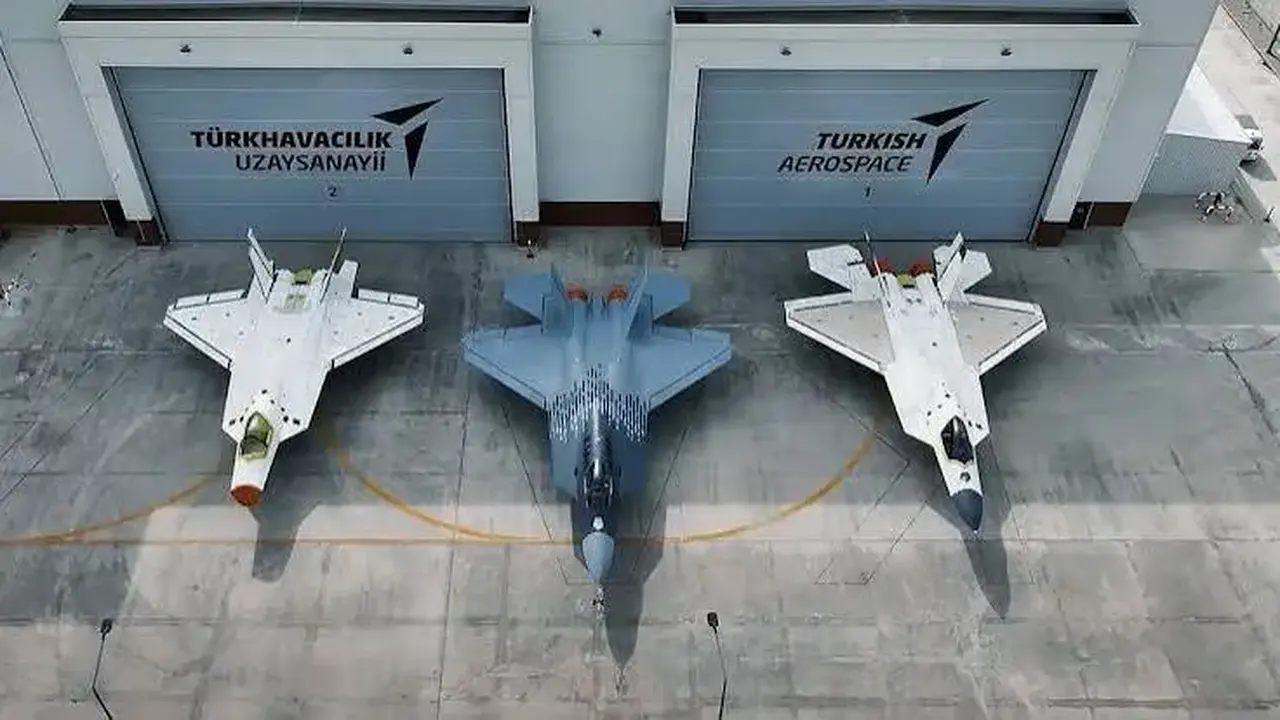
The centerpiece of the company’s expansion is the KAAN national combat aircraft program. TUSAŞ expects to produce more than 150 units by 2035, requiring a massive increase in manufacturing capacity as the project shifts from testing to serial production. Initial deliveries to the Turkish Air Force are anticipated between late 2028 and early 2029, provided the development cycle remains on schedule.
Simultaneously, the HÜRJET program targets a production volume exceeding 200 units to meet both domestic training requirements and international export demands. Spain has already signed an agreement for 30 units, with deliveries slated for 2028. Additionally, the HÜRKUŞ turboprop trainer program maintains a target of over 150 units as the HÜRKUŞ-II variant enters military service.
Helicopter Programs Expand to Include Over 450 Platforms
Rotary-wing aircraft form another pillar of the 2035 strategy, with specific goals set for the GÖKBEY utility helicopter, the T925 heavy-lift platform, and the T129 ATAK attack helicopter. TUSAŞ plans to manufacture over 200 GÖKBEY units, 150 T925 helicopters, and 100 T129 ATAK units. The GÖKBEY is currently serving various security and civil agencies, while the T925 is being developed to offer superior heavy-lift capabilities for the Turkish Armed Forces.
Production Scale Increases for Unmanned Aerial Systems
The company’s commitment to unmanned systems is highlighted by a target of over 250 ANKA-3 combat drones, 150 AKSUNGUR platforms, and 150 units from the standard ANKA family. The ANKA-3, characterized by its low-observable flying wing design, represents a leap in autonomous combat capabilities. Furthermore, the massive target of 10,000 tactical UAVs underscores TUSAŞ’s intent to dominate the market for smaller, high-volume autonomous systems.
Subcontractors Assume Greater Responsibility in Production
To achieve these high output numbers, TUSAŞ is transforming its supply chain management. While the company will retain control over final assembly and complex system integration, it intends to shift the manufacturing of structural parts and smaller components to its expanding network of subcontractors. This model, already exemplified by the partnership with TOMTAŞ for HÜRJET components, is designed to enhance efficiency and accelerate delivery timelines across all aerospace programs.
We invite you to share your thoughts on the future of Turkish aerospace and the potential impact of these ambitious 2035 production targets on global defense markets in the comments section below.
Your comment has been submitted,
it will be published after approval.