
Spotify Tightens Subscription Sharing Rules With New QR Verification

Spotify is intensifying efforts to enforce its subscription policies by introducing a new QR code-based verification system for its Premium Family plan users. To ensure that all members of an account reside at the same physical address, the music streaming giant has begun requiring subscribers to re-verify their location credentials. This strategic move aims to restrict the platform’s shared plans strictly to household members, marking a significant escalation in Spotify’s crackdown on unauthorized subscription sharing among friends or non-cohabitating individuals who have been leveraging the service’s family-oriented pricing models.
- Spotify now mandates a dynamic QR code scan to verify the residential address of all Family plan members.
- Users failing to complete the verification process within a seven-day window face a potential downgrade to the free ad-supported tier.
- Non-compliant subscribers risk losing eligibility for any Family or Duo plans for a duration of 12 months.
How the QR Code Verification Process Functions
The newly implemented verification mechanism requires the primary account holder to display a specific QR code on their device, which must then be scanned by the family member’s phone. To prevent users from circumventing the system through static screenshots or image sharing, the QR code refreshes automatically every few seconds. This real-time validation is designed to confirm that all participants are physically present at the same location as the plan manager. 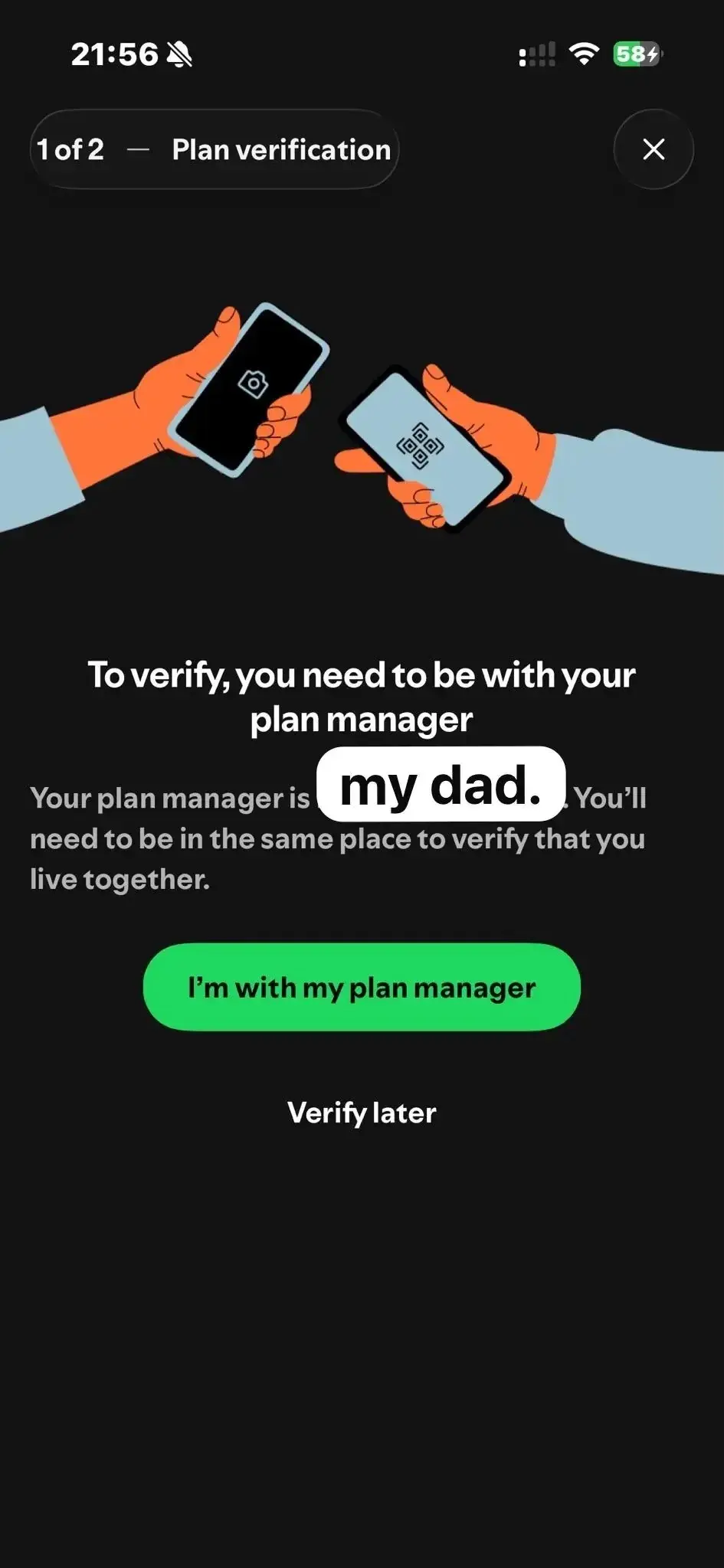
While some users have attempted to bypass these restrictions using screen-sharing software or multiple secondary devices, Spotify’s support documentation remains clear regarding their terms of service. The policy explicitly mandates that all members must reside at the same address as the primary subscriber. This measure serves as a robust deterrent against the commercialization of family plans and the common practice of splitting costs among disparate groups.
The Consequences of Verification Failure
Once a user receives a notification to verify their address, they are granted a strict seven-day grace period to complete the procedure. If the verification is not finalized within this timeframe, the account is automatically transitioned to the free, ad-supported version of the service. Furthermore, those who fail to comply suffer stricter penalties, including being barred from joining any Family or Duo subscription plans for the next 12 months. This policy forces impacted users to either return to individual Premium subscriptions or accept the limitations of the free tier, effectively dismantling shared-access arrangements.
How Historical Subscription Audits Have Evolved
Spotify’s interest in enforcing location-based compliance is not a recent development. The company previously experimented with GPS-based location tracking in 2018 and subsequently updated its terms of service in 2019 to reflect stricter household requirements. While initial public concerns regarding user privacy led to a temporary softening of these policies, the industry trend has shifted toward stricter enforcement.
Major streaming platforms are increasingly adopting household-based verification to ensure revenue integrity and encourage individual subscriptions. As Spotify continues to refine its approach, it remains to be seen how the broader user base will react to these stringent measures. The company’s persistent commitment to these verification protocols highlights its ongoing strategy to optimize revenue streams across its global subscriber base.
Have you received a verification notification from Spotify, or do you believe these measures are too intrusive for standard family plans? Share your thoughts and experiences in the comments section below.
Your comment has been submitted,
it will be published after approval.