
AMD Officially Confirms RDNA 4m Support for Medusa APUs


AMD has officially initiated a crucial preparation phase for its upcoming Medusa APU series by updating its HIP Ray Tracing (HIP-RT) library to version 3.2.0. This significant software update introduces official support for the integrated graphics units (iGPU) of the unreleased Medusa processor family. By incorporating new identification codes such as GFX1171, GFX1170, and GFX115E, AMD has confirmed its strategic move to utilize both RDNA 4m and RDNA 3.5 architectures within these next-generation chips. This development represents a major milestone in AMD’s hardware roadmap, signaling that the company is finalizing the necessary infrastructure for its next wave of computing solutions.
- AMD has upgraded the HIP-RT library to version 3.2.0 to provide critical software support for the Medusa APU lineup.
- The update integrates three distinct iGPU identifiers that confirm the coexistence of RDNA 4m and RDNA 3.5 architectures.
- Entry-level models are expected to utilize RDNA 3.5, while mid-to-high-end segments will transition to the RDNA 4m architecture.
- Advanced Medusa Halo variants are reportedly slated to feature dedicated RDNA 5 graphics dies for superior performance.
HIP-RT Updates Facilitate New Capabilities for Medusa Processors
The release of HIP-RT v3.2.0 extends beyond mere performance optimization or bug fixing; it provides a transparent look at the technological standards governing future AMD hardware. These new graphics identifiers are the foundational building blocks for the Medusa architecture’s visual processing power. With this update, ray tracing performance on integrated graphics units becomes significantly more efficient, marking a leap forward for mobile computing.
The early deployment of this library indicates that AMD is nearing the final stages of its hardware development cycle. Software developers now possess the essential tools required to optimize the graphics capabilities of Medusa-based processors. This availability is expected to accelerate the commercial launch timeline for upcoming laptops and handheld gaming consoles.
The Company Adopts a Dual Architecture Strategy
Technical data suggests that the GFX117X series identifiers represent the new RDNA 4m architecture, while the GFX115X series denotes enhanced versions of the existing RDNA 3.5 technology. By adopting this flexible strategy, AMD aims to provide a versatile performance spectrum that caters to diverse user requirements. 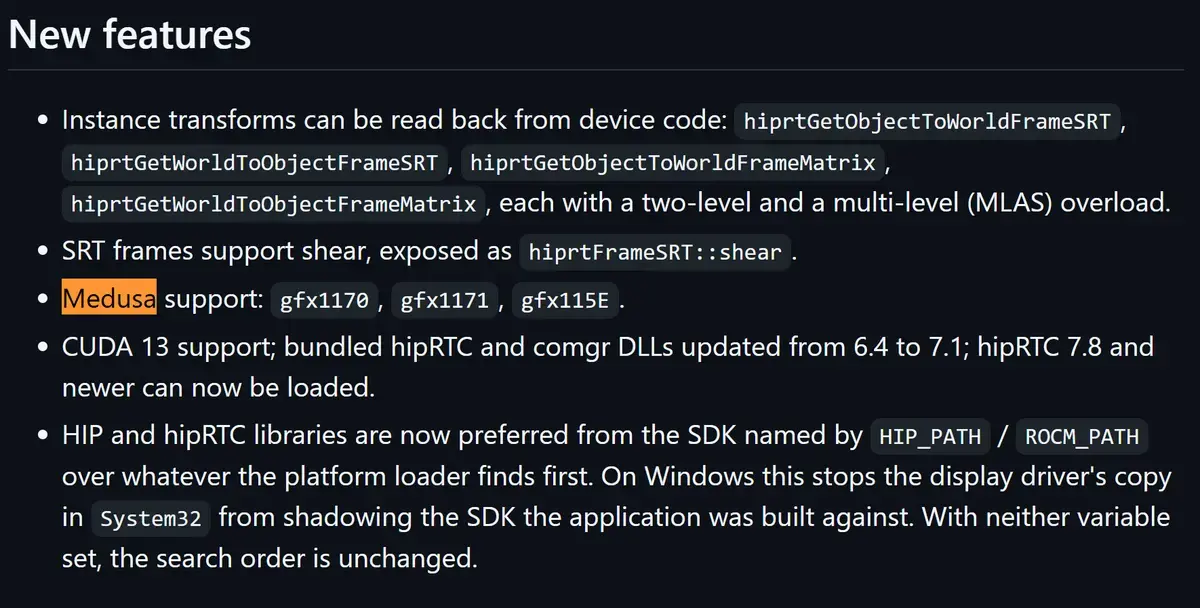
Industry analysts believe the RDNA 4m architecture acts as a hybrid structure, successfully blending the energy efficiency of RDNA 3.5 with the advanced graphics features of RDNA 4.0. The GFX115E identifier specifically points toward an enhanced or efficiency-focused iteration of the RDNA 3.5 family. While entry-level Medusa Point APUs will leverage these designs to balance power consumption and output, premium users can expect significantly higher performance from the RDNA 4m cores.
Premium Models Feature Future RDNA 5 Technology
AMD’s roadmap for the Medusa series encompasses more than just mid-range solutions. Reports indicate that top-tier SoC designs, specifically the Premium and Halo lineups, will integrate RDNA 5 architecture. 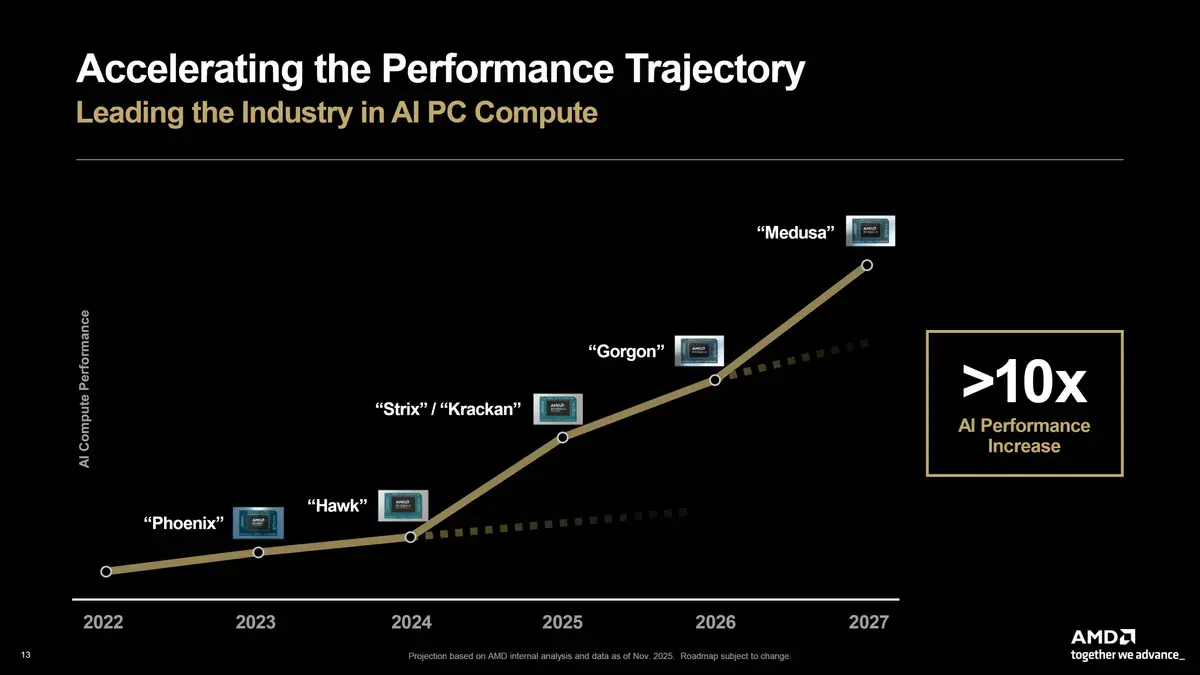
In these specialized models, the graphics unit is expected to reside on a separate die from the main processor, offering clear advantages in thermal management and raw performance. The implementation of RDNA 5 in these segments aims to bolster AMD’s competitiveness, potentially reducing the necessity for discrete graphics cards in gaming-oriented high-performance devices.
The Market Competition Intensifies in the iGPU Sector
As Intel shifts toward its Xe3 architecture, the rivalry in the integrated graphics market has reached a new peak. AMD is responding by increasing core counts and executing deep architectural optimizations within the Medusa family. This intense competition will ultimately benefit consumers, as it forces the delivery of more powerful, cost-effective devices. AMD’s strategic use of diverse architectures suggests a strong commitment to maintaining its lead in the portable computing sector.
Do you believe this multi-architecture strategy will allow AMD to successfully counter Intel’s upcoming Xe3 advancements? Share your thoughts on what you expect from these next-generation integrated graphics units in the comments below.
Your comment has been submitted,
it will be published after approval.