
Google Expands AI-Powered Search Ads to Global Markets

In a strategic effort to diversify revenue streams amidst shifting market dynamics, Google has officially launched its AI-powered search ads across global territories. This expansion marks a significant transition for the tech giant, as it seeks to integrate sophisticated artificial intelligence features into its core advertising business following a period of decelerated growth in traditional search revenue. During the company’s third-quarter earnings call, Alphabet reported a robust total revenue of $127.6 billion, representing a 25% year-over-year increase. However, to maintain momentum, Google is now leveraging its Gemini-backed advertising technology to capture international audiences through smarter, conversational, and highly relevant sponsored content.
- Google has extended the reach of its AI-enhanced search advertisements from the United States to international markets.
- Alphabet reported a total quarterly revenue of $127.6 billion while shifting focus toward AI-driven monetization strategies.
- Search queries using AI integration are found to be significantly longer and more complex than traditional keyword-based searches.
- The company recorded a 103% revenue increase in its Google Cloud division during the latest fiscal quarter.
Global Ad Strategy Undergoes Significant Expansion
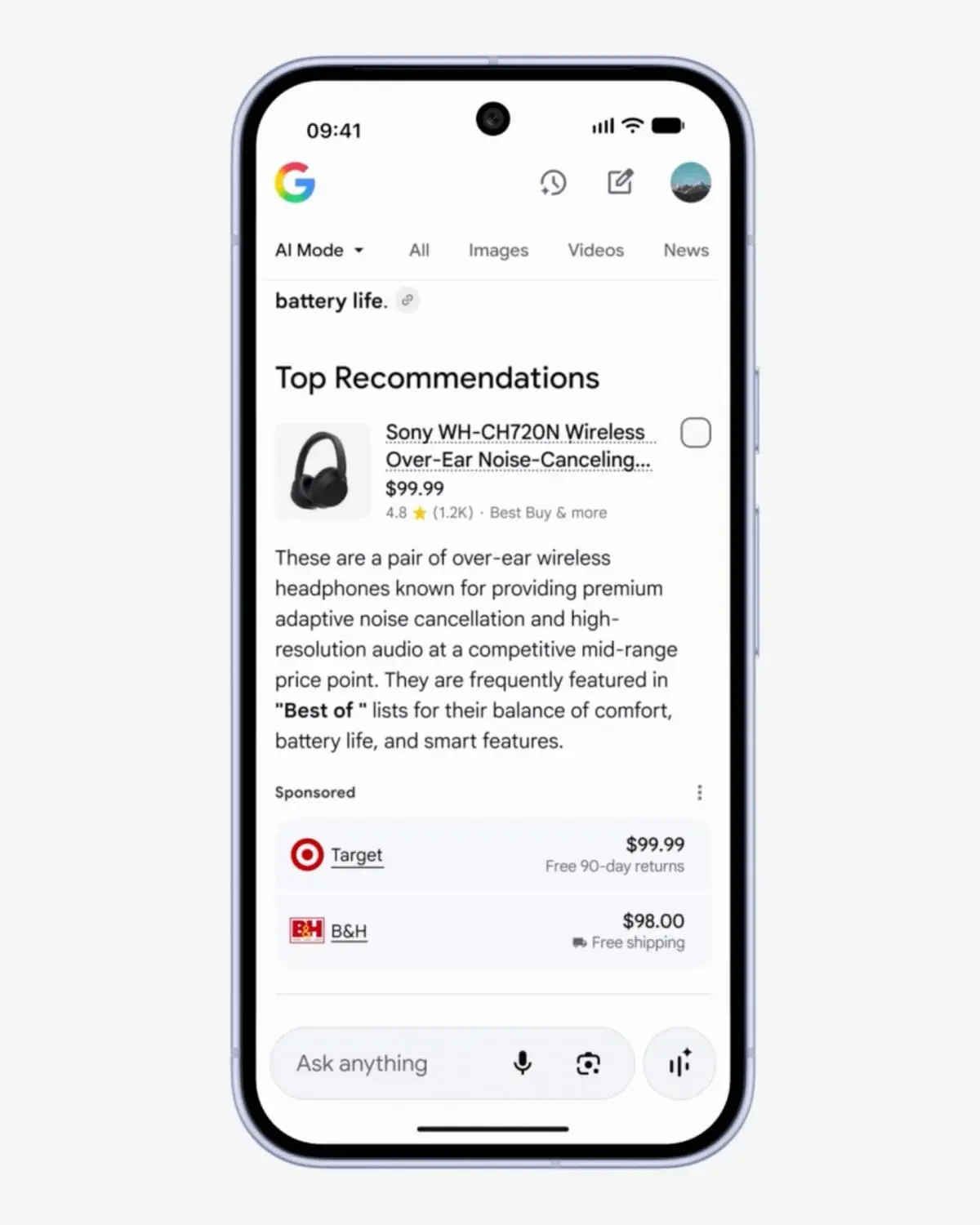
Philipp Schindler, Chief Business Officer at Google, emphasized that high-quality advertisements within AI-generated search results are currently being scaled to a broader user base. This initiative represents the company’s first major effort to monetize its AI-driven search experience on a global scale. By introducing multi-turn ad formats, Google aims to provide more fluid and helpful interactions for users while delivering value to advertisers.
Early performance metrics have proven encouraging for the search giant. According to internal reports, the click-through rates for sponsored product listings within AI-generated responses are performing on par with traditional organic search results. This suggests that users find these AI-integrated recommendations both relevant and helpful, rather than intrusive. This strategy builds directly upon the foundation laid by the Gemini-powered formats introduced earlier in May, which allow for conversational exploration where sponsored suggestions are seamlessly embedded into the AI’s comprehensive answers.
Search Habits and AI Integration Continue to Evolve
Sundar Pichai, CEO of Google, recently highlighted that search query volume is currently experiencing its fastest annual growth rate in five years. This surge is largely attributed to how AI features are fundamentally altering consumer behavior. Users are now crafting significantly longer and more complex queries, with AI-mode searches averaging three times the length of standard search inquiries. Furthermore, one in every five searches now incorporates multimodal elements, such as voice, images, or document analysis.
The scale of this shift is further evidenced by Google surpassing 50 billion monthly visual searches. Pichai noted that the search functionality serves as the primary gateway for delivering the benefits of artificial intelligence to the widest possible global audience. Alongside these developments, the Google Services division, which encompasses core search operations, generated $96.3 billion in revenue, reflecting an 11% year-over-year growth. Meanwhile, Google Cloud continues to exhibit explosive potential, reporting a massive 103% revenue increase to reach $30.7 billion for the quarter.
These financial milestones follow a busy period for the company, marked by the release of the Gemini 4 Argon version and the widespread adoption of the Gemini application, which has now reached one billion monthly active users. As Google continues to refine its AI-centric growth strategy, the industry remains focused on how these advancements will reshape the digital advertising landscape.
As Google continues to integrate sophisticated artificial intelligence into search results, we are interested in hearing your perspective on this transition. Do you believe that AI-powered advertisements enhance or distract from your daily search experience? Please share your thoughts in the comments section below.
Your comment has been submitted,
it will be published after approval.