
Trump opposes iPhone Fold

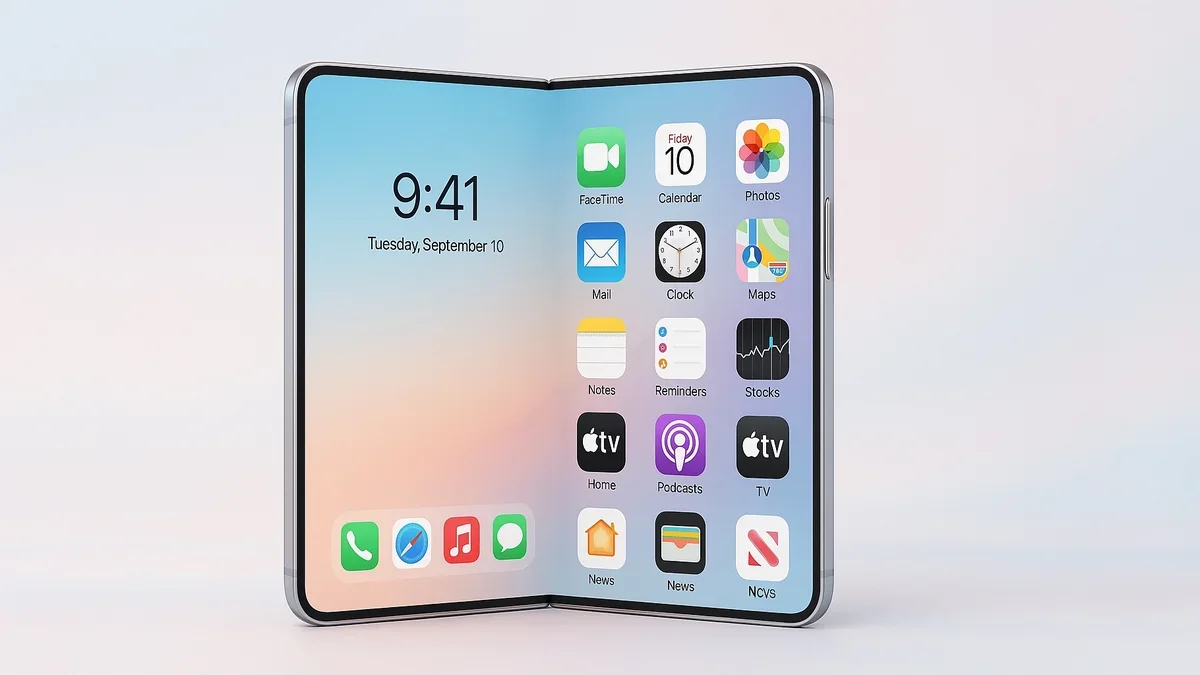
Apple’s foldable iPhone, which has been on the radar for years, has begun to be overshadowed by the competition in the industry even before its release. US President Donald Trump’s rapid entry into the technology arena has made Apple’s slow progress in this area even more apparent.
Trump is not only attracting attention with a smartphone, but also with a dedicated mobile network and a tablet-version social media app for it. This move contrasts sharply with the fact that Apple has still not been able to secure a native Instagram app for the iPad.
Why will Apple’s foldable phone struggle?
Apple’s foldable device remains shrouded in uncertainty compared to competitors like the Galaxy Z Fold series. While the company is known to focus on hardware features like “line-free folding,” this issue has largely been addressed in most foldable models today.
The sole distinguishing feature of Apple’s device appears to be its “foldability.” While this may be sufficient for users fully committed to the Apple ecosystem, it appears to be less convincing for platform-agnostic users.
Trump’s approach to technology is marked by his bold and swift decision-making. While the T1, which is said to be manufactured in China, is technically challenging to compete with its high-end competitors, Trump’s very launch of the device is a significant step. In contrast, Apple CEO Tim Cook’s more cautious approach is fueling criticism that the company is lagging behind in innovation.
Apple’s recently unveiled Vision Pro device, despite its positioning in the mixed reality space, has yet to reach mass audiences. The foldable iPhone, however, faces even greater expectations because it will be in an already established product category.
With this product, Apple is expected to not only keep pace with the market but also reshape the industry. However, the information released so far does not strongly suggest this will happen.
Foldable phones are still considered “nice to have, but not essential” for many users. While switching to a tablet form factor offers advantages in scenarios like reading or watching videos, traditional phones meet the needs of most users.
Details like the ability to convert to a laptop form factor remain a “showpiece.” In this context, the iPhone Fold needs to offer a distinct value proposition. Apple has largely relied on user loyalty to date. However, this loyalty isn’t always permanent.
Changing expectations and technological advancements can accelerate user shifts toward alternatives. The rapid shift in loyalty to some major car brands, particularly in the US, suggests that a similar transformation may be occurring in the mobile world.
Your comment has been submitted,
it will be published after approval.