
Circle to Search Will Detect Scam Messages!


With the exponential increase in the number of malicious actors and their increased sophistication of fraudulent methods using the latest AI models, Google is taking a new step to protect its users. Circle to Search will now detect suspicious messages or web content and warn users that they may be part of a fraud attempt.
Coming with Android 16 QPR2 Update
Google’s Circle to Search feature introduces a new feature that targets fraud attempts, whether in the form of text messages or other web content. After enabling Circle to Search, users can circle or highlight messages or phrases of text they deem suspicious.
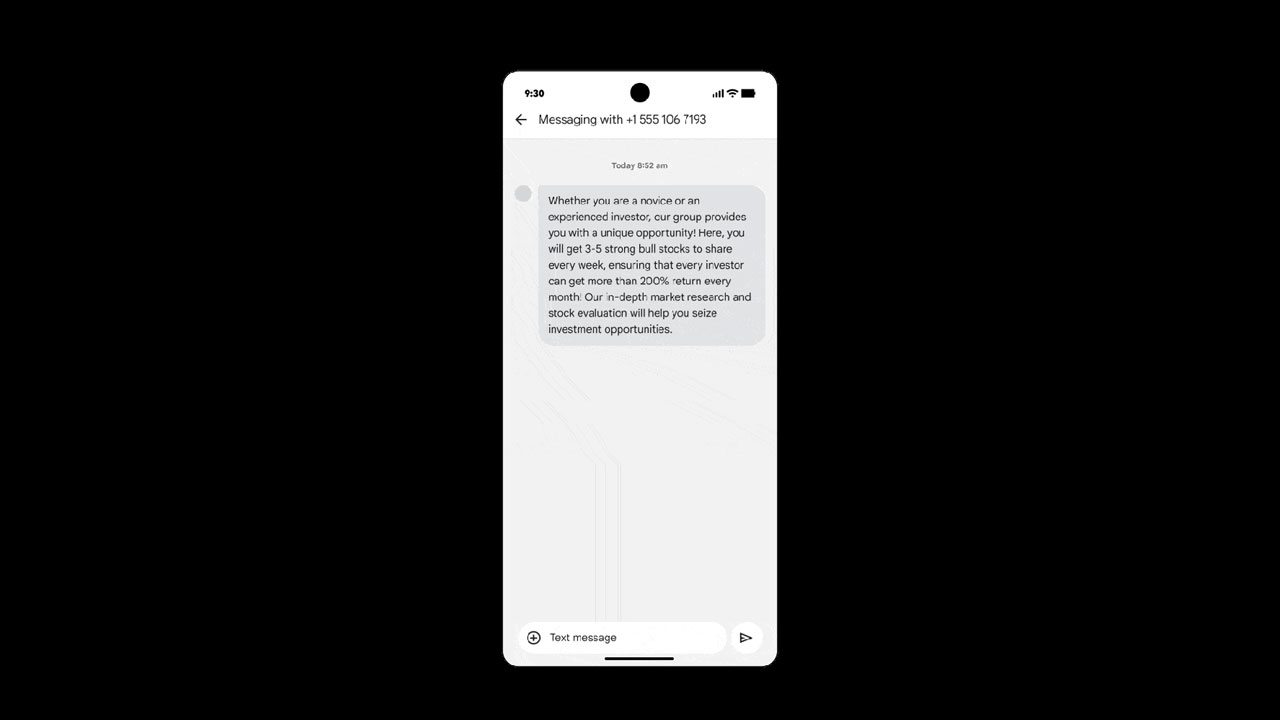
The selection will automatically open to the AI Overview panel. The panel will provide a detailed explanation, backed by insights from across the web, of why the message or content might be a fraud attempt, along with recommended steps to follow.
Given that most online scams follow similar formulas, Circle to Search aims to detect and flag all of these “red flags,” significantly benefiting end-user security.
Google describes this feature as follows:
“Have peace of mind about suspicious chats or text messages. With Circle to Search, you can easily find more information about anything you see on your screen, including content you suspect is a scam. Powered by insights from the web, you’ll see a helpful AI Overview that tells you if the content is likely a scam. By providing relevant guidance and suggested next steps, it allows you to scan suspicious messages without having to switch apps.”
Google also notes that this feature can be used through Google Lens by taking a screenshot of the text and uploading it.
This feature announcement comes as part of Google’s broader Android 16 QPR2 update. This update also includes other security features, such as faster exits from unwanted group chats and the option to mark calls as urgent when calling an outgoing number.
Circle to Search’s new fraud detection functionality will be rolling out globally, but not as quickly as other Android 16 QPR2 additions. Google notes that the feature will appear more widely “once our systems have high confidence in the quality of the response.”
Your comment has been submitted,
it will be published after approval.