
Blue Origin sent a wheelchair user into space!


Blue Origin, the aerospace company founded by Jeff Bezos, achieved a historic milestone on Thursday by sending aeronautical engineer Michaela “Michi” Benthaus into space. This mission, a major step towards accessibility in human spaceflight, makes Benthaus the first wheelchair user to cross the Kármán line into space.
The era of accessibility in space begins: NS-37 mission successfully completed
The New Shepard rocket successfully launched from Launch Site One in West Texas. As part of the NS-37 mission, Benthaus and five passengers experienced approximately 11 minutes of suborbital flight. The crew ascended approximately 62 miles (about 100 kilometers) above Earth, experiencing weightlessness for a few minutes and observing the Earth against the backdrop of the deep darkness of space.
Benthaus, an engineer at the European Space Agency, suffered a spinal cord injury in a mountain bike accident in 2018 and has been using a wheelchair ever since. Sharing his feelings before the launch, Benthaus stated that he thought his space dreams were over forever after the accident. However, he explained that in recent months, working with a fantastic team, he achieved something never before done, making it possible for someone in a wheelchair to participate in the flight.
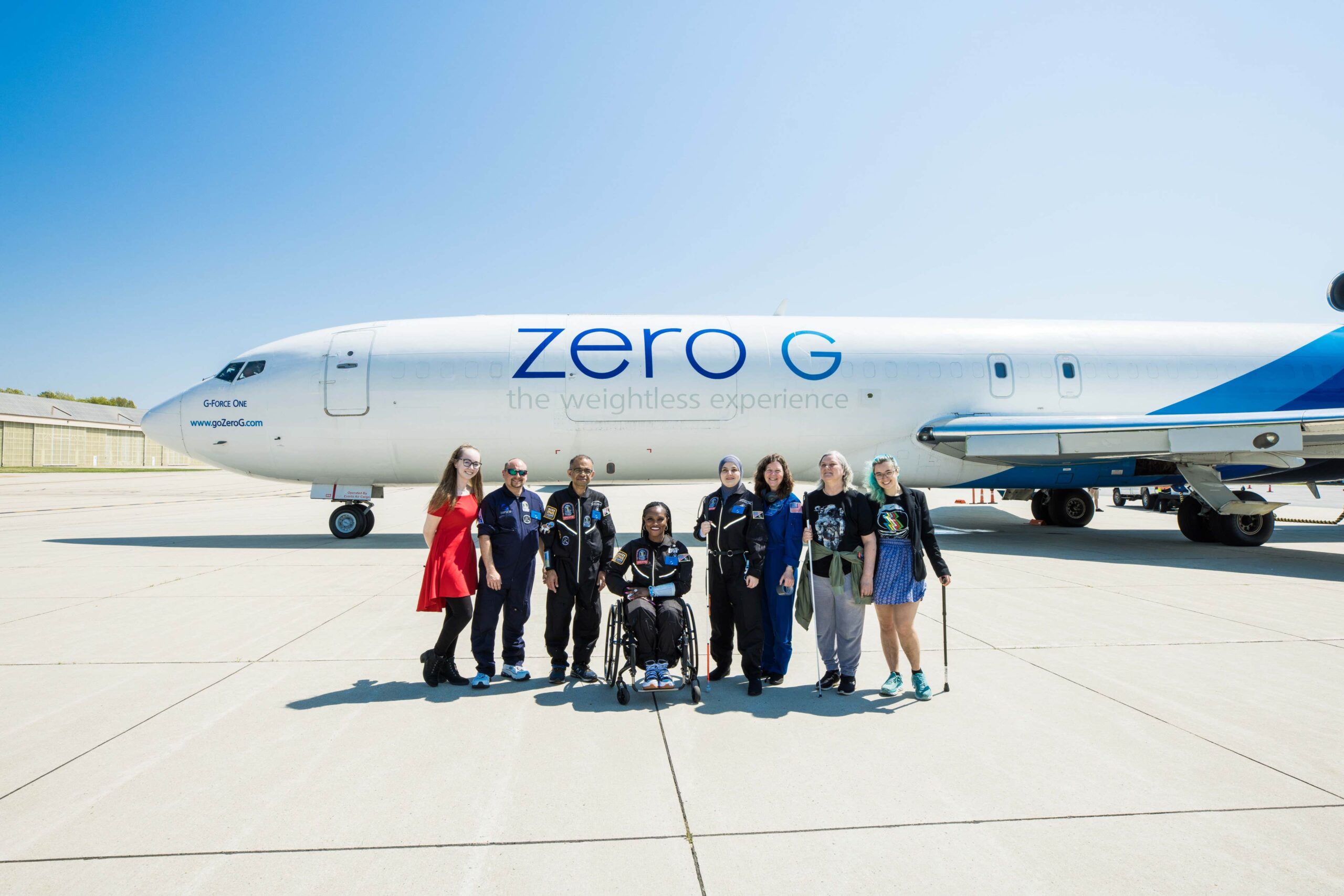
Before the historic flight, Benthaus actively participated in parabolic flights with AstroAccess, conducting various accessibility experiments in a zero-gravity environment. His plush hippo toy, which supported him during his recovery in the hospital, also accompanied him on this special journey. Benthaus emphasized that space travel for people with disabilities is still in its very early stages, but this flight is a critical step.
In addition to Benthaus, Hans Koenigsmann, who served as vice president at SpaceX for twenty years, was also on the NS-37 crew. The team also included physicist Joey Hyde, entrepreneur Neal Milch, mining engineer Adonis Pouroulis, and computer scientist Jason Stansell. With this latest mission, Blue Origin has transported a total of 92 people beyond the atmosphere using its New Shepard spacecraft.
The armada designed for the mission used custom parts symbolizing Blue Origin’s commitment to overcoming barriers such as cost, nationality, and physical ability. A tennis ball symbol, representing Benthaus’s passion for wheelchair tennis, was also added to the emblem. Company officials stated that their mission is to make space accessible to everyone and that this flight serves as an inspiring example for the future.
After the flight, Michaela Benthaus said, “I may be the first, but I don’t intend to be the last,” emphasizing the need for continued inclusivity in space exploration. In this era where technology is pushing boundaries, space tourism is becoming a goal for everyone, not just individuals with specific physical conditions. What are your thoughts on the future of space tourism and accessibility initiatives?
Your comment has been submitted,
it will be published after approval.