
LG Announces 4K 240Hz OLED Monitor!


LG Display has announced the world’s first 27-inch 4K OLED monitor with a true RGB strip pixel structure, to be showcased at CES 2026, marking a groundbreaking move in display technology. Part of the company’s next-generation panel strategy, this monitor aims to fundamentally solve one of the biggest drawbacks of OLED screens: text readability.
4K 240Hz OLED monitor unveiled
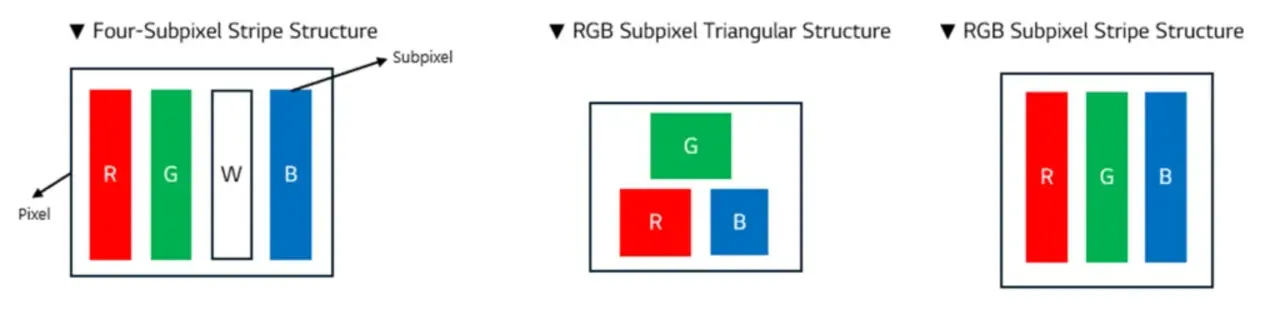
In this new model, the white subpixel used to enhance brightness in WOLED panels produced to date is completely disabled. Instead, it uses a “stripe” arrangement where red, green, and blue (RGB) subpixels are arranged side-by-side, as we are accustomed to in standard LCD monitors. This structure ensures full compatibility with text processing engines, especially in operating systems like Windows, and eliminates color aberration and blurring at letter edges.
In terms of technical specifications, this 27-inch panel offers a 3840 x 2160 resolution and promises high clarity with a pixel density of 160 PPI (pixels per inch). Thanks to LG’s “Dynamic Frequency & Resolution” (DFR) technology, the monitor offers users two different usage modes: those who want can use 4K resolution with a 240 Hz refresh rate, while competitive gamers can increase the resolution to Full HD and the speed up to 480 Hz.
While OLED panels with RGB strip architecture were previously limited to a 60 Hz refresh rate, LG is bringing this technology to 240 Hz, placing it in the professional gaming monitor category. Furthermore, the panel is expected to offer a lag-free experience with a 0.03 ms (GtG) response time.
In terms of brightness performance, LG is employing a fourth-generation Tandem OLED structure. While the removal of the white subpixel naturally reduces brightness capacity somewhat, this is balanced by the Tandem technology.
According to the data released, the monitor reaches a peak brightness of 250 nits with SDR content and 1,000 nits with HDR content in a 1.5% windowed area. Full-screen brightness is fixed at 250 nits.
LG states that in the Tandem structure used in this panel, the “W” no longer represents the white subpixel; instead, the multi-layered light source is directly converted into pure RGB colors using filters. This method brings color accuracy and purity to a level that can directly compete with rival QD-OLED technologies.
Your comment has been submitted,
it will be published after approval.