
AMD Ryzen 9 9950X3D2 Officially Announced!

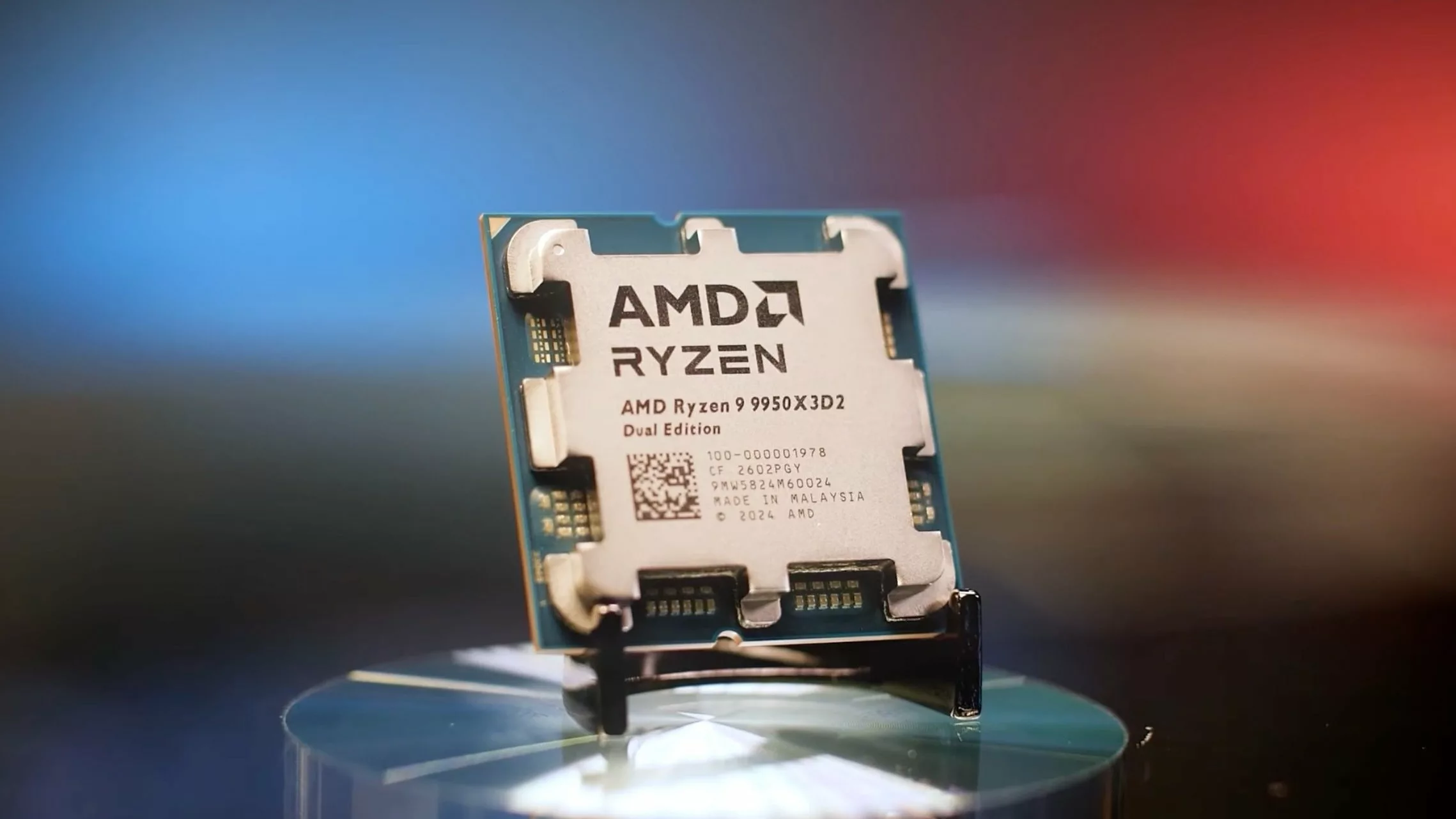
AMD has officially announced its latest desktop powerhouse, the Ryzen 9 9950X3D2 Dual Edition. Built on the AM5 socket and the Zen 5 microarchitecture, this new flagship is positioned as the ultimate successor to the current 9950X3D. The defining innovation of this model is the implementation of 3D V-Cache technology on both Core Complex Dies (CCDs), a first for consumer-grade processors.
A 192 MB L3 Cache Monster!
By stacking 3D V-Cache on both 8-core chiplets, the processor delivers a massive 192 MB of L3 cache (208 MB total on-chip cache). This dual-cache design ensures that gaming workloads can benefit from ultra-low latency regardless of which core they run on. The technical specifications include:
- Cores/Threads: 16 Cores / 32 Threads
- Clock Speeds: 4.30 GHz Base / 5.60 GHz Max Boost
- Cache: 192 MB L3 + 16 MB L2 (208 MB Total)
- TDP: 200 Watts (The highest ever for a Ryzen desktop CPU)
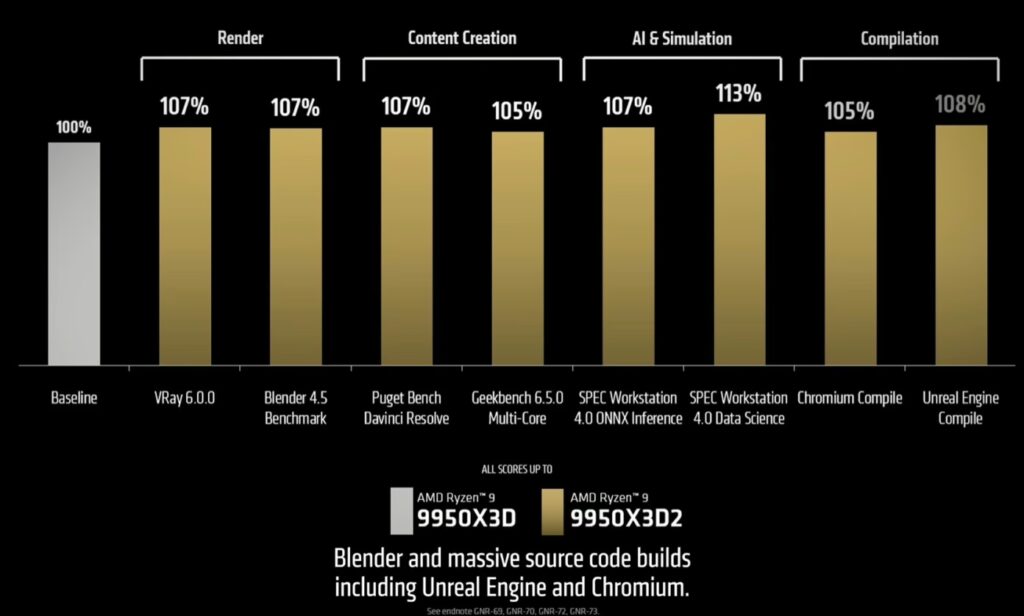
To maintain these high clock speeds across two X3D-equipped dies, AMD has pushed the Thermal Design Power (TDP) to 200W. While this marks a significant power increase, it allows the chip to excel not just in gaming, but also in data-intensive professional tasks such as AI model training, game engine compilation, and large-scale software builds.
Performance Gains and Availability
Internal benchmarks from AMD suggest that the 9950X3D2 offers a 5–13% performance uplift in productivity and creative workloads compared to the standard 9950X3D. While it remains to be seen if the dual-cache layout will provide a proportional jump in every game, the reduced inter-CCD latency is expected to solve the scheduling issues seen in previous dual-chiplet X3D generations.
The Ryzen 9 9950X3D2 Dual Edition is scheduled for a full global launch on April 22, 2026. Although official pricing has not yet been confirmed, industry experts expect it to carry a premium price tag given its unique “Dual Edition” status. Following this launch, GIGABYTE and other motherboard partners have already begun releasing BIOS updates to unlock the full potential of this expanded cache architecture.
AMD’s decision to move to a dual-cache design marks a major turning point for the AM5 platform. What do you think about this 200W power requirement? Is the performance jump worth the extra cooling you’ll need, or do you think the Ryzen 7 9850X3D will remain the “gaming king” for most users? Share your thoughts in the comments!
Your comment has been submitted,
it will be published after approval.