
iQOO 15 Ultra Named the Most Powerful Android Phone of April

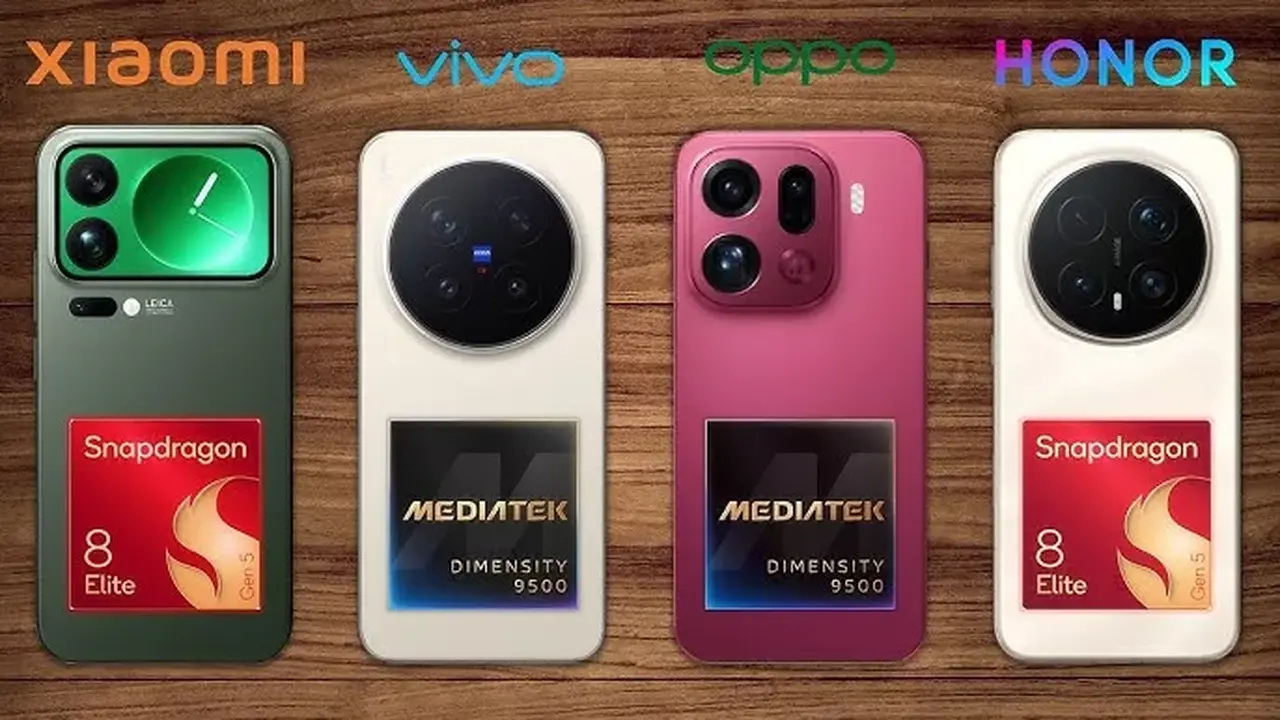
AnTuTu has officially released its highly anticipated Android performance rankings for April, confirming that the tech market continues to push hardware boundaries. The report highlights that the iQOO 15 Ultra has secured the title of the most powerful Android phone for the month, achieving a record-breaking score of 4,126,940 points. This achievement, measured through rigorous testing, underscores the dominance of the latest Qualcomm silicon in the flagship smartphone segment. By leveraging advanced thermal management and massive memory capacity, the iQOO 15 Ultra has outperformed its closest competitors, setting a new benchmark for mobile performance across the industry throughout April.
- The iQOO 15 Ultra earned the top position with an AnTuTu benchmark score of 4,126,940.
- Qualcomm Snapdragon 8 Elite Gen 5 chipsets power nine out of the top ten flagship smartphones.
- The iQOO Z11 leads the mid-range category using the MediaTek Dimensity 8500 processor.
- The Vivo Pad 6 Pro currently holds the highest performance score in the tablet market segment.
Qualcomm Dominates the Flagship Smartphone Market
The leaderboard for April reveals a clear trend toward consolidation, with the iQOO 15 Ultra leading the pack. It is closely followed by the standard iQOO 15, which recorded a score of 4,102,621. Both devices utilize the cutting-edge Snapdragon 8 Elite Gen 5 chipset, paired with 16 GB of RAM and 1 TB of storage to ensure seamless high-end performance. 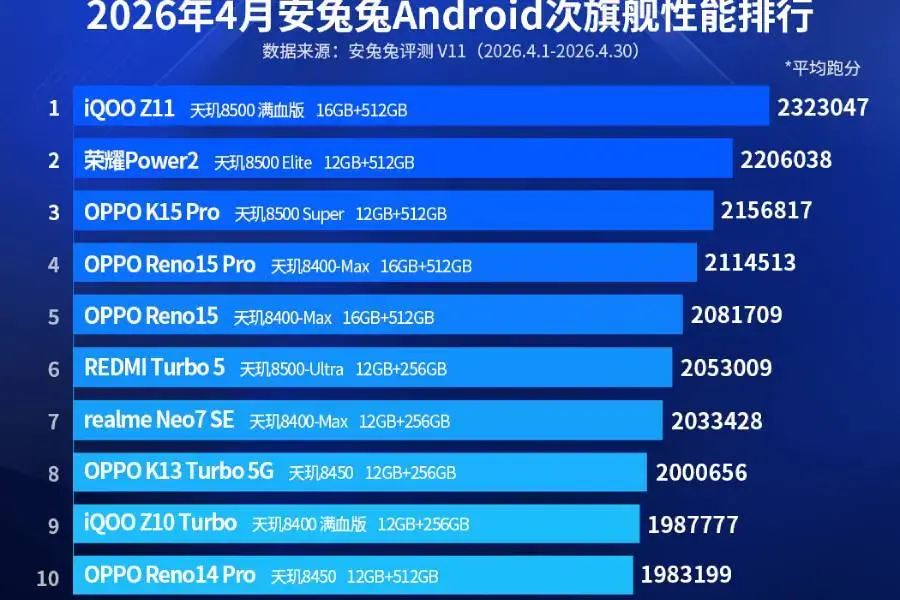
Qualcomm’s Snapdragon 8 Elite Gen 5 processor remains the undisputed foundation for the world’s highest-performing mobile devices.
Third place is occupied by the Red Magic 11 Pro+, which scored 4,098,742 points. Despite featuring 24 GB of RAM, the device fell slightly behind the iQOO models, highlighting that raw hardware specs are secondary to system-level optimization. Nine of the top ten devices listed exclusively use Qualcomm hardware, illustrating the manufacturer’s near-total control over the premium market segment.
The only exception to this trend is the OnePlus Ace 6 Ultra, which holds the sixth position. Powered by the MediaTek Dimensity 9500, it stands as the sole challenger to Qualcomm’s hegemony in the flagship category. While the leaderboard shows slight fluctuations compared to March, the iQOO 15 Ultra has maintained its lead, proving the efficacy of its thermal design.
Performance Standards Shift in Mid-Range and Tablet Categories
While Qualcomm commands the flagship space, MediaTek has established a dominant presence in the mid-range segment, often referred to as the “sub-flagship” category. The iQOO Z11, equipped with the Dimensity 8500, claims the top spot with a score of 2,323,047. It is followed by the Honor Power2 and the Oppo K15 Pro, both of which rely on MediaTek architecture to achieve their rankings. 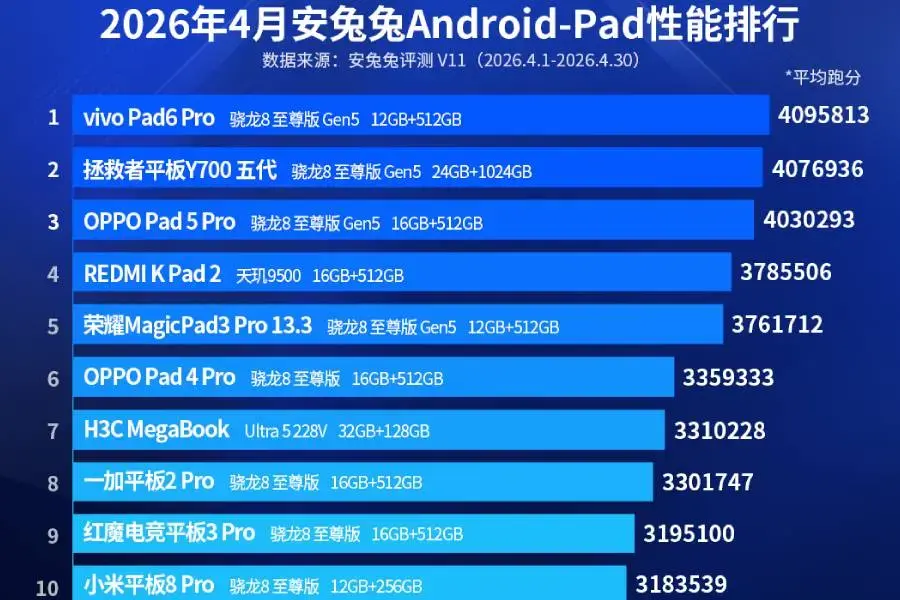
The tablet market is witnessing a parallel evolution in raw power. The Vivo Pad 6 Pro has risen to become the leader in its category with 4,095,813 points. Notably, these high-end tablets now utilize the same Snapdragon 8 Elite Gen 5 chips found in top-tier smartphones, effectively narrowing the performance gap between the two form factors.
The record-breaking scores achieved by the Vivo Pad 6 Pro confirm that the performance gap between mobile handsets and tablets has officially vanished.
This shift represents a significant change from the March data, where Lenovo’s Legion tablet held the top position. Such rapid movement in the rankings reflects the intensity of the competition among manufacturers as they strive to deliver the most efficient and powerful user experiences possible. As these hardware iterations continue to evolve, consumers benefit from significantly faster processing speeds across all price segments.
How do you feel about the consistent performance dominance of iQOO devices, and does this influence your future smartphone purchase decisions? Share your thoughts and personal experiences with your current device in the comments section below.
Your comment has been submitted,
it will be published after approval.