
Xiaomi 18 Fold Launches with Innovative Design and XRing O3 Chip

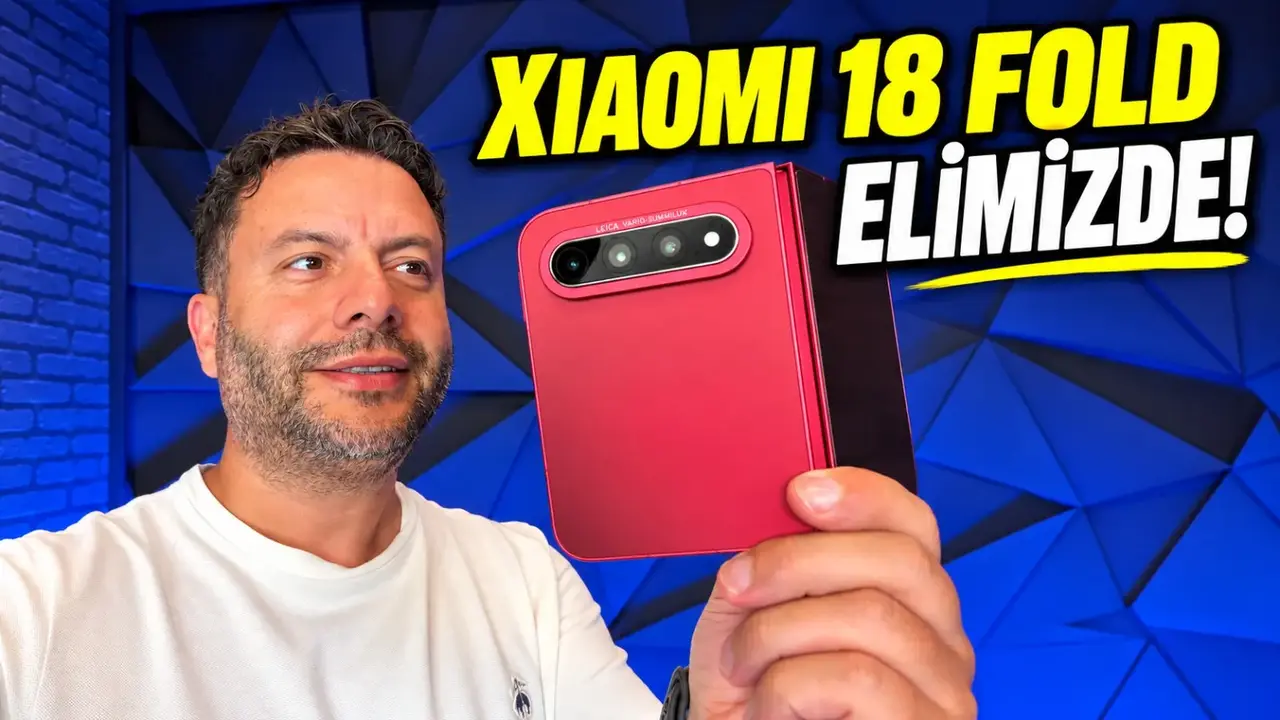
Xiaomi has officially introduced the Xiaomi 18 Fold, a groundbreaking foldable smartphone that seeks to redefine the market with its unique passport-like form factor. Launched in China with a starting price of 10,999 yuan, this flagship device moves away from the traditional, narrow foldable design by offering a more balanced, wider body. Equipped with the proprietary 3nm XRing O3 processor, a 200-megapixel Leica-branded camera system, and a substantial 6,000 mAh silicon-carbon battery, the Xiaomi 18 Fold aims to deliver a tablet-like experience that fits into a pocket. Weighing just 219 grams, the device represents a significant advancement in mobile engineering for consumers seeking portability without sacrificing performance.
- The Xiaomi 18 Fold features a custom 3nm XRing O3 chipset designed to handle intensive artificial intelligence tasks.
- The device incorporates a 7.58-inch primary display and a 5.38-inch cover screen to improve daily usability.
- The hardware includes a high-capacity 6,000 mAh battery that supports 67W wired and 50W wireless charging speeds.
- The camera system utilizes a 200-megapixel main sensor developed in partnership with Leica for professional-grade photography.
Passport-Inspired Design Enhances Usability
The primary critique of previous foldable phones centered on their narrow, remote-control-like outer screens, which often hindered typing and navigation. Xiaomi has addressed this limitation by adopting a wider chassis. When closed, the 5.38-inch OLED external display provides a user experience similar to a standard smartphone, allowing for efficient messaging and notification management.
Upon opening the device, users are greeted by a expansive 7.58-inch OLED panel with a resolution of 2364 x 1672 pixels. Despite this large screen real estate, the device remains remarkably thin at 5mm when unfolded and 10.7mm when closed. The integration of the new Dragon Bone hinge and dual-layer Ultra Thin Glass (UTG) helps minimize the visibility of the fold crease, which has been a recurring issue in the foldable segment.
Proprietary Hardware Drives Performance
A standout feature of the Xiaomi 18 Fold is the debut of the XRing O3 processor. By developing its own 3nm, 10-core chip, Xiaomi has significantly reduced its reliance on third-party silicon providers. The processor integrates a dedicated Neural Processing Unit (NPU) optimized for MiMo language models, ensuring that complex multitasking, such as simultaneous video streaming and document editing, remains fluid within the HyperOS environment.
Photography enthusiasts will find the Leica-engineered triple camera setup particularly compelling. The 200-megapixel primary sensor is complemented by a 50-megapixel ultra-wide lens and a 50-megapixel telephoto unit. This hardware combination effectively transforms the device into a mobile studio, allowing users to capture, review, and edit high-resolution images directly on the large internal display.
Energy Management Supports Demanding Users
Powering such a high-performance device requires an efficient battery solution. Xiaomi has opted for a 6,000 mAh silicon-carbon battery, which offers superior energy density compared to traditional lithium-ion cells. This capacity ensures that the device maintains longevity even when users engage in intensive tasks like high-resolution gaming or continuous multitasking. With 67W wired charging and 50W wireless charging, the phone minimizes downtime for those constantly on the move.
We are eager to hear your thoughts on this new approach to the foldable form factor; do you believe the passport-style design is the future of smartphones, or do you prefer the traditional narrow aspect ratio?
Your comment has been submitted,
it will be published after approval.