
OpenAI Expands ChatGPT Strategy to Target Families and Seniors


OpenAI is officially shifting its long-term strategy by extending the reach of ChatGPT from individual productivity users to families, caregivers, and elderly populations. The company recently posted a job opening in San Francisco for a product manager tasked specifically with developing experiences tailored to these demographics. This initiative marks a significant pivot three years after the initial launch of the service, as data indicates that ChatGPT is successfully moving beyond its core youth-oriented user base. By seeking experts in family-focused product development, the firm aims to deepen its integration into the daily lives of households across the globe.
- Data from Sensor Tower reveals that the share of ChatGPT users aged 35 and older has climbed to 31 percent this year.
- OpenAI is actively recruiting specialized product management talent to build safer tools for parents, children, and elderly users.
- The company is prioritizing safety-by-design features to mitigate risks associated with artificial intelligence in domestic environments.
The company is evolving its platform from a professional productivity tool into a comprehensive household assistant.
OpenAI Shifts Focus Toward Household Integration
Industry analysts, including Creative Strategies CEO Ben Bajarin, suggest that this move signals a broader transition for OpenAI. Much like the strategies employed by tech giants such as Google, Apple, and Meta, OpenAI appears to be positioning its artificial intelligence models as central pillars of home infrastructure. 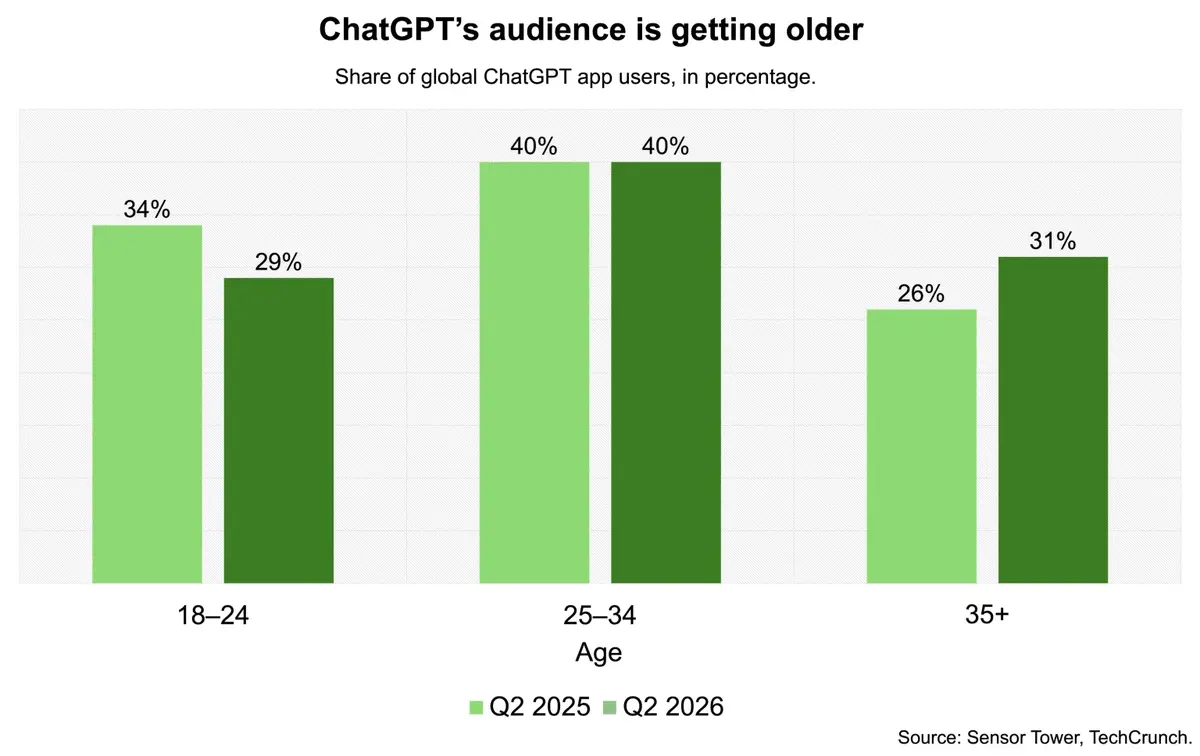 This shift reflects a recognition that modern families require distinct digital tools that support collaborative living, education, and health management rather than just isolated work tasks.
The growth statistics support this strategic shift. Market research shows that approximately 25 percent of smartphone-using parents in the United States have engaged with ChatGPT in the current quarter, a notable increase from 16 percent just one year ago. As the user base matures, the demand for features like shared accounts, child-safe profiles, and specialized caregiver support is expected to rise sharply.
Safety Standards Remain a Critical Priority
Expanding into the family market brings significant challenges regarding child safety and privacy. Stephen Balkam, CEO of the Family Online Safety Institute, emphasizes that AI companies must accept that child-facing products require entirely different protective architectures compared to those designed for adults. The industry is currently moving toward a “safety by design” philosophy to prevent the vulnerabilities that plagued early social media platforms.
OpenAI has already begun implementing protective measures, such as parental controls for younger accounts and specialized models that steer conversations away from sensitive or harmful topics. Furthermore, the introduction of a “Trusted Person” feature—which can alert caregivers if a user exhibits signs of self-harm—demonstrates a proactive commitment to safety. Despite these efforts, the company continues to navigate ongoing legal scrutiny regarding the potential impact of its technology on younger users.
Future Developments Shape the Digital Landscape
Artificial intelligence companies are racing to capture the growing demographic of older users who are increasingly adopting digital assistants.
While ChatGPT currently faces stiff competition from rivals like Anthropic’s Claude and Google’s Gemini—particularly among users aged 25 to 34—it is growing at a faster rate within the senior demographic. To solidify this lead, OpenAI is collaborating with organizations like the San Antonio Spurs Community Impact and the Positive Coaching Alliance to explore how AI can better serve youth education and community engagement.
Looking ahead, the market anticipates the arrival of comprehensive family plans that allow for better data management and customized learning experiences. As these tools become more sophisticated, the challenge will remain in balancing personalized utility with the rigorous privacy standards required for household technology. The success of this expansion will likely depend on how effectively the company can foster trust among parents and older adults.
As OpenAI integrates its technology into the heart of the home, we are curious to hear your perspective on this shift; do you believe AI assistants are ready to support your family’s daily needs, or do you have concerns regarding privacy and safety? Share your thoughts in the comments section below.
Your comment has been submitted,
it will be published after approval.