
Modders Run DLSS 5 on Intel Arc 140V Graphics

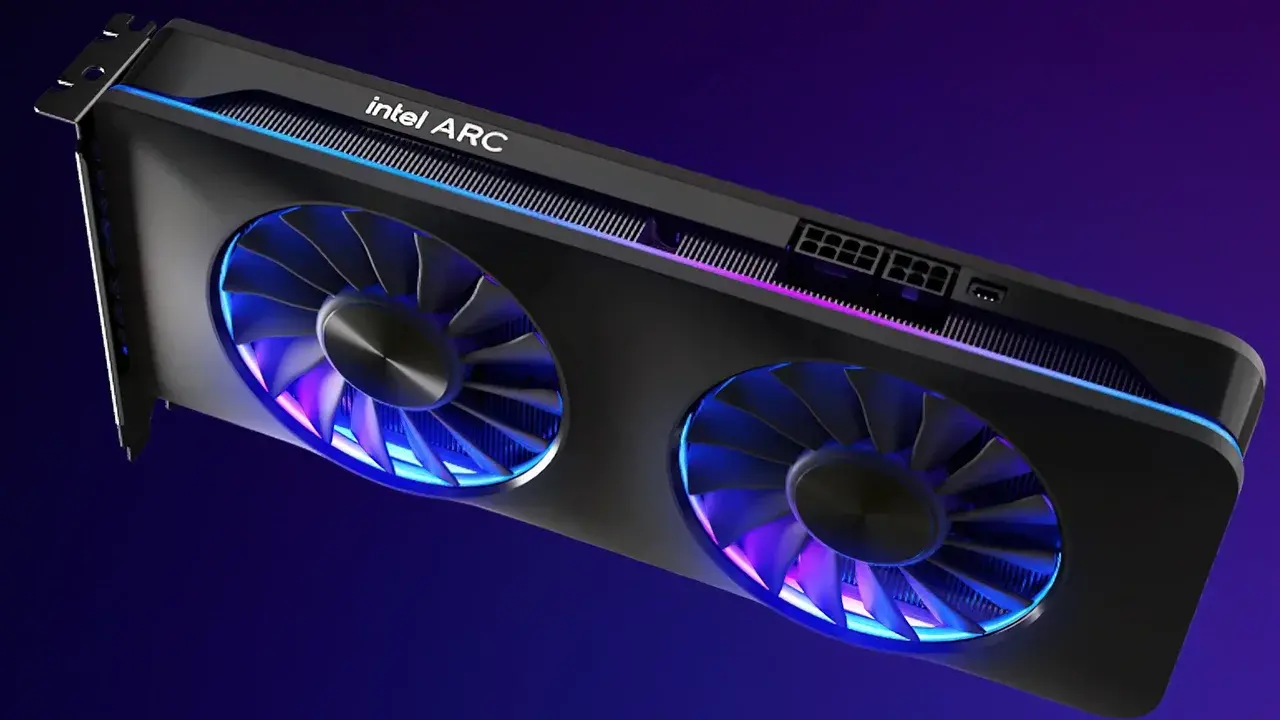
In a significant technical achievement, mod developers have successfully ported NVIDIA’s advanced DLSS 5 Neural Rendering technology to non-NVIDIA hardware, specifically the Intel Arc 140V integrated graphics found in Lunar Lake processors. This unofficial project, pioneered by Reddit user u/UzbekUnknown, demonstrates that sophisticated image processing techniques are not strictly bound to proprietary ecosystems. By bypassing traditional NVIDIA-specific libraries, the developer has opened a new conversation regarding the future of cross-platform neural rendering capabilities and the potential for integrated graphics units to handle complex AI-driven upscaling tasks outside of their intended environments.
- The project utilizes a custom Vulkan layer to interface with Intel’s XMX matrix engines without requiring CUDA or NGX libraries.
- Testing on Intel Arc 140V hardware reveals severe performance bottlenecks with frame rates dropping to single digits at 720p resolution.
- High memory overhead requires over 2 GB of shared system RAM, significantly impacting overall platform performance.
- The implementation remains an experimental proof-of-concept rather than a viable solution for everyday gaming.
Technical Hurdles are Being Overcome Through Vulkan
The core of this modification lies in its ability to reconstruct the U-Net architecture typically reserved for NVIDIA’s neural rendering suite. By leveraging the VK_KHR_cooperative_matrix Vulkan extension, the developer successfully executes FP16 and FP32 accumulation cycles on Intel Xe2 architecture. 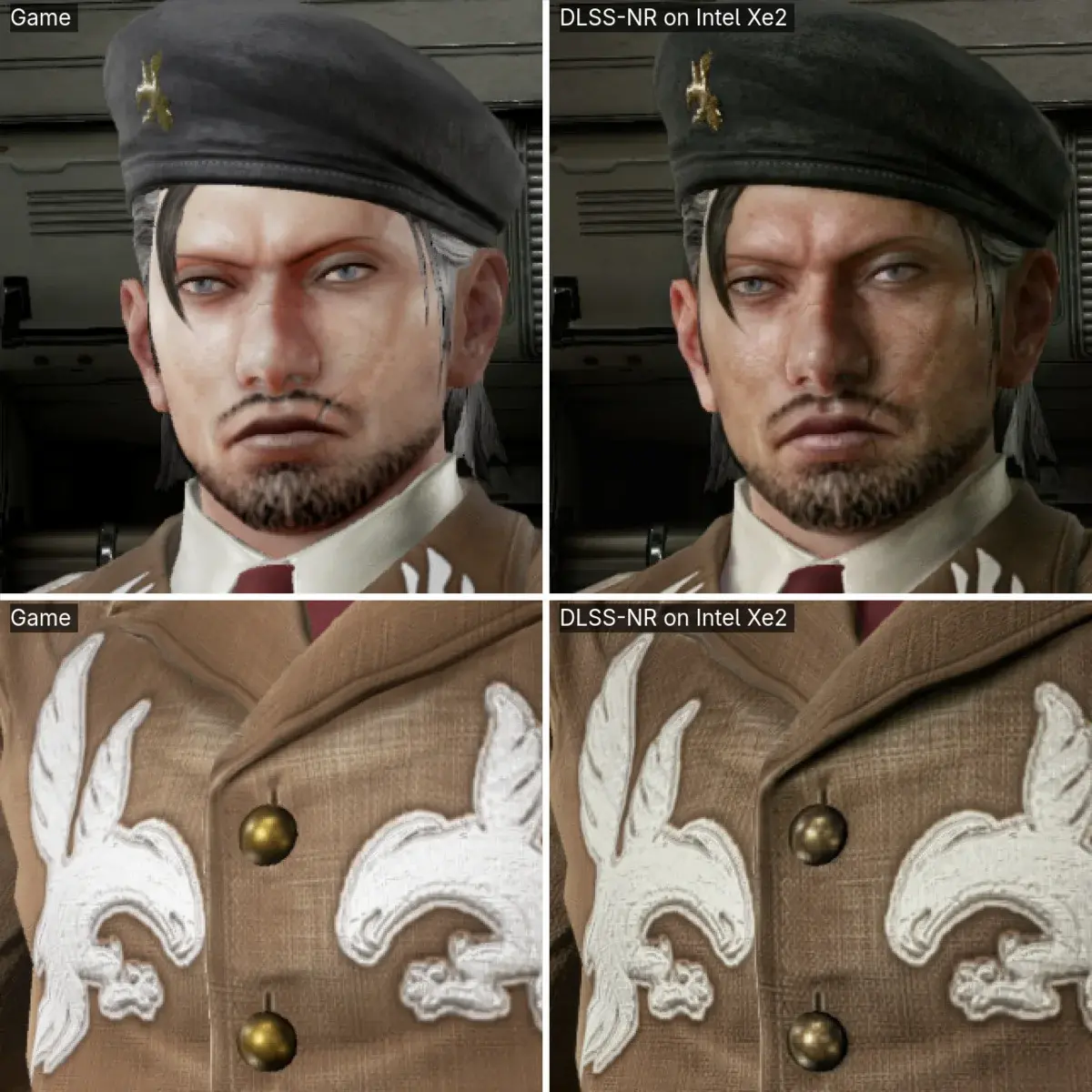 This bypasses the need for the proprietary CUDA environment, instead forcing the Intel iGPU to perform the heavy mathematical calculations required for neural reconstruction via a Vulkan-based hook in the display pipeline.
Performance Limitations are Currently Hindering Playability
Despite the technical success of the integration, the real-world performance on the Intel Arc 140V is currently far from ideal for standard gaming. In demanding titles such as Tekken 7, Mortal Kombat 1, and Dead or Alive 5 Last Round, the frame rate struggles to exceed 5 FPS at 720p resolution. 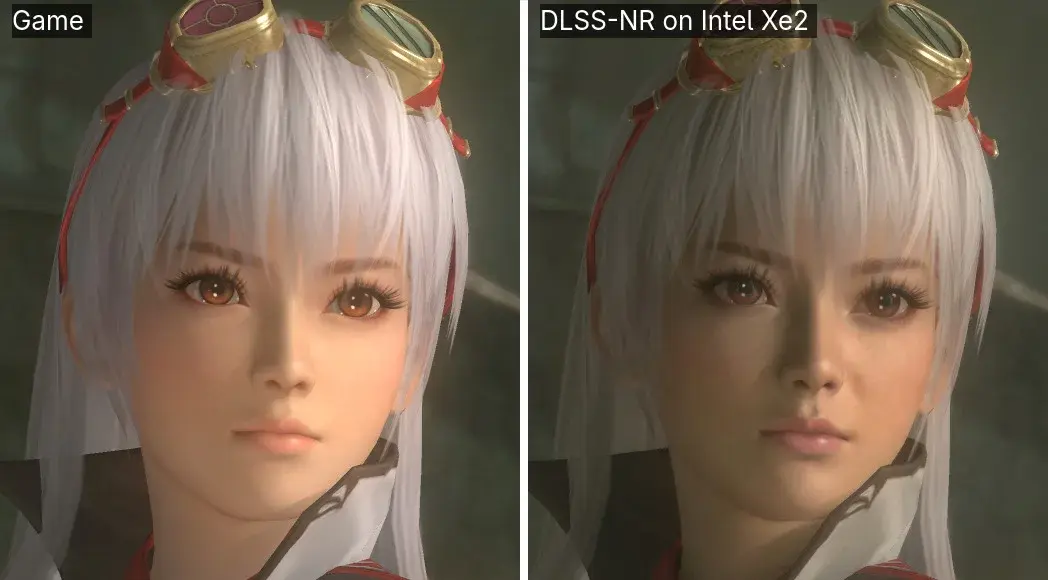 Dropping the resolution further to 640x360p yields only a marginal improvement to approximately 10.5 FPS, confirming that the current workload is far too heavy for the integrated silicon to process in real-time.
Furthermore, the memory footprint is a significant concern for mobile devices. The implementation demands roughly 2.3 GB of dedicated buffer space, which is pulled directly from the system’s shared memory. 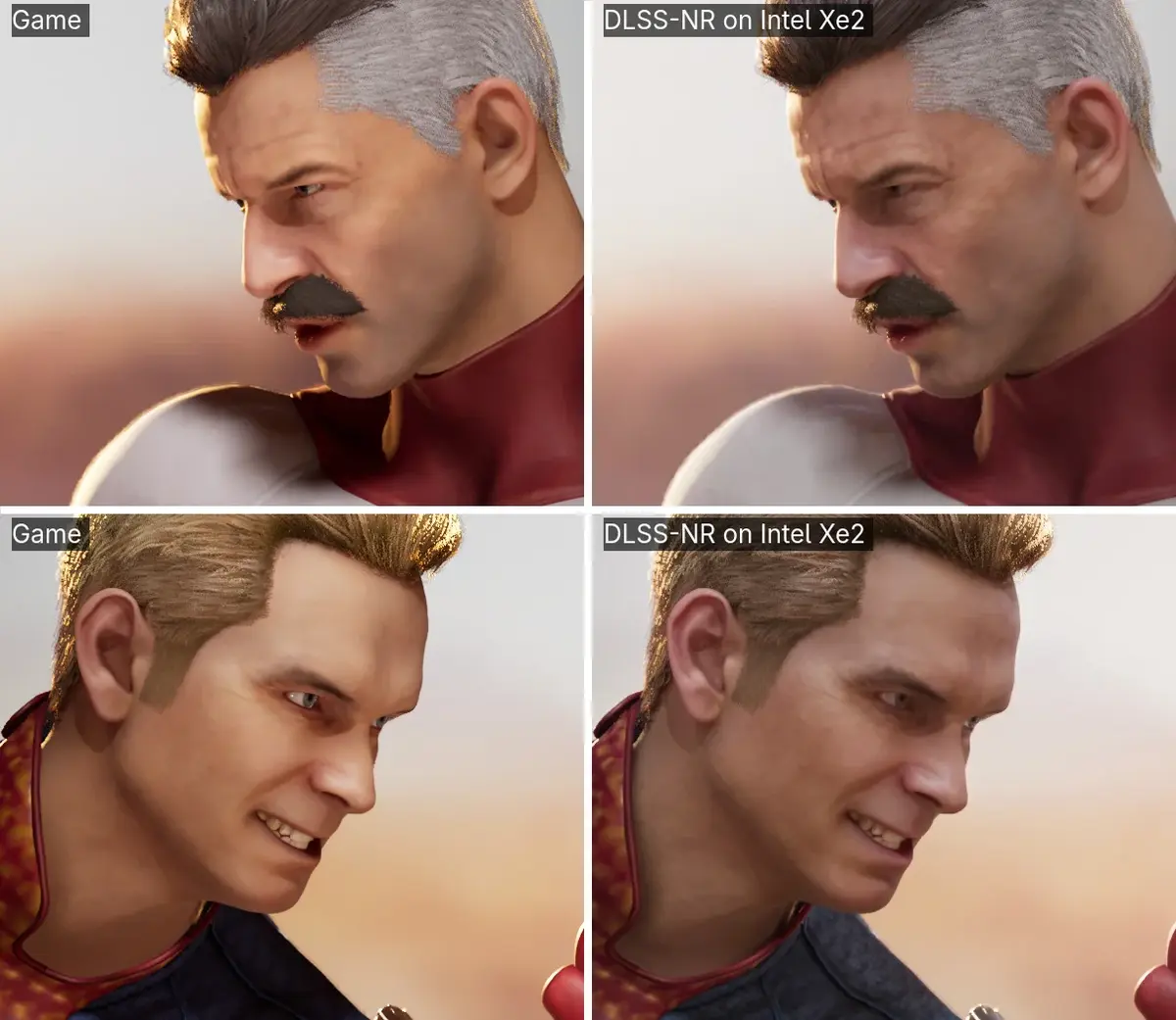 Because the Arc 140V shares bandwidth and capacity with the CPU, this massive allocation leads to severe system-wide performance degradation. Additionally, the software is not a plug-and-play tool; it requires users to manually extract and provide their own model weights from existing DLSS files, keeping it strictly in the realm of advanced enthusiast experimentation.
While this mod shows that hardware limitations can be pushed in unexpected ways, it is clear that native optimization remains essential for performance. We invite you to share your thoughts in the comments section: do you believe that AI-driven upscaling will eventually become a standard feature for all integrated graphics, or will proprietary hardware requirements continue to dictate the landscape of high-end visual rendering?
Your comment has been submitted,
it will be published after approval.