
NVIDIA RTX Spark Closes Performance Gap with Apple M4 Max


NVIDIA’s highly anticipated ARM-based processor, the RTX Spark, has demonstrated significant performance improvements in the latest Geekbench 7 benchmarks. Developed in collaboration with MediaTek, this new system-on-a-chip (SoC) is designed to challenge the dominance of Apple Silicon in the portable computing market. Recent tests reveal that the 20-core configuration of the RTX Spark has substantially narrowed the multi-core performance deficit compared to Apple’s flagship 14-core M4 Max processor. As NVIDIA continues to refine its hardware architecture, the industry is closely monitoring whether this chip can effectively compete with established high-end mobile processors in real-world professional workloads.
- The 20-core RTX Spark variant achieved multi-core scores only 11 percent lower than those of the Apple M4 Max chip.
- Geekbench 7 data indicates that the 20-core model delivers a 6.2 percent performance increase over the 18-core version.
- High-end RTX Spark configurations utilize the advanced Blackwell architecture featuring 6,144 CUDA cores.
RTX Spark Models Demonstrate Performance Variability
The latest results from the Geekbench 7 database confirm that NVIDIA is testing two distinct configurations of the RTX Spark. Both systems were equipped with 64GB of unified memory and operated under a balanced power profile during the benchmarking process. The 20-core unit recorded 2,570 in single-core and 23,126 in multi-core tests, while the 18-core variant reached 2,541 and 21,776 points, respectively. 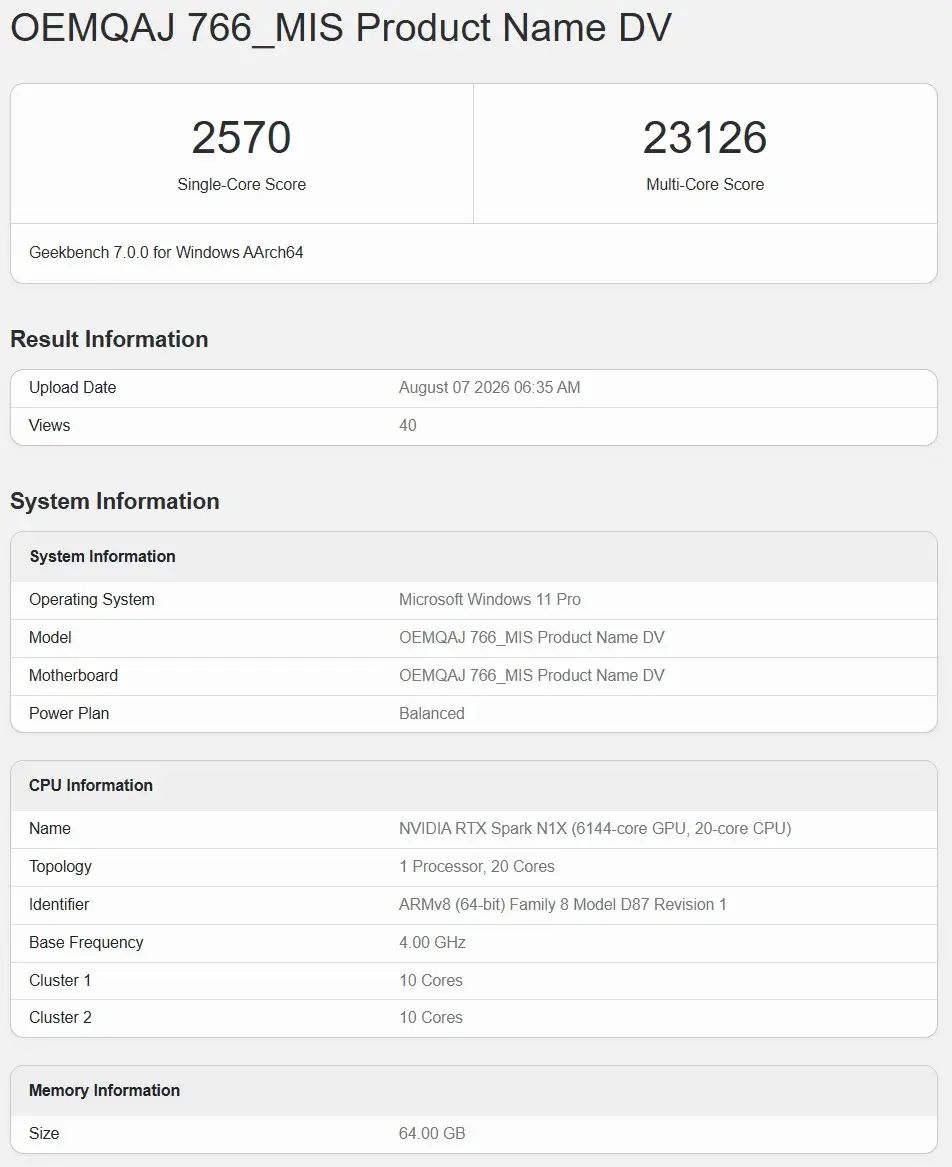
While the RTX Spark architecture currently trails Apple in single-core efficiency, its multi-core scaling capabilities are rapidly narrowing the gap.
For comparison, Apple’s M4 Max processor maintains its lead in the industry with scores of 3,404 for single-core and 25,957 for multi-core tasks. Currently, the most powerful RTX Spark model remains approximately 11 percent slower in multi-core performance and 24.5 percent behind in single-core benchmarks. Experts suggest that these margins are likely to shrink as NVIDIA optimizes its software drivers and firmware before the official commercial release. 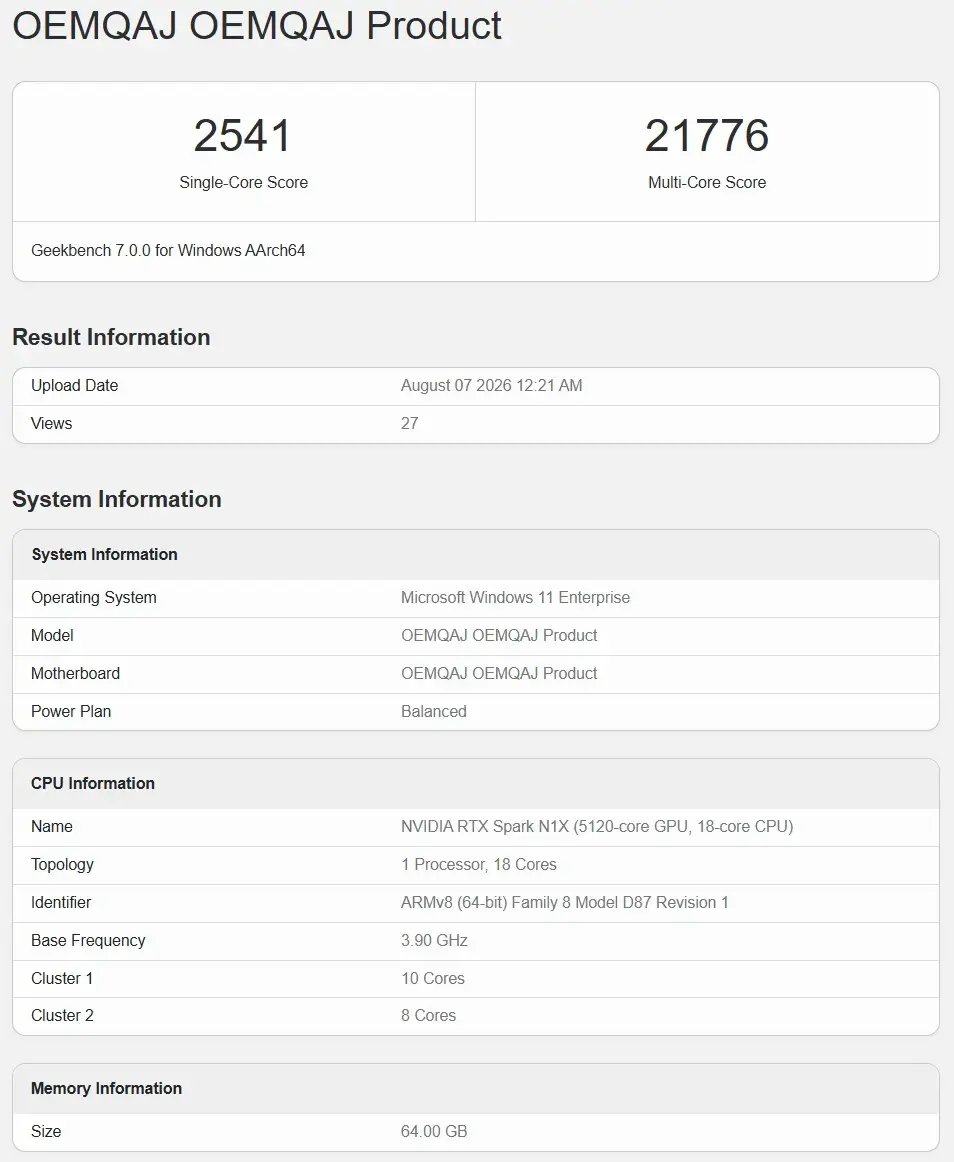
NVIDIA Blackwell Architecture Influences Graphics Capability
Beyond raw CPU performance, the primary advantage of the RTX Spark lies in its integrated GPU, which leverages the powerful Blackwell architecture. Analysis of Windows 11 ARM64 drivers suggests that the 18-core model incorporates 5,120 CUDA cores, whereas the 20-core iteration scales up to 6,144 cores. These specifications align closely with desktop-class performance metrics, similar to those found in the RTX 5070 graphics cards. 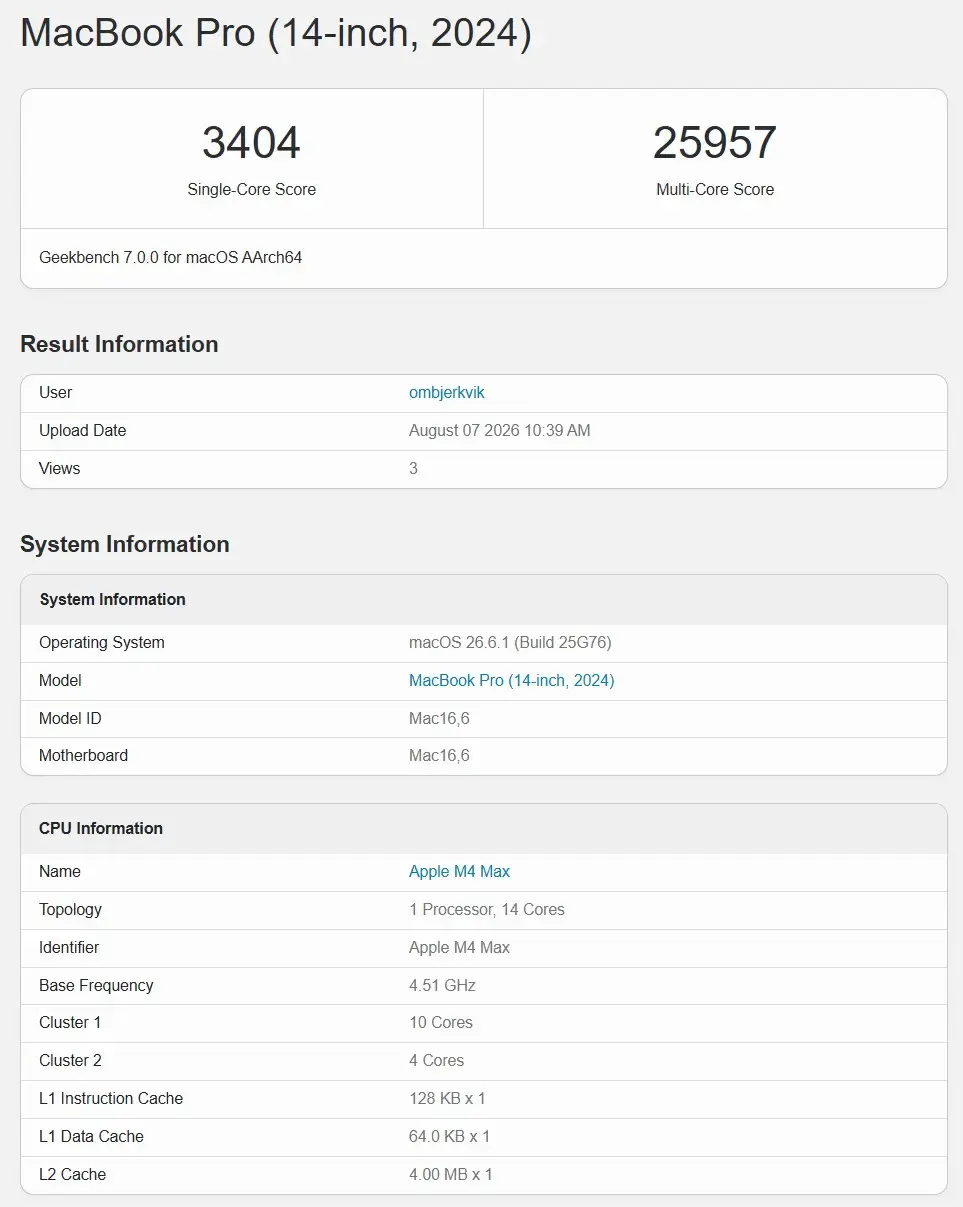
Although these prototype devices are currently subject to performance fluctuations due to evolving driver support, the potential impact on the PC landscape is significant. NVIDIA’s entry into the ARM processor segment signals a major shift in how the industry approaches high-performance laptop design. As development progresses, the tech community remains eager to see how these chips perform under sustained professional stress compared to the established M-series ecosystem.
Do you believe NVIDIA’s move into ARM-based chips will successfully disrupt Apple’s dominance in the high-performance laptop market? Share your thoughts on whether this architecture can provide a true desktop-class experience for mobile users.
Your comment has been submitted,
it will be published after approval.