
Starship Flight 15 Targets November 12 for First Double Catch

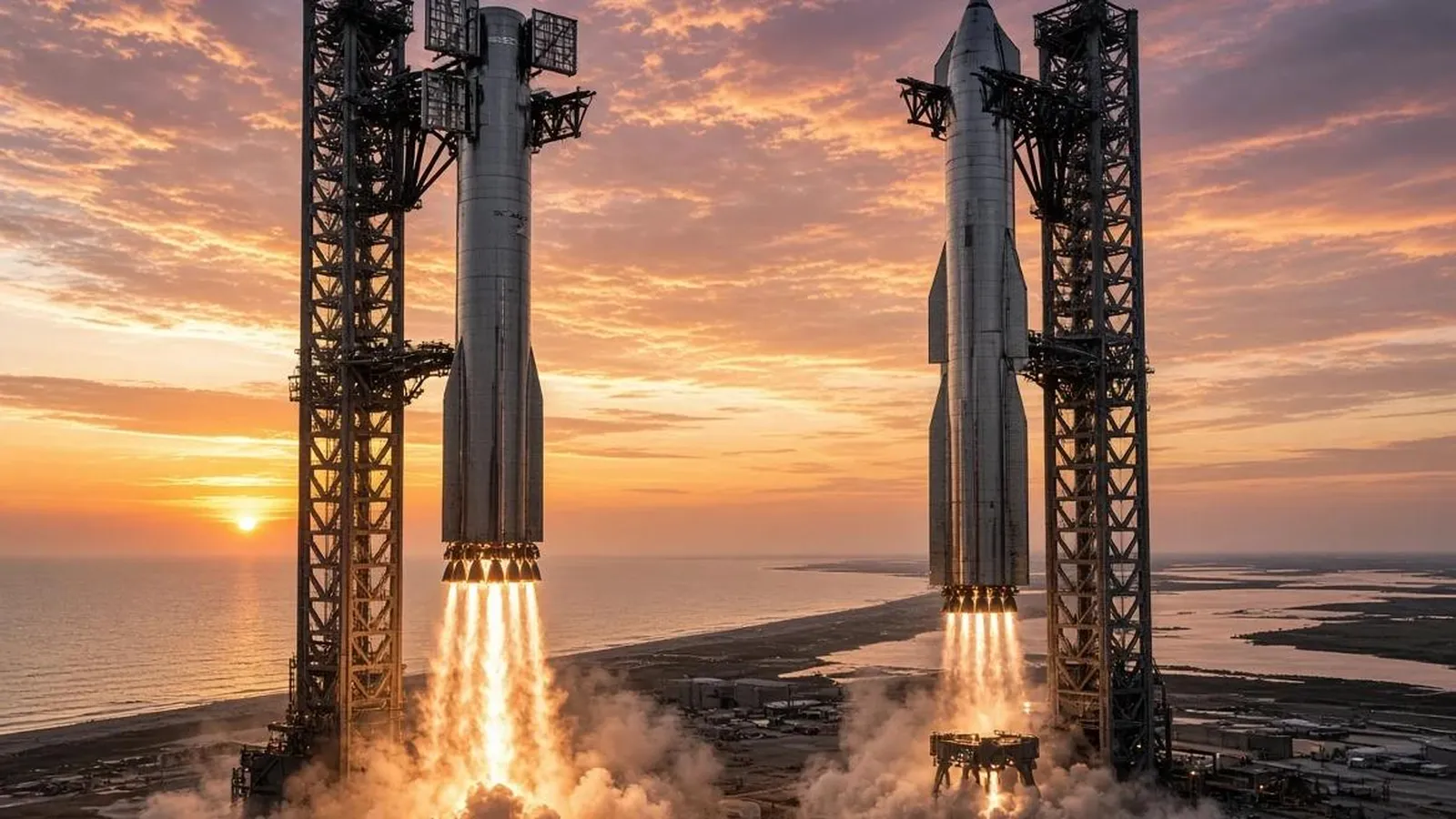
Starship Flight 15 is now targeting no earlier than November 12, 2026, according to a US air traffic coordination slide first shared by the SpaceNotices account on October 29. SpaceX plans to use the flight for its most ambitious test yet: catching both the Super Heavy booster and the Starship upper stage with the launch tower at Starbase, Texas. SpaceX itself has not announced a launch date, and the flight still needs an FAA license.
Starship Flight 15 is now NET November 12 per a new CADENA high profile missions slide
— SpaceNotices (@SpaceNotices) October 29, 2026
What SpaceX Plans for Starship Flight 15
Elon Musk confirmed the plan during SpaceX’s third quarter earnings webcast on October 20. “For Flight 15, which we expect to happen next month, we’re going to attempt to catch both the booster and the ship,” he said, adding that a success “will be the first time that an orbital launch vehicle has been fully recovered.” Musk called the odds “more likely than not” on the first attempt, according to Space.com.
SpaceX President Gwynne Shotwell said on the same call that the company expects the Flight 15 license “to include return to launch site and tower catch for both stages.” SpaceX has already caught Super Heavy boosters with the tower’s “chopstick” arms on three flights, but it has never tried to catch the ship.
Why the Ship Catch Is Harder
The booster only climbs a few minutes before heading back. The ship has to reach orbit, slow down, survive reentry through the dense atmosphere, flip from its belly flop position to vertical, and then line up precisely with the tower arms. Bringing it back to Starbase also means reentering toward land instead of the open ocean, which is why the FAA approval matters.
The flight follows Flight 14, when Starship reached Earth orbit for the first time and deployed the first Starlink V3 satellites.
Hardware Is Ready
Both vehicles have finished testing. Booster 22 completed its static fire on October 25, and SpaceX said on October 28 that Ship 42 performed “a full duration, six-engine static fire” plus a single Raptor burn that simulated a deorbit burn. Musk followed up on X:
As the prophecy foretold, Starship 42 will be the first tower catch
— Elon Musk (@elonmusk) October 29, 2026
The full Starship stack stands about 120 meters (roughly 400 feet) tall. Super Heavy uses 33 Raptor engines and the ship uses six, all burning liquid methane and liquid oxygen.
What It Means
A full catch would close the reuse loop that SpaceX says is key to cheap satellite launches, NASA’s Artemis Moon landings and eventually Mars missions. It would also support Musk’s cadence targets: weekly Starship launches in the first half of 2027, then twice weekly or more by the end of that year. A second set of vehicles is already being prepared for Flight 16, which NASASpaceflight reports is expected to be Starship’s first launch from Florida.
Starship is also becoming a bigger business story, with Anthropic now SpaceX’s largest customer and Musk having explored a Tesla and SpaceX merger. If November 12 holds, Flight 15 will be the first time anyone tries to recover both stages of an orbital rocket on the same day.
Your comment has been submitted,
it will be published after approval.